Award-Winning 10th Grade math
Tutors
Who needs tutoring?
FEATURED BY


TUTORS FROM
- YaleUniversity
- PrincetonUniversity
- StanfordUniversity
- CornellUniversity
Award-Winning 10th Grade math Tutors
Certified Tutor
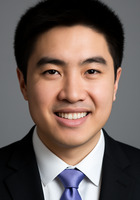
Allan
Geometry proofs are the stumbling block Allan sees most often with 10th graders — not because the logic is impossibly hard, but because nobody teaches them how to organize a proof step by step. He walks through each theorem and postulate as a building block, showing students how to construct argumen...
Northwestern University
Bachelors, Biological Sciences
Certified Tutor
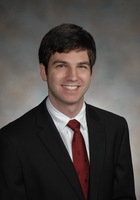
Eric
Geometry proofs and trigonometric ratios trip up a lot of tenth graders because they require a different kind of thinking — building logical arguments step by step. Eric tackles this by encouraging students to sketch, experiment, and discover relationships on their own before formalizing anything. I...
Princeton University
Bachelor in Arts

Certified Tutor
Samuel
Geometry proofs and trigonometric identities are the two places where 10th-grade math stops feeling like arithmetic and starts demanding logical reasoning. Samuel teaches proof-writing as a skill in structured argumentation, not just a format to memorize. He's currently studying applied mathematics ...
Brown University
Applied Mathematics major

Certified Tutor
10+ years
Sarah
Geometry proofs are where many 10th graders hit their first real wall — the shift from computing answers to constructing logical arguments is a fundamentally different kind of thinking. Sarah approaches proofs as a writing exercise, teaching students to build each step like a persuasive paragraph. H...
Providence College
Masters, Secondary Education
University of Notre Dame
Bachelors, Psychology

Certified Tutor
Greg
Geometry proofs and coordinate geometry trip up a lot of tenth graders because the logic feels different from the algebra they're used to. Greg tackles this by teaching proof structure as a form of argument-building — each step justified, each theorem earned. His experience teaching math to younger ...
Vanderbilt University
Building Engineer, Chemical Engineering and Math

Certified Tutor
10+ years
Madeline
Tenth grade math often marks the shift into more abstract territory — polynomial operations, trigonometric ratios, and formal proofs that demand both precision and creative thinking. Madeline's chemical engineering background means she uses these tools daily and can show students exactly how each co...
Johns Hopkins University
Bachelors

Certified Tutor
Rebecca
Tenth-grade math often marks the shift from straightforward computation to more abstract reasoning — geometric proofs, trigonometric ratios, and function analysis all demand a different kind of thinking. Rebecca approaches these topics by connecting them to the logical frameworks she studied in her ...
University of Notre Dame
Bachelors of Arts in English and Philosophy

Certified Tutor
10+ years
Ariela
Geometry proofs and quadratic functions can feel like two completely different subjects crammed into one year. Ariela tackles that disconnect by showing how logical reasoning connects both — writing a two-column proof and completing the square both reward the same kind of step-by-step discipline. He...
University of Chicago
Current Undergrad, Theater & Performance Studies

Certified Tutor
10+ years
Ben
Geometry proofs are usually the first time a student has to build a logical argument from scratch, and that skill transfers far beyond math class. Ben approaches proof-writing as a thinking exercise — teaching students to identify what they know, what they need, and how to bridge the gap. He holds a...
University of Pennsylvania
Bachelors, Mathematics
Certified Tutor
13+ years
Geometry proofs and coordinate geometry trip up a lot of 10th graders because they require a completely different kind of thinking than arithmetic ever did. Sung breaks down the logic behind each proof structure so students learn to build arguments step by step, not just mimic examples from the text...
Yale University
Bachelor of Science
Top 20 Math Subjects


Meet Varsity Tutors Experts
Connect with highly-rated educators ready to help you succeed.
Julia
11th Grade math Tutor • +41 Subjects
I am a recent college graduate currently pursuing a career in publishing in New York City. My interest in tutoring and the publishing industry stem from the same source: I want to help instill in others the same love of learning I have felt throughout my life. Whether it's getting lost in a good book or feeling the thrill of excitement at finally solving a difficult math problem, I feel that learning should be fun and viewed as a challenge, not a chore. Throughout my academic career, I have been a well-rounded student, excelling in math as well as language and literature. I am a notoriously good test-taker, a skill developed from solid study habits that I hope to pass on to future students. For me, tutoring is my way of giving back to my community and paying forward the help I've gotten from teachers, mentors, and fellow students throughout my life.
Julie
12th Grade math Tutor • +83 Subjects
I am a rising junior at Princeton University pursuing a Bachelors of Arts in Philosophy with a certificate in Statistics and Machine Learning. I am highly passionate about education: during the academic year, I serve as a volunteer tutor for the Petey Greene Program, which provides educational assistance to those incarcerated in New Jersey prisons; after graduation, I hope to work toward becoming a high school mathematics teacher. This summer, I am interning part-time at IntegrateNYC4me, a nonprofit that seeks to integrate New York schools. I believe that quality educational opportunities should be accessible to all, and I hope to dedicate my career toward realizing this vision!
Alexandra
12th Grade math Tutor • +42 Subjects
I'm a Math and French major at Brown University, and I've been tutoring for over three years. I have worked with young kids taking elementary-level math, middle school students taking Pre-Algebra and Algebra, high school students taking Pre-Calculus and Calculus, college students taking Calculus I/II and Linear Algebra -- and any level in between! Tutoring is one of my favorite activities, because every student I work with teaches me something new about my field. In addition to doing math and writing French poetry, I play the piano, contract bridge, soccer and tennis. I am also a passionate vegan, and hope to one day combine math and language into a field that draws on both the sciences and the humanities. Hobbies: reading, music, writing, art, books
Richard
12th Grade math Tutor • +56 Subjects
I am currently a PhD candidate at Northwestern University, studying microbiology and public health (my two biggest passions). I received my Bachelor of Science with high honors from Emory University in 2011, where I double-majored in Biology and Spanish. During my time at Emory, I studied abroad in Australia working on barrier reef and rainforest ecology, and studied in Spain mastering my Spanish language skills. I can read and write Spanish with high proficiency and have tutored Spanish speakers, and received highest scores on the AP Spanish exam with listening. My favorite academic subjects are math and science, and I have received perfect scores on a variety of standardized math exams, including SAT I math, SAT II math IIC subject test, BC calculus AP exam, and the GRE quantitative exam. In addition to tutoring mathematics at all levels, I enjoy tutoring grammar and mechanics, and editing essays. I received the Carlos C. Rojas Excellence in Writing Award from Emory University, and have served on the editorial board for Emory University's undergraduate research journal, as well as have authored peer-reviewed manuscripts at Northwestern University. I have lectured to undergraduate students at Northwestern University in cell biology, and have taught English as a Second Language (ESL) in both a classroom setting and one-on-one. I have a very diverse background of knowledge and have worked in a variety of settings, both academic and in industry, and can meet any of your tutoring needs. I am a very patient person with excellent communication and listening skills who will take the time to get to know each of my tutees. After identifying and recognizing a tutee's own strengths and weaknesses, I can tailor a unique tutoring plan to help each student exceed his or her goals. Hobbies: writing, hiking, reading, cooking, traveling, music, art, travel, books
Dakota
12th Grade math Tutor • +126 Subjects
I am a native Texan now living in NYC. I just finished my Master's degree, and I love food, reading, and travel. I've been working and volunteering as a tutor since my high school days, and I am eager to provide advanced-level assistance to you! I'm a friendly, approachable person who maintains a professional but fun learning atmosphere. And, most importantly, we get hard work done! Hobbies: art, books, travel, reading, cooking, music, writing
Patrick
10th Grade math Tutor • +33 Subjects
I am a West Chester East High School class of 2015 alumni. I currently attend Boston College, majoring in Economics and Mathematics. I am very excited for the opportunity to tutor and help students with their academics. I have a history of tutoring in my high school and look forward to furthering my tutoring career by helping as many students as I can. Hobbies: reading, music, writing, art, sports, books
Tom
12th Grade math Tutor • +33 Subjects
I am firmly of the belief that learning a technical subject like chemistry, physics, or math is much like learning a foreign language: listening and reading is much easier than speaking and writing. It is all too easy to fall into the trap of believing that if you come to class and understand what the instructor is saying, you don't need to practice the material. Accordingly, I emphasize the need to practice "speaking" the language on a regular basis and to receive immediate feedback on one's learning. In my free time I enjoy woodworking and playing with Legos with my small children.
Katie
12th Grade math Tutor • +34 Subjects
I am graduate of Boston University with a BS in nutrition and premedical studies and University of New England with a degree in Medicine. During my year between undergraduate school and medical school, I worked full time as a nutrition educator in grades kindergarten through 12th grade in Boston Public schools. During this time I was also a private tutor for high school students and completed in-home one-on-one tutoring sessions in the sciences and mathematics. I have completed medical coursework in biochemistry, anatomy, and nutrition. I will be a great tutor from my in-depth understanding of the material and ability to educate students in middle school, high school and college I have also peer tutored chemistry and biology during college.
Morgan
12th Grade math Tutor • +44 Subjects
I am a recent graduate of Arizona State University with a Bachelors of Science and Engineering (BSE) in Chemical Engineering. I was selected as the outstanding graduate for the Ira A. Fulton Schools of Engineering and have extensive math, physics, and writing experience. I recently applied and was accepted to many top-ten PhD programs for engineering because of academic merit and personal statement writing skills. I will be attending the University of Texas at Austin in the fall. Hobbies: books, reading, writing, music, running, hiking, art
Apoorva
10th Grade math Tutor • +44 Subjects
I am currently a M. Eng. mechanical engineering graduate student at the University of California Berkeley. I completed my undergraduate degree the University of Illinois at Chicago, majoring in bioengineering. I have been tutoring other students since high school and also have experience teaching engineering in a classroom setting. I especially enjoy teaching subjects that have a stigma for being difficult or unattainable and strive to change that perception. My strengths are math, science and standardized test preparation.
Top 20 Subjects
Frequently Asked Questions
The biggest challenge for 10th graders is the shift from concrete arithmetic to abstract algebraic thinking. Quadratic equations, systems of equations, and graphing parabolas trip up many students because they require visualizing relationships rather than just following steps. Word problems are another major pain point—students often struggle to translate real-world scenarios into equations. Geometry proofs also challenge students who haven't yet developed the logical reasoning skills to construct a chain of reasoning from given information to conclusion. Finally, understanding function notation and how functions behave across different representations (tables, graphs, equations) tends to expose gaps in foundational algebra skills.
A tutor helps by asking students to explain *why* a procedure works, not just how to execute it. For example, instead of just showing how to complete the square, a tutor might ask, "Why does adding that term create a perfect square trinomial?" This forces students to see the underlying structure. Tutors also use multiple representations—showing the same concept as an equation, a graph, and a real-world scenario—so students recognize patterns and connections. When a student can explain why factoring works or what a negative slope means in context, they've moved from procedural fluency to conceptual understanding, which makes new topics far easier to learn.
Tutors teach students to break word problems into predictable steps: identify what you're solving for, define your variable, translate the words into an equation, solve, and check your answer against the original scenario. Many students skip the translation step and jump straight to solving, which leads to confusion. A tutor also helps students recognize problem *types*—distance-rate-time problems, mixture problems, or investment problems each have a structure students can learn to recognize. Practicing with problems of increasing complexity, and regularly reviewing past problem types, builds the pattern recognition that makes word problems feel less intimidating.
Many 10th graders can plot points but don't understand what a graph actually *represents*—that it's a visual picture of all solutions to an equation. A tutor connects the equation, the table of values, and the graph as three ways of saying the same thing. For functions specifically, tutors emphasize domain and range, the vertical line test, and how changes to an equation (like shifting or reflecting) change the graph. Using technology like graphing calculators or interactive tools, students can experiment with how changing coefficients affects the shape and position of parabolas or other curves, which builds intuition that pure calculation can't provide.
Proofs intimidate students because they require logical reasoning and clear communication, not just computation. A tutor starts by teaching students to organize given information, identify what they need to prove, and work backwards to find the logical path. Rather than expecting students to write perfect proofs immediately, tutors model the thinking process: "What do I already know? What would help me get closer to the goal?" Breaking a proof into smaller, manageable steps makes it less overwhelming. Regular practice with similar proof structures, combined with explicit instruction on how to write clear justifications, helps students see proofs as a logical puzzle rather than an impossible task.
Math anxiety often stems from past struggles or the pressure to get answers quickly without understanding. A tutor creates a judgment-free space where students can ask questions without embarrassment and work at their own pace. When a student finally *understands* a concept they've been struggling with, that breakthrough builds genuine confidence that no amount of reassurance can replace. Tutors also help students develop a growth mindset by showing them that mistakes are learning opportunities, not failures. Over time, as students experience success on progressively harder problems and see themselves improving, anxiety decreases naturally.
Many 10th graders rush through steps or skip them entirely, then wonder why they get wrong answers. A tutor emphasizes that showing work isn't just for the teacher—it's a tool for catching mistakes and understanding your own thinking. Tutors teach students to isolate variables systematically, one step at a time, and to check each step by substituting back. For equations with variables on both sides or those involving fractions, tutors help students see the underlying structure and choose the most efficient approach. Consistent practice with clear, organized work, combined with regular checking, transforms multi-step equations from a source of frustration into a manageable skill.
Beyond knowing the content, an effective 10th Grade math tutor understands the specific conceptual hurdles students face at this level and can explain abstract ideas in concrete ways. They should be skilled at asking guiding questions rather than just giving answers, and comfortable using multiple representations (graphs, tables, equations, real-world contexts) to help concepts click. Experience with different curricula is valuable since textbooks approach topics differently. Finally, a tutor should be patient and able to adapt their explanation when a student doesn't understand the first time—flexibility and strong communication matter as much as mathematical expertise.
Connect with 10th Grade math Tutors
Get matched with expert tutors in your subject