Award-Winning Non-Euclidean Geometry
Tutors
Non-Euclidean Geometry
Tutors
Private 1-on-1 tutoring, weekly live classes for academic support, test prep & enrichment, practice tests and diagnostics, and more to elevate grades and test scores.
Based on 3.4M Learner Ratings
UniversitiesSchools & Universities
DeliveredHours Delivered
ProficiencyGrowth in Proficiency
Who needs tutoring?
No obligation. Takes ~1 minute.
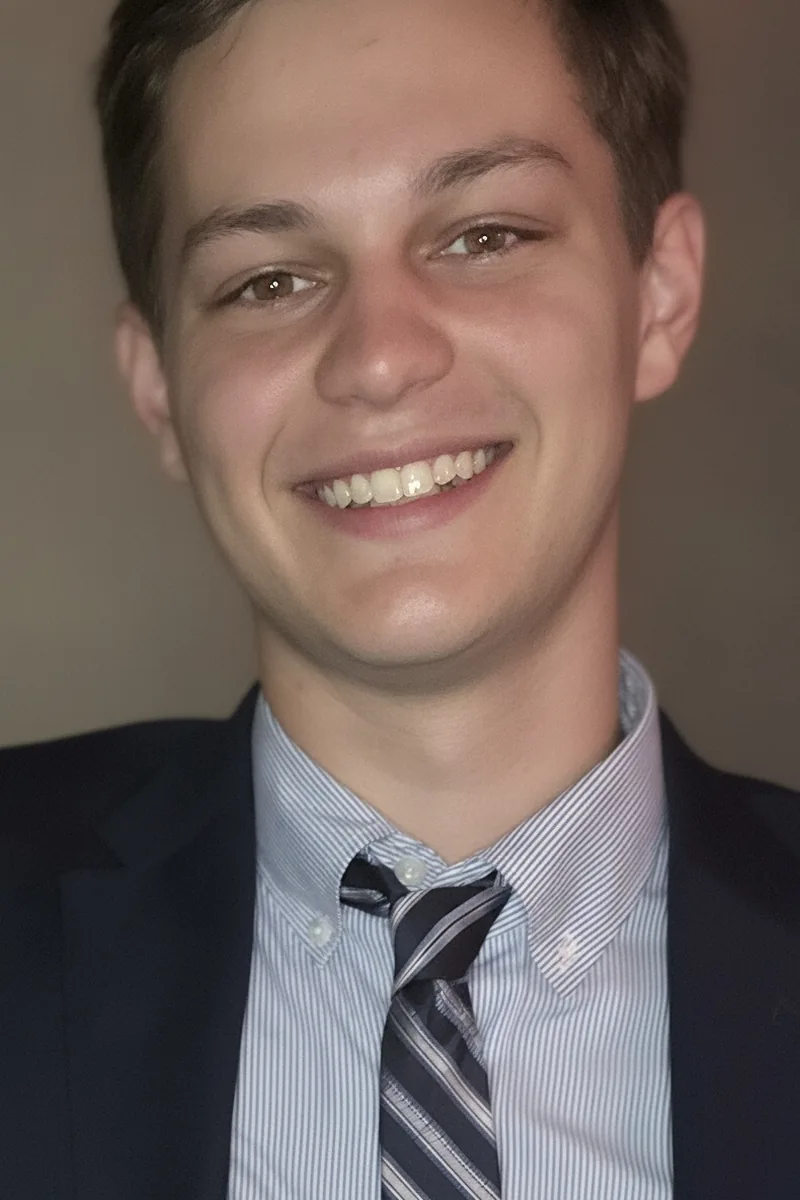
Most of Simon's tutoring lives in economics and algebra, so non-Euclidean geometry sits at the edge of his range — but his comfort with calculus and formal mathematical reasoning means he can tackle the core ideas of how curved surfaces break Euclidean rules. He's strongest at grounding abstract concepts like geodesics and alternative parallel postulates in concrete, step-by-step logic that keeps students from feeling lost in the abstraction.
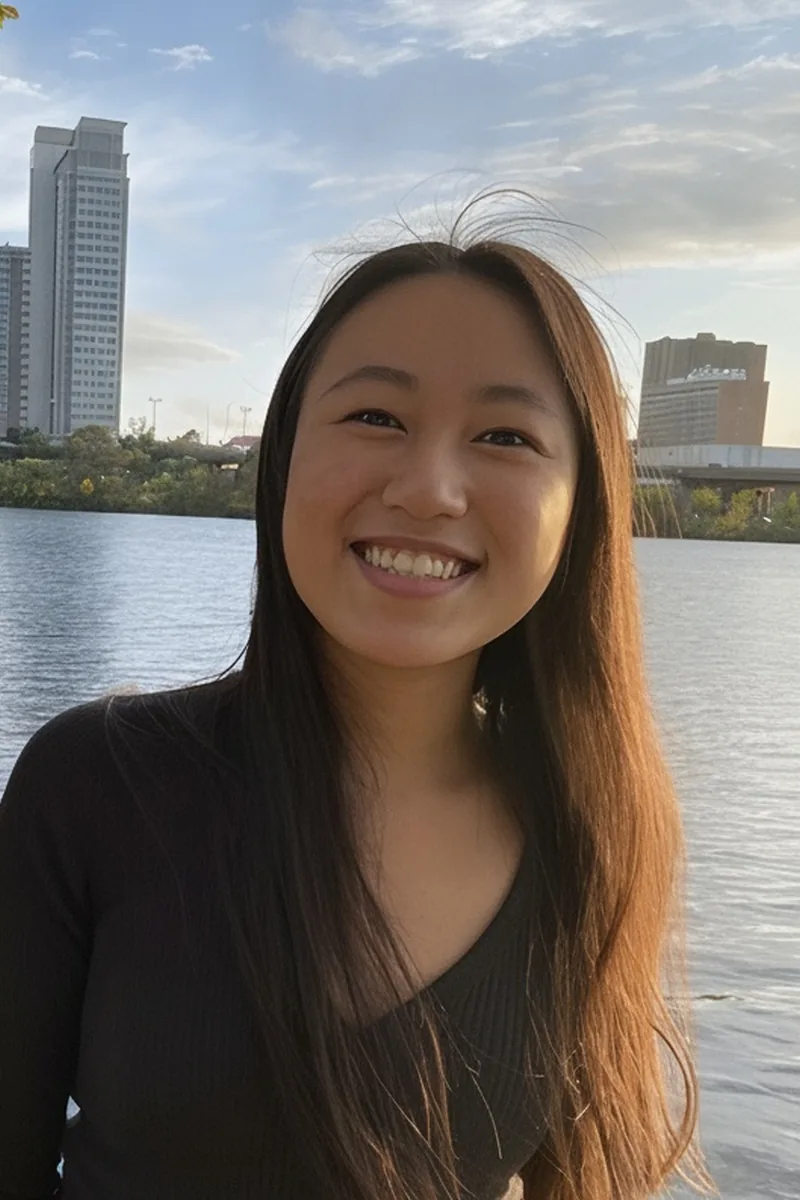
Yan's math teaching spans pre-algebra through calculus, so while non-Euclidean geometry isn't a daily subject for her, she understands how to walk students through the axiomatic shift — what happens when you drop Euclid's fifth postulate and watch familiar rules about parallel lines and angle sums unravel. Her curriculum design background means she builds explanations that move from concrete Euclidean comparisons into hyperbolic and spherical ideas step by step, keeping the abstraction grounded.
Firas's PhD in computer science involved the kind of mathematical formalism — working with abstract structures, axiom systems, and proofs — that translates directly to understanding how non-Euclidean geometries emerge when you alter foundational postulates. He teaches the subject by connecting models like the Poincaré disk and spherical geometry back to the computational and applied math contexts where curved-space reasoning actually matters, from machine learning on manifolds to algorithm design. Rated 5.0 by students.
Felix's math degree covers the real analysis and axiomatic reasoning that underpin non-Euclidean geometry — understanding why relaxing Euclid's fifth postulate creates entirely consistent alternatives isn't just memorization, it's learning to think structurally about what makes a geometry a geometry. He unpacks models like the hyperbolic plane by connecting them back to the rigorous proof techniques students already use in standard coursework, so the leap from flat to curved spaces feels logical rather than mystifying. Rated 5.0 by students.
Biomedical engineering and applied statistics both demand comfort with mathematical structures that don't behave the way introductory courses promise — and non-Euclidean geometry is where that tension becomes explicit. William's graduate-level math training means he can trace exactly how altering Euclid's fifth postulate produces hyperbolic and spherical spaces with their own internally consistent rules about parallels, angle sums, and curvature. He grounds each model in the kind of systematic, axiom-by-axiom reasoning that makes the jump from flat to curved geometry feel earned rather than arbitrary.
Joseph's math range covers pre-algebra through calculus, so while non-Euclidean geometry isn't his everyday subject, he has the algebraic and geometric fluency to dig into how tweaking Euclid's fifth postulate reshapes the rules students have trusted since grade school. His English and acting training also sharpened a knack for narrative explanation — he teaches the shift from flat to curved spaces as a story of 'what if,' making ideas like angle sums below 180° feel like discoveries rather than abstractions. Holds a 5.0 rating from students.
Earth and environmental engineering at Columbia means Shin regularly works with curved-surface models — mapping climate data onto a sphere, for instance, requires exactly the kind of geometric thinking where Euclid's flat-plane assumptions fall apart. He brings that applied perspective to teaching how geodesics, angle sums, and parallel behavior change once you move from flat to curved spaces, keeping the concepts tied to physical surfaces students can visualize. Rated 5.0 by students.
A PhD in applied mathematics means Samuel has spent serious time with the formal machinery behind curvature, geodesics, and metric spaces — exactly the tools needed to make sense of hyperbolic and elliptic geometries. He teaches non-Euclidean geometry by building up from where Euclid's fifth postulate breaks down, then tracing how that single change ripples through everything from triangle angle sums to the behavior of parallel lines. Rated 5.0 by students.
This isn't Christina's core subject area, but her broad math teaching range — from pre-algebra through calculus — means she can bridge the gap when students first encounter the idea that Euclid's parallel postulate isn't the only option. She breaks down how changing that single axiom produces hyperbolic and spherical worlds where familiar rules about angles and lines no longer apply, keeping the focus on building intuition rather than drowning in formalism.
I am listening to and learning about him or her as an individual. I can also discover what motivates the student during this conversation and plan for how to frame future tutoring sessions in terms of what the student already knows and enjoys.
Testimonials
Because the right Non-Euclidean Geometry tutor makes all the difference.
Average Session Rating – Based on 3.4M Learner Ratings
Top 20 Math Subjects


Top 20 Subjects
Frequently Asked Questions
Non-Euclidean geometry requires students to unlearn deeply ingrained Euclidean assumptions about space, lines, and angles—which can feel counterintuitive at first. Many students struggle with visualizing curved spaces like spherical or hyperbolic geometry, where familiar rules (like parallel lines never meeting) no longer apply. Another common challenge is transitioning from computational geometry to abstract, proof-based reasoning, where students must think conceptually rather than just applying formulas. Personalized tutoring helps students build mental models of these spaces and see how non-Euclidean concepts connect to real applications in physics, cosmology, and computer graphics.
Non-Euclidean geometry is highly conceptual, and many students need more than lecture-based learning to truly grasp why the axioms work differently. A tutor can work one-on-one to identify exactly where your understanding breaks down—whether it's visualizing hyperbolic surfaces, understanding geodesics, or following the logical flow of proofs. Tutors can also use interactive tools, diagrams, and real-world examples to make abstract ideas concrete. This personalized approach helps you build genuine comprehension rather than just memorizing theorems, which is essential for advanced math and its applications.
Proof-writing in non-Euclidean geometry requires both logical rigor and deep conceptual understanding of axioms and theorems that differ from Euclidean geometry. Many students struggle because they're not yet comfortable with the foundational differences in how parallel postulates and angle sums work in these systems. A tutor can break down the proof-writing process step-by-step, help you understand why each axiom matters, and show you how to construct valid arguments in spherical or hyperbolic space. Regular practice with feedback from an expert helps you develop the pattern recognition and logical thinking needed to write proofs independently.
Visualization is critical in non-Euclidean geometry because our brains are wired for Euclidean space. Effective approaches include using 2D models of spherical geometry (like working with geometry on a globe), understanding the Poincaré disk model for hyperbolic geometry, and using dynamic geometry software that lets you explore how shapes behave in different spaces. Many students benefit from physical manipulatives—like a sphere or stretchy fabric—to develop intuition before moving to abstract representations. Expert tutors know how to guide you through these visualization techniques and help you translate between different models, building the spatial intuition that makes proofs and problem-solving much more manageable.
Non-Euclidean geometry appears in different contexts depending on your educational path. In some high schools, it's introduced briefly in geometry or honors math courses to show that other valid mathematical systems exist. In college, it's often part of advanced courses like real analysis, differential geometry, or topology, where it's explored more rigorously. Some curricula emphasize the historical development (how mathematicians questioned the parallel postulate), while others focus on applications in physics and computer science. Varsity Tutors connects you with tutors who understand your specific curriculum and can align instruction with your course's approach and pacing, whether you're in a high school enrichment setting or a university-level mathematics program.
A strong non-Euclidean geometry tutor needs deep mathematical knowledge of multiple models and the ability to explain why these systems work differently from Euclidean geometry. Equally important is the skill to recognize conceptual gaps and adapt explanations—some students need visual and kinesthetic approaches, while others thrive with rigorous logical arguments. Great tutors also understand the emotional side of learning difficult, abstract material and can build confidence while challenging you to think deeper. They're skilled at asking questions that help you discover patterns yourself, rather than just showing you answers, which develops the problem-solving habits you need for advanced mathematics.
With personalized tutoring, you should expect to develop genuine conceptual understanding of how non-Euclidean systems differ from Euclidean geometry and why those differences matter mathematically and philosophically. You'll become confident reading and writing proofs in these systems, improve your ability to visualize abstract spaces, and see connections between non-Euclidean concepts and real applications. Beyond the subject itself, you'll strengthen your abstract mathematical thinking and proof-writing skills, which transfer to other advanced math courses. Success looks like moving from confusion to clarity—being able to explain concepts in your own words, tackle unfamiliar problems with confidence, and genuinely enjoy the elegance of these alternative geometric systems.
Let’s find your perfect tutor
Answer a few quick questions. We’ll recommend the right plan and match you with a top 5% tutor.