Award-Winning AP Calculus BC Tutors
serving Minneapolis, MN
AP Calculus BC
Tutors in Minneapolis
Private 1-on-1 tutoring, weekly live classes for academic support, test prep & enrichment, practice tests and diagnostics, and more to elevate grades and test scores.
Based on 3.4M Learner Ratings
UniversitiesSchools & Universities
DeliveredHours Delivered
ProficiencyGrowth in Proficiency
Who needs tutoring?
No obligation. Takes ~1 minute.

When BC Calculus students hit convergence tests or polar area integrals, the real issue is often a shaky grasp of limits or integration fundamentals from AB — Broden's computer science training makes him especially good at diagnosing those logical gaps, since programming demands the same step-by-step precision. He walks through series and parametric problems the way he'd debug code: isolating exactly where the reasoning breaks down and rebuilding from there. Holds a 5.0 rating.
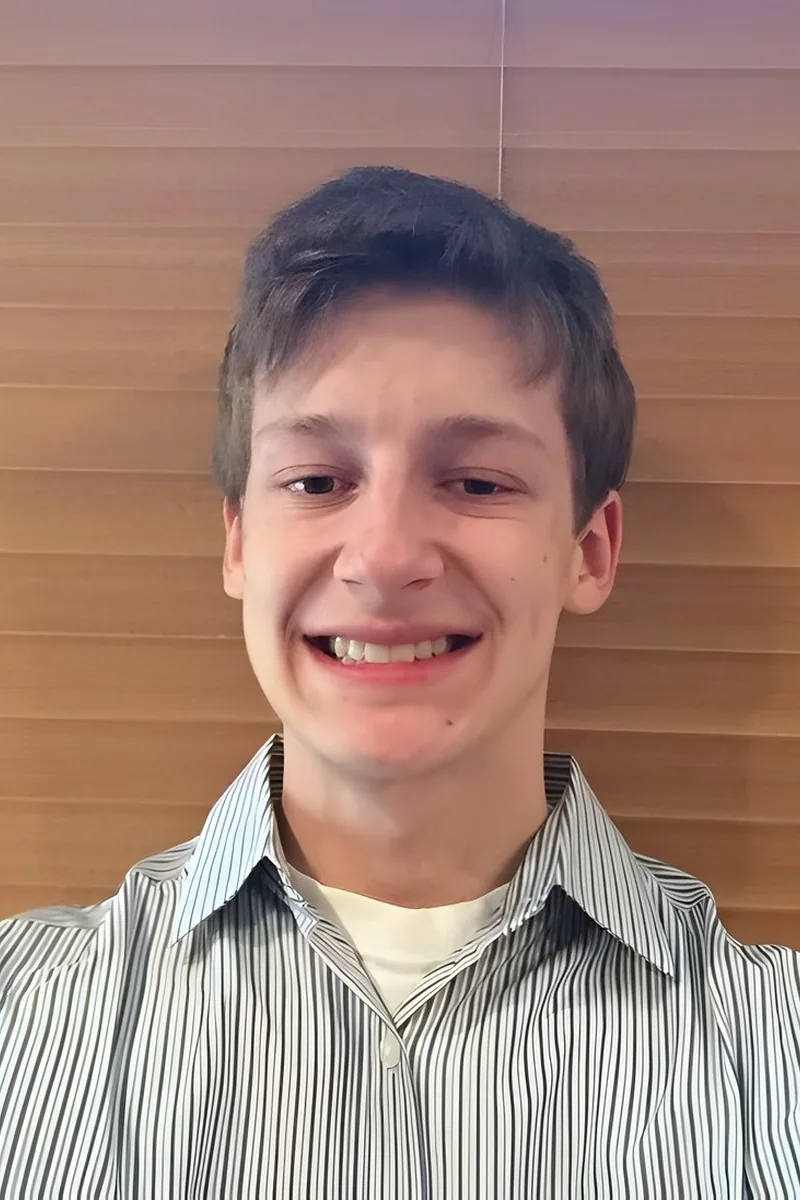
Most BC students don't struggle with the new topics themselves — they struggle because shaky AB foundations buckle under the weight of series, parametric curves, and advanced integration. Cory's math degree and years of tutoring at every level from pre-algebra up mean he can spot exactly where that underlying gap lives and rebuild it while keeping pace with BC material. Rated 5.0 by students.
Most BC students hit a wall not because the new material is impossibly hard, but because their AB foundations have quiet gaps that only surface once series and parametric curves enter the picture. Eric, a computer science major at WashU, approaches calculus the way he approaches debugging code — tracing errors back to their source, whether that's a shaky understanding of limits feeding into convergence tests or weak integration skills undermining Taylor polynomial construction. His logical, step-by-step problem-solving style translates naturally into breaking down BC's trickiest topics.
Currently studying Mathematics Education at Bethel University, Michelle knows the BC curriculum from both sides — as a student who earned a 34 ACT and as someone training to teach the underlying concepts to grades 5-12. She breaks down the leap from AB material into BC territory by treating topics like series convergence and integration techniques as logical extensions of limits and derivatives, not as a separate toolkit students have to memorize cold. Five semesters as a teaching assistant have sharpened her ability to spot exactly where a student's reasoning goes sideways mid-problem.
An actuarial science specialization means Ingy's entire degree was built on the calculus that BC tests hardest — series convergence for risk modeling, integration techniques for probability distributions, and differential equations for financial forecasting. She's particularly sharp at tracing where a student's confusion with, say, a Lagrange error bound or a polar area setup actually stems from an earlier AB gap that never got addressed. Rated 4.9 by students.
Scoring a 36 on the ACT and earning a physics degree means Ella didn't just pass through BC Calculus — she kept using it. Series expansions to model physical systems, parametric equations describing projectile paths, and improper integrals in energy calculations were daily tools in her coursework, so she teaches convergence tests and Taylor polynomial construction as ideas with real weight behind them. Rated 5.0 by students.
BC Calculus piles on series convergence, parametric equations, and polar coordinates on top of an already demanding AB curriculum. Julie's Princeton training in statistics and machine learning means she regularly uses advanced calculus as a tool, giving her an intuitive sense for which techniques apply where. She tackles integration strategies and Taylor series by connecting each method back to the core idea it extends.
BC Calculus throws students into series convergence tests, parametric equations, and polar coordinates — topics that feel disconnected unless someone ties them back to the core ideas of AB. Dylan's physics major at Vanderbilt means he uses calculus daily and can show exactly how Taylor series or integration by parts behave visually, not just symbolically. He turns abstract series into something students can sketch, interpret, and reason through on exam day.
Until age 16, Viktor saw math as blind formula memorization — then a series of teachers at the right moment revealed the deeper logic underneath, and he ended up majoring in math at UChicago, where rigorous proof-based coursework made concepts like convergence and infinite series feel inevitable rather than arbitrary. That shift from "memorize the ratio test" to "understand why it works" is exactly what he brings to BC Calculus, especially when students hit the wall where AB intuition stops and formal reasoning about Taylor polynomials and error bounds needs to take over. His 1600 SAT and current CS master's work at NYU keep that analytical edge sharp.
Scoring a 36 on the ACT while majoring in chemistry at MIT means Nicholas lives in the overlap where rigorous math meets scientific application — and BC Calculus sits right at that intersection. He's especially good at breaking down series convergence and integration techniques by grounding them in the kind of approximation problems he encounters in physical chemistry coursework, so the logic behind a ratio test or a Taylor expansion feels earned rather than arbitrary. Rated 5.0 by students.
Biomedical engineering at Yale means Jonathan lives in the calculus that comes after most students stop — modeling biological systems with differential equations, approximating nonlinear tissue behavior with series expansions, running convergence analysis on numerical simulations. That daily exposure makes him especially effective at teaching the logic behind the ratio and integral tests, because he's seen firsthand what happens when you pick the wrong one. Holds a 5.0 rating.
Studying applied physics at Cornell, Ritesh encounters BC-level calculus constantly — parametric motion in mechanics, series approximations in wave theory, integration techniques in electromagnetism — so he teaches these topics as interconnected tools rather than isolated chapters. He's especially sharp at walking through the logic of convergence tests, where students often memorize steps without understanding which test to reach for and why. His 1440 SAT and 4.6 rating speak to that clarity.
Studying both mathematics and computer science at Rice, William is taking the courses that treat BC topics like series convergence and parametric integration as foundational tools rather than standalone exam material. His 1540 SAT reflects the kind of precise, structured reasoning he brings to breaking down the jump from AB to BC — especially when Taylor polynomial construction or convergence tests start feeling like they came out of nowhere.
Notre Dame's Science-Computing program front-loads calculus-heavy coursework — Aidan moved through multivariable calc and differential equations while simultaneously applying integration techniques and series in his science courses, so BC topics like Taylor polynomials and convergence tests landed as tools he actually needed, not just exam hurdles. He's especially sharp at tracing where a BC struggle — say, setting up an integral in polar coordinates or choosing the right convergence test — traces back to an AB concept that needs reinforcing. His 35 ACT and premed science background keep explanations precise and grounded.
Having TA'd Calculus I and II at Rice while pursuing a graduate degree in computational and applied mathematics, Sakibul knows exactly where the AB-to-BC transition trips students up — particularly when series convergence and parametric differentiation demand a sharper kind of reasoning than anything before. He breaks down topics like interval of convergence arguments and integration techniques by rebuilding the logic from scratch rather than handing over shortcuts. His applied math background means he treats Taylor approximations and error bounds as precision tools, not abstract busywork.
I am a graduate of Cornell University's College of Arts and Sciences. I received my Bachelor of Arts in Chemistry with Distinction in 2015. Since graduation, I was a physics/chemistry teacher and soccer coach at a private school in Virginia for a year, where I led the soccer team to an undefeated season. Before teaching and coaching professionally, I was a Teaching Assistant for the Cornell Math and Physics Departments, where I taught many subjects including calculus, mechanics, electromagnetism. Throughout my time at Cornell and as a teacher, I tutored subjects ranging from the SAT to AP Physics and Algebra II, which is where my true talents lie: in small group or one-on-one settings where I can give students the full attention they deserve and tailor my approach specifically to their learning styles. This is why I am now pursuing tutoring as a part-time occupation at Varsity Tutors. I embrace teaching all math and science subjects, especially physics and calculus, at both the college and high school level and will go above and beyond to make sure all of my students succeed, according to their definition of success. In my spare time, I enjoy playing league soccer, basketball, tennis and guitar, and also like to travel and see as much of the world as I can.
Series convergence tests, parametric equations, polar curves — BC Calculus piles on concepts fast, and falling behind on one unit can cascade through the rest of the course. Ethan breaks each new topic back to its AB foundation before building upward, so students see Taylor series and integration techniques as extensions of ideas they already own rather than entirely new material.
BC Calculus layers convergence tests, parametric equations, and polar curves on top of an already demanding AB foundation, and keeping all of it organized is half the battle. Tessa's approach is to unpack each new topic by tying it back to core ideas students already understand — showing, for instance, how Taylor series are really just an extension of local linearity. She's a math major at Yale with a 4.9 client rating.
Testimonials
Because the right AP Calculus BC tutor makes all the difference.
Average Session Rating – Based on 3.4M Learner Ratings
Practice AP Calculus BC
Free practice tests, flashcards, and AI tutoring for AP Calculus BC
Nearby AP Calculus BC Tutors
Other Minneapolis Tutors
Related Math Tutors in Minneapolis
Frequently Asked Questions
AP Calculus BC covers all topics from AP Calculus AB plus additional material including parametric equations, polar coordinates, and infinite series. The course focuses on limits, derivatives, integrals, differential equations, and applications of calculus. For students in Minneapolis preparing for the exam, understanding how these topics build on each other is essential for success on test day.
Score improvement depends on your starting point and how consistently you apply the strategies you learn. Students who work with tutors typically see gains of 1-3 points on the AP scale (out of 5), though some see larger improvements by addressing specific weak areas like integration techniques or series convergence. The key is identifying which topics are holding you back and practicing strategically with targeted feedback.
Many students struggle with infinite series, parametric and polar equations, and integration by parts—topics that require both conceptual understanding and procedural fluency. Additionally, the free-response section demands clear communication of your mathematical reasoning, which is different from multiple-choice. A tutor can help you master these concepts and develop the writing skills needed to earn full credit on the exam.
The exam has two sections: multiple-choice (105 minutes) and free-response (90 minutes). A smart strategy includes tackling easier multiple-choice questions first to build confidence, then returning to harder ones. For free-response, show all your work clearly—partial credit is available even if your final answer is wrong. Tutors can help you practice pacing, develop a question-selection strategy, and learn how to communicate your solutions effectively.
Practice tests are critical—they help you identify weak areas, build test-taking stamina, and get comfortable with the exam format and timing. Research on retrieval practice shows that testing yourself repeatedly strengthens retention and reveals gaps in understanding. Working through full-length practice exams under timed conditions with a tutor allows you to receive feedback on both your problem-solving approach and how you communicate your reasoning.
Look for tutors with strong calculus backgrounds, ideally with experience teaching or tutoring AP Calculus BC specifically. They should understand the College Board's scoring rubric for free-response questions and be able to help you develop both conceptual understanding and test-taking strategies. Varsity Tutors connects you with expert tutors in Minneapolis who have the subject knowledge and teaching experience to help you succeed.
If you're already in an AP Calculus BC course, consistent weekly tutoring sessions combined with regular practice outside of tutoring is ideal. For intensive exam prep in the weeks leading up to the test, many students benefit from 2-3 sessions per week focused on weak areas and full-length practice tests. A tutor can help you create a personalized study plan based on your current level and target score.
In your first session, a tutor will assess your current understanding of calculus concepts, identify which topics need the most work, and learn about your goals—whether that's earning a 3, 4, or 5 on the exam. They'll also discuss your learning style and preferences so they can tailor instruction to work best for you. From there, you'll develop a focused plan to address gaps and build confidence before test day.
Let’s find your perfect tutor
Answer a few quick questions. We’ll recommend the right plan and match you with a top 5% tutor.