Award-Winning Statistics Tutors
serving Minneapolis, MN
Statistics
Tutors in Minneapolis
Private 1-on-1 tutoring, weekly live classes for academic support, test prep & enrichment, practice tests and diagnostics, and more to elevate grades and test scores.
Based on 3.4M Learner Ratings
UniversitiesSchools & Universities
DeliveredHours Delivered
ProficiencyGrowth in Proficiency
Who needs tutoring?
No obligation. Takes ~1 minute.
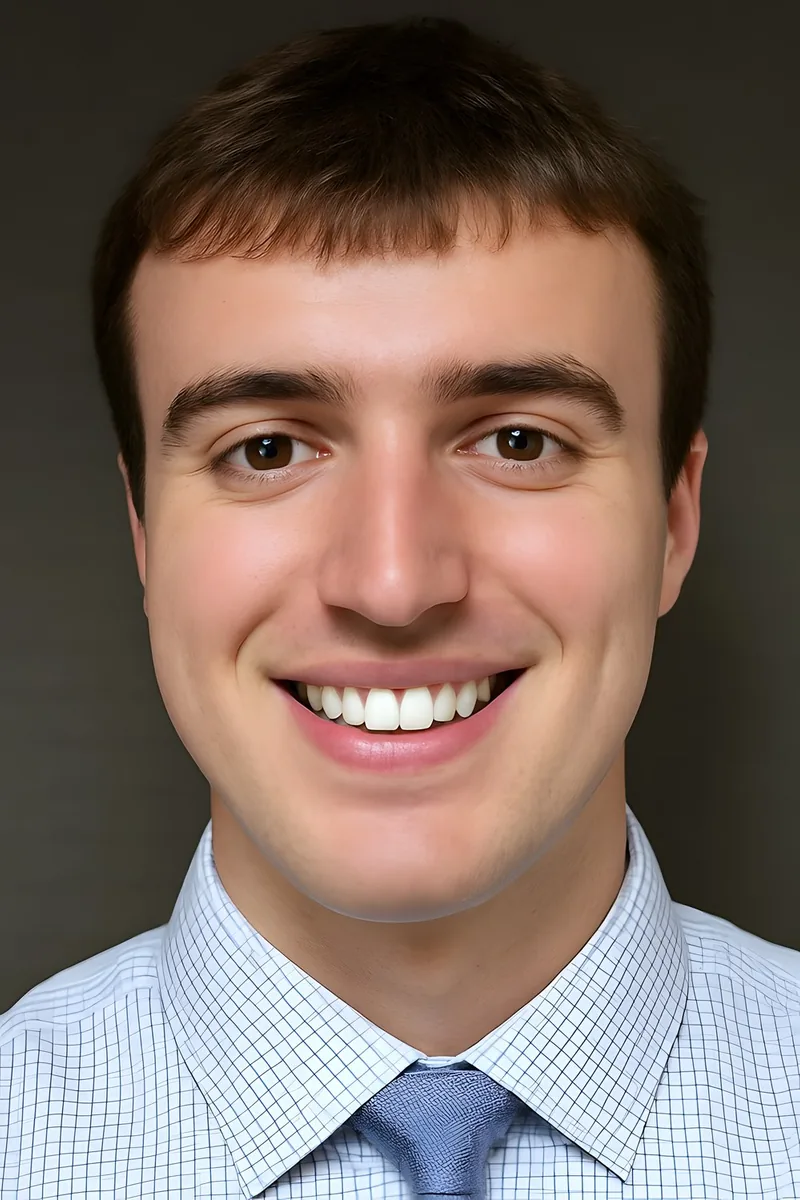
Econometrics training at Carleton College gave Reed a daily working relationship with probability distributions, hypothesis testing, regression analysis, and confidence intervals — statistics wasn't just a course for him, it was the backbone of his degree. He unpacks concepts like p-values and standard deviation using real datasets and plain language, so the logic behind each formula actually registers.
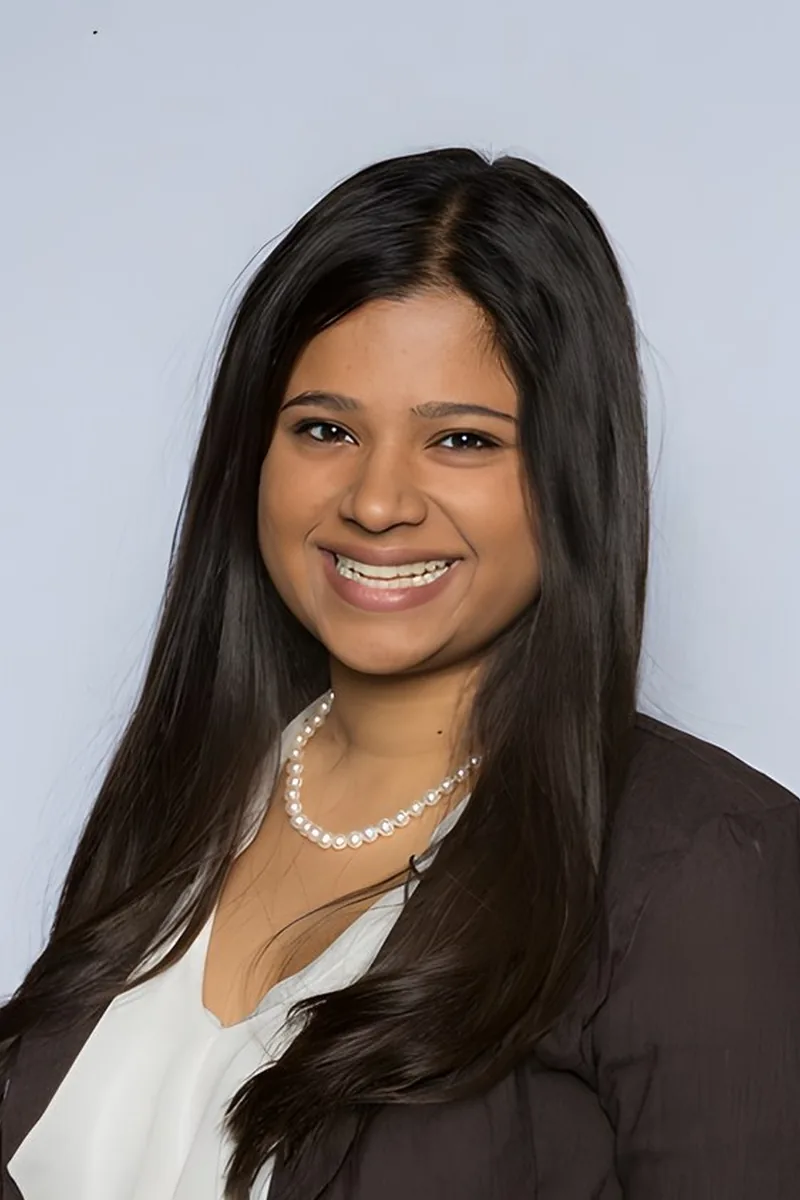
Every genetics course leans heavily on statistics — chi-square tests, probability distributions, Hardy-Weinberg calculations — so Jaya doesn't just know the formulas, she's used them to interpret real experimental data. That experience makes her particularly effective at teaching students how to set up hypothesis tests and understand what p-values actually mean. She approaches stats as a reasoning tool rather than a collection of procedures to memorize.
Biomedical engineering runs on statistics — from analyzing clinical trial data to fitting regression models to experimental results — so Emily applies these tools constantly in her own coursework. She unpacks concepts like probability distributions, standard error, and p-values by tying them to concrete scenarios rather than leaving them as abstract formulas. She holds a 5.0 rating from students.
David's concentration in Economics at Pomona means he uses statistics constantly — regression analysis, probability distributions, and hypothesis testing are tools he applies to real policy questions, not just textbook exercises. He teaches students to interpret what a p-value or confidence interval actually tells you, which is the skill that separates surface-level answers from genuine understanding.
Cognitive psychology research runs on statistics — t-tests, ANOVAs, regression models, effect sizes — and Danelle has used all of them extensively throughout her PhD work. She teaches statistical reasoning by connecting each test to the real question it answers, so concepts like p-values and confidence intervals actually make sense instead of feeling like arbitrary formulas.
Understanding why a confidence interval narrows with a larger sample, or when a t-test applies instead of a z-test, requires more than plugging into formulas. Ella approaches statistics by making sure students can interpret what their calculations mean in context — a skill her physics training reinforced through years of analyzing experimental data and quantifying uncertainty.
Understanding statistics means learning to ask the right questions about data before running any test: Is the sample random? What's the shape of the distribution? Could this result have happened by chance? Ethan's policy background gave him years of practice interrogating datasets and translating statistical output into plain-language conclusions, a skill he now brings directly to topics like hypothesis testing and regression analysis.
Emily's computational biology concentration at Cornell is essentially applied statistics — she uses probability distributions, confidence intervals, and regression analysis to interpret biological data every week. That hands-on context lets her explain statistical reasoning through concrete examples rather than abstract formulas.
Understanding when to use a standard deviation versus an interquartile range — or why a skewed distribution changes your entire analysis — requires more than formula memorization. Vinson approaches statistics through data interpretation first, walking through probability distributions, hypothesis testing, and regression with an emphasis on what the numbers actually tell you. He's studying computational math at Rice, where statistical reasoning is woven into his daily coursework.
Probability distributions, hypothesis testing, and regression analysis are central to both engineering and business — and Caroline has graduate-level training in both. Her mechanical engineering M.S. from WashU built her statistical modeling skills, while her current MBA at MIT Sloan sharpens how she interprets data for real-world decisions. She teaches the reasoning behind each method so formulas stop feeling like black boxes.
Interpreting p-values, choosing the right hypothesis test, and knowing when a confidence interval actually tells you something useful — these are the concepts that separate students who understand statistics from those just plugging into calculators. Zachary brings a researcher's perspective from his biochemistry and biophysics training, where statistical analysis was built into every experiment. Rated 5.0 by students.
A PhD in economics at Yale means Anthony doesn't just teach statistics — he relies on it daily, from econometric modeling to designing empirical studies that require careful handling of inference, sampling, and regression. His dual undergraduate background in physics and math gives him an unusual ability to trace statistical methods back to their mathematical roots, making concepts like maximum likelihood estimation or the central limit theorem genuinely intuitive. Rated 5.0 by students.
Understanding when to use a t-test versus a z-test, or why a sampling distribution behaves the way it does, requires more than formula sheets — it takes genuine statistical intuition. Brian built that intuition through his economics coursework at Caltech, where statistical analysis was a daily tool, and he walks students through each concept with concrete data examples.
As an economics major at Yale, Conor uses statistical methods constantly — regression analysis, probability distributions, hypothesis testing — so he teaches statistics as a practical toolkit rather than an abstract set of formulas. He's especially sharp at walking through the logic behind concepts like p-values and confidence intervals, which tend to confuse students who try to memorize procedures without understanding what the numbers actually mean.
A PhD statistician who also holds a biomedical engineering degree, Sam teaches introductory and intermediate statistics with an unusual amount of real-world context. Whether the topic is hypothesis testing, confidence intervals, or regression, he unpacks the logic behind each method so students can interpret results critically, not just run calculations.
Probability distributions and hypothesis testing trip students up when they try to memorize formulas without understanding what a p-value actually represents or why a sample size matters. Abismael connects statistical reasoning back to real engineering applications — quality control, experimental design, process variation — which makes abstract concepts like confidence intervals tangible. He's the kind of tutor who will quiz you with problems you haven't seen before, because that's what exams do.
Probability distributions, hypothesis testing, and regression analysis all require a kind of structured thinking that Florence sharpened through her computer science degree at Duke. She teaches statistics by grounding each concept in real data scenarios — building intuition for what a p-value actually means before diving into formulas. Her 5.0 client rating speaks to how well that approach lands.
Between her sociology research in undergrad and her MBA coursework, Krupa has run enough regressions, hypothesis tests, and probability models to know exactly where students get tripped up. She tackles the conceptual side — why you'd choose a t-test over a z-test, what a p-value actually means — so the formulas stop feeling arbitrary. Her 4.9 rating speaks to how clearly she communicates these ideas.
Testimonials
Because the right Statistics tutor makes all the difference.
Average Session Rating – Based on 3.4M Learner Ratings
Practice Statistics
Free practice tests, flashcards, and AI tutoring for Statistics
Nearby Statistics Tutors
Other Minneapolis Tutors
Related Math Tutors in Minneapolis
Frequently Asked Questions
Statistics is taught differently depending on whether your school uses a traditional AP Statistics curriculum, integrated math pathway, or introductory college-level approach. Tutors connect with students to understand their specific textbook, course structure, and teacher's emphasis—whether that's probability theory, data analysis, hypothesis testing, or statistical software. This ensures tutoring reinforces exactly what's being taught in class rather than introducing conflicting methods.
Statistics word problems require students to translate real-world scenarios into mathematical language, identify which statistical test or concept applies, and interpret results in context—that's three distinct skills. Many students can calculate correctly but struggle to determine *what* to calculate or explain *why* their answer makes sense. Personalized tutoring helps students develop a systematic approach to breaking down problems, recognizing patterns across different problem types, and building confidence in their interpretation of results.
Memorizing a formula for standard deviation or correlation doesn't help students understand *why* these measures matter or *when* to use them. True conceptual understanding means seeing how data distributions connect to probability, recognizing that correlation isn't causation, and understanding sampling variability. Tutors help students move beyond plug-and-chug calculation to see the bigger picture—the patterns, assumptions, and real-world implications behind each concept.
In Statistics, showing work is critical because it demonstrates your reasoning, not just your final answer. Teachers and AP graders want to see: the problem setup, which test or method you chose and why, the calculations or software output, and your interpretation in context. Tutors help students develop the habit of explaining each step clearly, which catches errors early and earns partial credit even if the final answer is wrong—especially valuable on AP exams where communication is heavily weighted.
Statistics anxiety often stems from feeling overwhelmed by new concepts, unfamiliar terminology, or the jump from algebra to probabilistic thinking. One-on-one instruction lets tutors slow down, use concrete examples, and celebrate small wins—like finally understanding why we divide by n-1 in sample standard deviation or seeing how a confidence interval actually works. Regular practice with immediate feedback and personalized encouragement transforms Statistics from intimidating to manageable.
Students need to create accurate graphs (histograms, boxplots, scatterplots, normal curves) *and* interpret what they show about distributions, outliers, relationships, and variability. Many students can plot points but miss what the shape tells them. Tutors help students develop a visual intuition—recognizing skewness, identifying clusters, spotting unusual patterns—and practice translating between graphs and numerical summaries like mean, median, and standard deviation.
Hypothesis testing is notoriously counterintuitive: students often misunderstand what a p-value actually represents or confuse the null and alternative hypotheses. Tutors break this down step-by-step, using simulations and real data to show why we test the null hypothesis, what probability we're actually calculating, and how to interpret results without over-claiming. This conceptual clarity makes the entire framework—from assumptions to conclusions—make sense.
In your first session, a tutor will ask about your course (AP Statistics, intro college stats, or other), current topics, specific challenges, and upcoming assessments. You might work through a problem together to identify where understanding breaks down—whether it's the concept, the calculation, or the interpretation. This conversation helps the tutor create a personalized plan focused on your biggest gaps and goals, whether that's improving test scores, understanding difficult units, or building overall confidence.
Let’s find your perfect tutor
Answer a few quick questions. We’ll recommend the right plan and match you with a top 5% tutor.