Award-Winning Physical Chemistry Tutors
serving Raleigh, NC
Physical Chemistry
Tutors in Raleigh
Private 1-on-1 tutoring, weekly live classes for academic support, test prep & enrichment, practice tests and diagnostics, and more to elevate grades and test scores.
Based on 3.4M Learner Ratings
UniversitiesSchools & Universities
DeliveredHours Delivered
ProficiencyGrowth in Proficiency
Who needs tutoring?
No obligation. Takes ~1 minute.
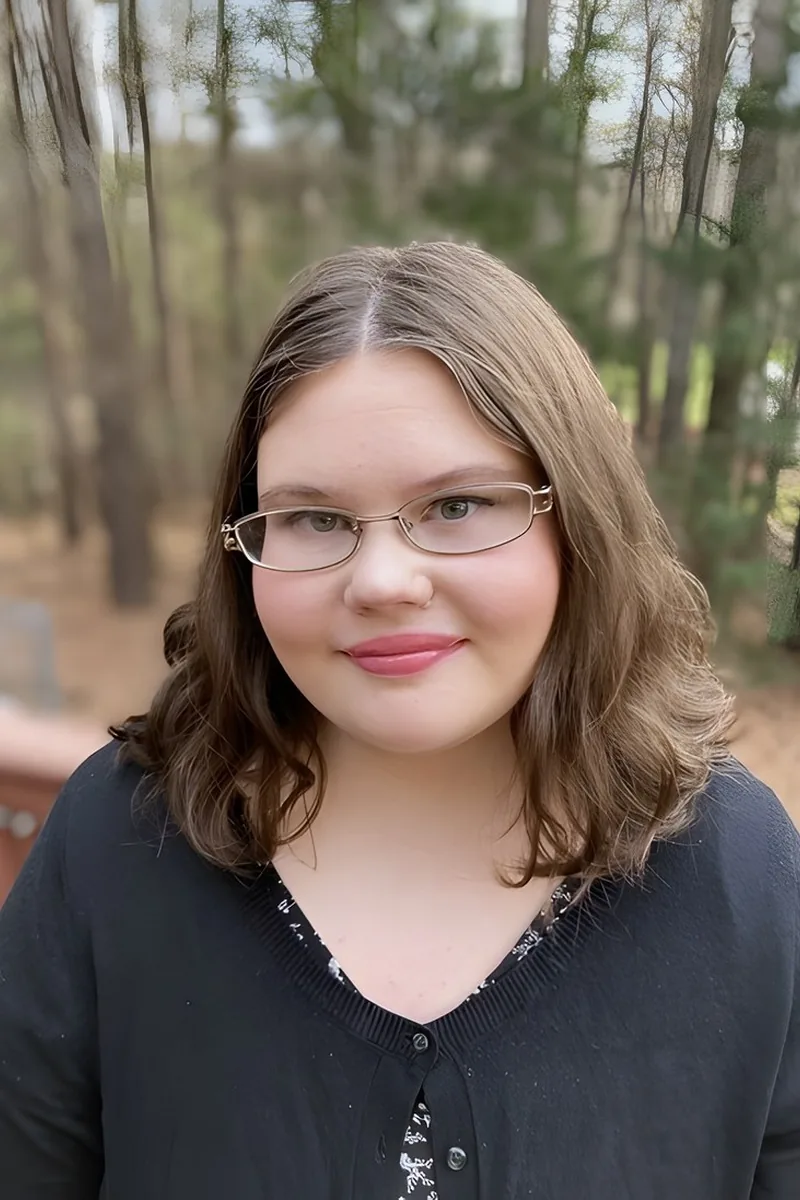
Studying chemistry as an undergrad means Amanda is taking p-chem right now — or just finished it — which gives her an unusually clear memory of exactly where the conceptual gaps hit hardest, whether it's the jump from ideal gas derivations to real thermodynamic cycles or the first encounter with quantum mechanical operators. She pairs that fresh perspective with strong calculus chops honed through coursework up to Calc BC and engineering, so she can isolate whether a student's stuck on the chemistry or the math underneath it.
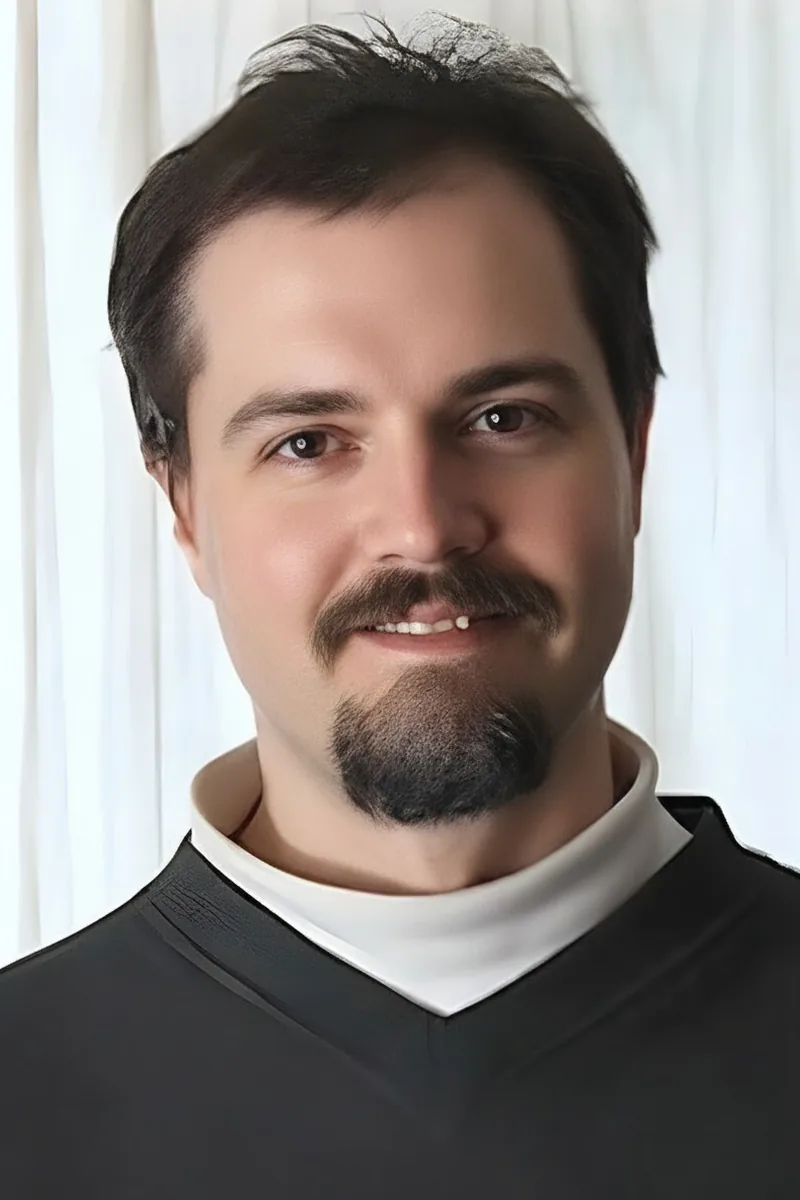
A PhD in biophysical chemistry means Tom didn't just survive p-chem — he built a research career on it, working at the intersection of thermodynamics, quantum mechanics, and molecular behavior where the math has to be airtight. He treats the subject like a language students need to actively speak: drilling derivations and problem sets until manipulating a Maxwell relation or setting up a partition function becomes fluent rather than formulaic.
Kirby's biochemistry degree at Michigan meant grinding through the thermodynamics and kinetics that sit at the heart of p-chem — Gibbs free energy calculations, equilibrium derivations, and the statistical mechanics of molecular systems were baked into her upper-level coursework. She breaks down the calculus-heavy formalism by keeping each variable tied to the chemical reality it represents, so a daunting derivation like a Clausius-Clapeyron equation reads as a description of phase behavior rather than an abstract math exercise. Rated 4.9 by students.
I am a public school teacher (Chemistry and Living Environment) but can tutor most sciences. I truly believe in differentiated learning and once I know the learning style of a student, I tailor my teaching style for optimum time usage. I love to utilize stories from my real life experiences in labs to help students understand the implications of their science education.
A PhD in chemistry means Justin didn't just pass p-chem — he lived in its formalism for years, from quantum mechanical models to statistical thermodynamics, and then kept using it through doctoral research. That depth shows when he teaches: he can trace a concept like chemical potential or a Maxwell relation back to the physical picture driving the math, catching the exact step where a student's understanding breaks down. Rated 5.0 by students.
Medical school at Tufts demands fluency in the thermodynamics and kinetics that p-chem students dread — Eric works through Gibbs free energy calculations, entropy-driven processes, and rate equations daily in a clinical science context, which keeps the material grounded rather than purely abstract. His economics background also sharpens the kind of quantitative modeling and equilibrium thinking that translates surprisingly well to topics like chemical potential and phase diagrams.
Studying biochemistry and cell biology at Rice means Sugi already had to internalize the thermodynamic and kinetic principles that drive cellular processes — free energy calculations for metabolic reactions, equilibrium constants governing binding events — before tackling them in their pure mathematical form. She unpacks p-chem derivations by linking each variable back to the molecular behavior it quantifies, turning something like a chemical potential expression into a description of what molecules are actually doing at a phase boundary. Rated 5.0 by students.
Katherine's broad math and science background — spanning calculus, thermodynamics, and physics — means she's comfortable with the multivariable calculus and differential equations that make p-chem derivations so dense. She takes apart concepts like Maxwell relations and chemical potential by slowing down at the exact algebraic step where the physical intuition tends to disappear. Rated 5.0 by students.
Two biomedical engineering degrees mean Allyson has been doing the calculus-heavy thermodynamics and kinetics work that p-chem formalizes — modeling energy transfer in biological systems, working through rate equations for physiological processes — since undergrad. She zeroes in on the specific mathematical step where a derivation goes from followable to opaque, whether that's a tricky partial derivative in a Maxwell relation or the statistical reasoning inside a Boltzmann distribution. Rated 4.9 by students.
Enric holds a PhD in Chemistry, which means p-chem wasn't just a course requirement — it was the foundation his entire research career was built on, from quantum mechanical modeling to thermodynamic analysis at the graduate level. He teaches the subject by slowing down at the exact calculus step where a derivation goes from followable to opaque, rebuilding the physical reasoning behind each manipulation before moving forward. Rated 5.0 by students.
This is Jacob's home turf. He earned his Ph.D. in Physical Chemistry from UC Berkeley and now conducts research at Northwestern, so topics like quantum mechanics, statistical thermodynamics, and spectroscopy are part of his everyday work. He walks students through the math-heavy derivations that make p-chem notoriously difficult, connecting each equation back to the physical picture it describes.
Medical school at the Medical College of Wisconsin means Abrahim encounters p-chem's core concepts daily — reaction kinetics in pharmacology, thermodynamic energy balances in physiology, and the quantum mechanical principles behind spectroscopic diagnostics. His UCLA biology degree and 34 ACT demonstrate the mathematical fluency needed to work through derivations involving state functions, equilibrium constants, and entropy calculations without losing sight of what the chemistry actually describes. Rated 5.0 by students.
Testimonials
Because the right Physical Chemistry tutor makes all the difference.
Average Session Rating – Based on 3.4M Learner Ratings
Nearby Physical Chemistry Tutors
Other Raleigh Tutors
Related Science Tutors in Raleigh
Frequently Asked Questions
During your first session, a tutor will assess your current understanding of key physical chemistry concepts—like thermodynamics, kinetics, and equilibrium—and identify specific areas where you need support. They'll discuss your learning goals, whether that's improving exam performance or building a stronger foundation for advanced coursework, and create a personalized plan tailored to your pace and learning style.
Physical chemistry involves visualizing molecular behavior, energy diagrams, and quantum mechanical principles that aren't always intuitive. Expert tutors use diagrams, molecular models, worked examples, and real-world applications to make abstract ideas concrete—helping you understand why reactions occur and how energy changes, rather than just memorizing formulas.
Physical chemistry requires strong math skills—unit conversions, calculus, logarithms, and problem-solving—and many students find this challenging. Tutors can break down complex calculations step-by-step, help you master unit analysis, and teach you how to set up equations correctly so you understand the math behind the chemistry, not just how to plug numbers in.
Absolutely. Many students struggle to see how lab experiments relate to theoretical concepts like enthalpy, entropy, or reaction rates. Tutors can help you understand what you're observing in the lab, interpret data, and connect experimental results back to the underlying physical chemistry principles—strengthening both your conceptual understanding and your ability to think like a scientist.
That depends on your current understanding and the exam scope, but starting tutoring 4-6 weeks before an exam gives you solid time to build foundational understanding, practice problem-solving, and refine your approach. Consistent, focused sessions are more effective than cramming—tutors help you identify weak spots early and address them systematically.
Yes. Varsity Tutors connects you with tutors who understand the physical chemistry courses taught across Raleigh's 17 school districts and local universities, whether you're in AP Chemistry, honors physical chemistry, or college-level coursework. They're familiar with the topics, pacing, and expectations you'll encounter.
Physical chemistry is fundamentally about understanding how and why matter behaves the way it does. When you memorize formulas without understanding, you can't adapt to new problems or apply concepts to unfamiliar situations. Tutors focus on building true comprehension—helping you understand the principles behind equations so you can solve any problem that comes your way, not just ones you've seen before.
Look for tutors with strong backgrounds in chemistry and mathematics—ideally with experience teaching or tutoring physical chemistry specifically. They should be able to explain concepts clearly, work through problems methodically, and connect theory to real-world applications. When you connect with Varsity Tutors, you'll be matched with someone qualified to teach at your level.
Let’s find your perfect tutor
Answer a few quick questions. We’ll recommend the right plan and match you with a top 5% tutor.