Award-Winning General Biology
Tutors
General Biology
Tutors
Private 1-on-1 tutoring, weekly live classes for academic support, test prep & enrichment, practice tests and diagnostics, and more to elevate grades and test scores.
Based on 3.4M Learner Ratings
UniversitiesSchools & Universities
DeliveredHours Delivered
ProficiencyGrowth in Proficiency
Who needs tutoring?
No obligation. Takes ~1 minute.

Li's background spans both speech and hearing science and medical doctoral work, which means she understands biological systems from the cellular level up through complex organ function — especially useful when general biology hits topics like neural signaling, sensory physiology, or homeostatic feedback loops. Her anatomy and microbiology teaching experience lets her connect the dots between units that often feel disconnected, like linking membrane transport in a cell biology chapter to how pathogens invade host tissue in an ecology unit.
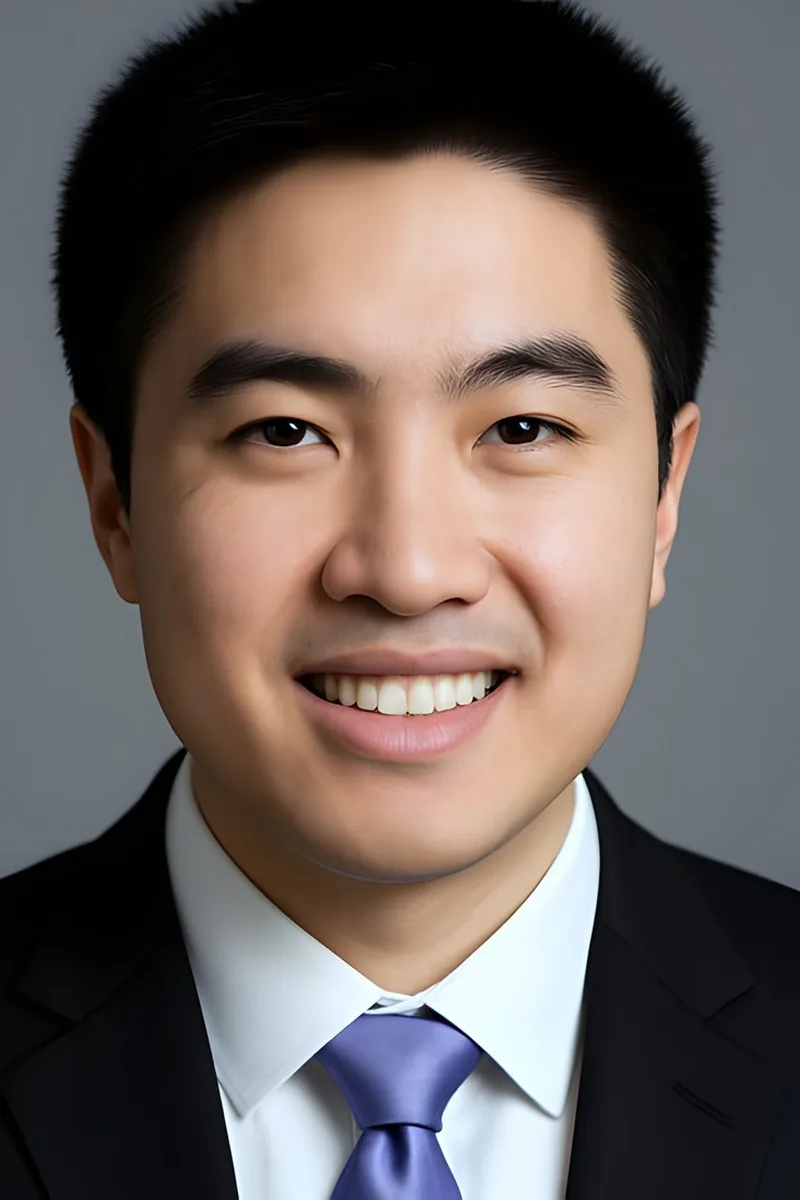
Allan earned his degree in Biological Sciences, which means topics like cellular respiration, Mendelian genetics, and ecological systems aren't abstract textbook chapters — they're concepts he's internalized through years of coursework and lab work. He breaks down complex processes like the Krebs cycle or DNA replication into clear, sequential steps that make the logic behind each mechanism click.
With degrees in molecular biology and literature plus a PhD that bridges law and management, Andrew has an unusual ability to translate dense biological content into clear, structured explanations — particularly when it comes to cell biology, molecular genetics, and the central dogma. That cross-disciplinary training means he doesn't just know the science; he knows how to organize and communicate it in ways that make sprawling topics like metabolic pathways or ecological interactions easier to hold onto. Rated 4.8 by students.
From cell structure to photosynthesis to Mendelian genetics, general biology covers enormous ground in a single course. Eric's ecology and evolutionary biology degree gives him a framework for showing how these topics connect — why understanding DNA replication matters when you get to inheritance, or how energy flow in cells relates to entire ecosystems.
Conor's economics training at Yale sharpened his ability to think in systems and trace cause-and-effect chains — skills that translate surprisingly well to biology topics like feedback loops in homeostasis or how energy budgets shape ecosystem dynamics. He treats general biology less as a subject to memorize and more as a set of logical relationships to map out, which is especially useful when students hit units on metabolism or genetics where everything connects to everything else.
From lecturing on cell biology at Northwestern to researching microbiology for his PhD, Richard has taught and lived general biology at every level — and that depth shows when he explains topics like gene regulation, microbial ecology, or the mechanics of cellular respiration. His dual background in biology and public health lets him connect textbook concepts to real-world applications, like how understanding immune cell signaling explains vaccine design. Rated 5.0 by students.
Steven's Human Development training gave him a surprisingly useful lens for biology — understanding how organisms grow, adapt, and change across time maps directly onto topics like cell differentiation, developmental genetics, and the life cycles that general biology courses spend weeks covering. He's especially effective at breaking down the logic behind biological processes so they feel intuitive rather than like a wall of vocabulary to memorize. Rated 4.9 by students.
A strong intro biology course covers everything from enzyme kinetics to population ecology, and the challenge is usually figuring out how to study such different material with one consistent approach. Emily teaches students to build concept maps that link cellular processes to organismal and ecological outcomes, turning a sprawling syllabus into something navigable. Her Cornell pre-med background means she's comfortable going deeper on any unit that needs extra attention.
Marjorie's biology degree gives her the content depth to teach general biology thoroughly, but what sets her apart is how she connects it to the reading and writing skills that make science stick — interpreting experimental data in a paper, articulating the logic behind natural selection, or explaining why a pedigree chart supports one inheritance pattern over another. That cross-disciplinary instinct turns biology from a memorization grind into something students can actually reason through. Rated 5.0 by students.
Karista's PhD in environmental science and biochemistry background give her an unusual double lens on biology — she teaches ecological concepts like nutrient cycling and energy flow with the same molecular precision she brings to cell signaling and enzyme kinetics. That range is especially useful in general biology, where a single exam might jump from photosynthesis mechanisms to population dynamics, and she can show students why those aren't actually separate topics. Rated 5.0 by students.
A solid grasp of general biology comes down to understanding a handful of core processes — how DNA becomes protein, how cells divide, how energy flows through ecosystems — and then layering detail on top. Alex earned his biology degree at Columbia and now applies that knowledge in a biochemistry lab at NYU Medical Center. He unpacks each system step by step so students build real comprehension, not just flashcard recall.
Mechanical engineering forced Daniel to internalize biology's overlap with physics and chemistry — understanding how diffusion drives gas exchange, or how thermodynamic principles govern metabolic pathways like cellular respiration and fermentation. That quantitative instinct gives him a different angle on intro bio than most tutors, especially when students hit the energy-heavy units that feel more like chemistry than memorization.
Avni earned her biology degree at Case Western Reserve alongside cognitive science, which means she's wired to think about how students actually learn and retain dense material — useful when a general bio course throws cell division, ecology, and molecular genetics at someone in the same semester. She zeroes in on whichever concept is causing the logjam, whether that's membrane transport or Punnett squares, and clears it so the rest of the material falls into place. Rated 5.0 by students.
A general biology course can feel overwhelming because it spans everything from macromolecules to ecosystems in a single semester. Albina zeroes in on the underlying principles — energy flow, structure-function relationships, genetic information transfer — so that each new unit builds on what came before instead of feeling like a brand-new subject.
I'm a recent college graduate with degrees in Biological Sciences and Russian from Ohio University. During my time there, I tutored students in a variety of subjects, including biology, chemistry, and Spanish. In addition, I worked as both a peer advisor and teaching assistant, which gives me insight into the learning strategies and study skills that students need to succeed. As a tutor, I like to focus on doing actual problems with students because it is the most effective way to immediately identify their strengths and weaknesses and to address them. In my free time, I like to lift weights, read books, and spend time with my friends.
I am a graduate of Cornell University. I received my Bachelor of Science in Human Biology, Health and Society. Since graduation, I have continued my education at Kean University. I plan to complete an informal postbach and apply directly to medical school. While I tutor a broad range of subjects, I am most passionate about Biology and Physics. I would best describe my tutoring style as very strategic and presenting the content as easy as possible to understand. In my spare time, I enjoy jogging, boxing and developing mobile games.
Arianna's neuroscience degree from Dartmouth means she originally learned cell biology, genetics, and molecular signaling not as standalone chapters but as the machinery underlying how the brain actually works — a perspective that gives her unusually concrete ways to explain abstract processes like signal transduction or gene expression. She's particularly effective at connecting the dots between units, like showing how membrane potential in a cell biology chapter is the same concept driving neural communication in a physiology unit. Rated 4.8 by students.
Oliver earned dual degrees in biochemistry and MCD (Molecular, Cellular, and Developmental) Biology at CU Boulder, which means he studied general bio topics like cell division, photosynthesis, and inheritance patterns with enough depth to explain the "why" behind each process, not just the textbook summary. His chemistry minor adds an extra layer when students hit metabolism or protein structure — he can walk through the actual molecular logic driving those systems. Rated 5.0 by students.
Penn's biology program trains students to see neurobiology, ecology, and cell biology as layers of the same story — and Pallavi's neurobiology concentration means she's especially skilled at unpacking how molecular events like ion channel gating or neurotransmitter release scale up into the organ-level and organism-level processes that dominate general biology exams. She also brings an economics-trained eye for systems and trade-offs, which turns topics like metabolic pathways and energy budgets into something intuitive rather than abstract.
Between a Vassar biology degree and graduate medical coursework at New York Medical College, John learned general biology from both the liberal arts and clinical sides — which means he can explain something like membrane transport as a chemistry problem, a physics problem, or a medical one, depending on what clicks. He's especially strong on the evolutionary biology thread that runs through intro courses, connecting topics like natural selection to molecular genetics to biodiversity in a way that gives the whole syllabus a through-line.
A strong general biology course connects the logic of evolution to the mechanics of a cell to the complexity of an ecosystem — and Tarif teaches those connections explicitly rather than treating each unit as isolated material. His question-driven style keeps students engaged through topics like photosynthesis, DNA structure, and classification, building the reasoning skills that carry across every biology exam.
Fourteen AP courses and a biochemistry degree from Texas A&M mean Gabriel learned topics like cellular respiration, genetics, and enzyme kinetics multiple times, from multiple angles — so when one explanation doesn't land, he has two or three others ready to go. That repetition across high school and college-level biology gives him an unusually flexible toolkit for breaking down everything from photosynthesis pathways to ecological energy flow. Rated 5.0 by students.
Melissa built a biology teaching career from the ground up, creating her own "Making Neuroscience Fun" curriculum for younger students and teaching AP/Honors biology to high schoolers. That range means she can explain concepts like mitosis, ecological relationships, or DNA replication at whatever depth a student actually needs. Her neuroscience background keeps the explanations grounded in how biological systems really work.
Because Tetyana studied neuroscience at the undergraduate level while preparing for medical school, she learned general biology concepts like cell signaling, membrane transport, and central dogma as functional tools — the pieces you need before you can understand how a neuron fires or how a drug crosses the blood-brain barrier. That gives her a knack for explaining why a process like protein synthesis or mitosis matters, not just what the steps are. Rated 5.0 by students.
Leonard's math degree from Columbia might seem like an odd fit for biology, but it actually sharpens his ability to break down the quantitative side of general biology — Hardy-Weinberg equilibrium, population growth models, enzyme kinetics graphs — that trips up students who expected a purely memorization-heavy course. He also teaches across anatomy, physiology, and molecular biology, so he connects intro-level concepts like cell division or metabolic pathways to the bigger biological picture rather than leaving them as isolated chapters. Rated 4.8 by students.
What makes general biology deceptively hard is its breadth — one week it's cellular respiration, the next it's phylogenetics, then suddenly ecology. Angela's approach is to anchor each new unit to a few core principles (energy transfer, structure-function relationships, evolution) so students aren't relearning from scratch every chapter. Her biology degree gives her the depth to answer the 'but why?' questions that textbooks often skip.
From mitosis to ecology, General Biology covers enormous ground in a single semester, and the challenge is usually figuring out how all the pieces connect. Albert teaches the throughlines — how energy flow links cellular respiration to ecosystem dynamics, or how DNA replication errors tie into evolution. His biomedical training gives him a knack for making those connections stick.
Most general biology courses move fast through ecology, genetics, cell biology, and physiology, expecting students to synthesize across all of them by exam time. Ruby's pre-med track at Columbia means she's living that synthesis daily, and her gap-year teaching experience gives her a practical sense for which foundational ideas need the most attention. Rated 5.0 by her students.
Whether the class is called "Intro to Biology" or "Principles of Life Science," the core challenge is the same: linking big ideas like evolution, cell theory, and energy flow to the specific details on an exam. Zarrin approaches each unit by identifying the handful of key mechanisms — photosynthesis, mitosis, protein synthesis — and building outward from there so the details have something to attach to. Her neuroscience and biology training at Mount Holyoke keeps the explanations accurate and clear.
Starting this fall, Kristina takes on a lecturer position teaching General Biology lab and lecture at Paul Quinn College, which means she's building curriculum around the same material her tutoring students are studying. Her biochemistry and biomedical engineering training lets her explain everything from photosynthesis to population genetics with a depth that goes well beyond the textbook. Rated 5.0 by students.
Biomedical engineering at Cornell meant Katie didn't just study biology — she applied it, digging into cell signaling, genetics, and organ-system physiology to solve real engineering problems. That applied lens makes her especially effective at teaching topics like cellular respiration, DNA replication, and membrane transport, because she can explain not just what happens but why it matters.
Introductory biology can feel deceptively simple until students hit topics like cellular energetics or the central dogma of molecular biology. Sidra approaches these by drawing out the cause-and-effect logic — why does the electron transport chain produce so much more ATP than glycolysis, and what happens when it stalls? That kind of questioning turns passive reading into real comprehension.
The sheer volume of vocabulary in a general biology course can feel overwhelming — organelles, taxonomic classifications, metabolic pathways — and most of it shows up again in later chapters. Amy teaches students how to organize these concepts into frameworks so that learning photosynthesis, for instance, makes cellular respiration easier to understand rather than harder. Her 4.9 rating speaks to how well that approach works.
Pharmacy school at the University of Michigan drills biology at the molecular level — pharmacology doesn't work unless you genuinely understand receptor binding, enzyme inhibition, and how cell signaling cascades play out in real tissue. Syeda brings that pharmacological depth to intro biology topics like protein structure, metabolism, and membrane transport, explaining them through the lens of how drugs actually interact with these systems. Rated 5.0 by students.
A strong general biology course builds the vocabulary and reasoning skills that every science class afterward depends on. Joyce tackles topics like cell structure, DNA replication, and ecology by linking them to concrete examples from her medical training — explaining mitosis through wound healing, or osmosis through IV fluid management. She holds a 5.0 rating from students.
Mike's psychology degree from the University of Miami — earned summa cum laude with biology and chemistry minors — means he first encountered topics like cell signaling, neurotransmitter release, and homeostatic feedback through the lens of how they shape behavior and cognition. Now in his final year of medical school at Rutgers, he teaches general biology by grounding molecular and cellular concepts in the bigger question of what they actually do inside a living organism. Rated 4.7 by students.
Whether someone is brushing up on ecology, diving into genetics for the first time, or reviewing human anatomy, Jared tailors each session around the specific biology concepts causing confusion. His Cornell biology degree and years of tutoring experience — plus time as a TA leading weekly lectures — make him effective at explaining everything from DNA replication to population dynamics.
Pharmacy school means Rocco never really left biology — he's still applying concepts like cell signaling, membrane transport, and enzyme kinetics every day in his pharmacology coursework at St. John's. That ongoing immersion makes him especially sharp when it comes to connecting introductory topics like mitosis or genetics to the bigger picture of how living systems actually function.
A PhD in ecology means Jeffrey learned biology from the top down — starting with how populations, communities, and ecosystems function, then drilling into the cellular and molecular machinery that drives those patterns. That perspective is surprisingly useful in a general biology course, where topics like natural selection, energy flow, and nutrient cycling suddenly have a unifying thread instead of feeling like disconnected chapters. Rated 5.0 by students.
A strong general biology course covers everything from macromolecules to ecosystems, and the challenge is seeing how those pieces fit together. Jessica breaks down core concepts like photosynthesis, mitosis, and Mendelian genetics by tying each one back to real biological systems she studied extensively through her Human Biology and Biomedical Sciences training.
Testimonials
Because the right General Biology tutor makes all the difference.
Average Session Rating – Based on 3.4M Learner Ratings
Top 20 Science Subjects


Top 20 Subjects
Frequently Asked Questions
Students often find cellular respiration and photosynthesis challenging because they involve multiple interconnected steps and require understanding energy transfer at a molecular level. Genetics and heredity patterns—particularly Punnett squares, pedigree analysis, and probability—trip up many learners who haven't developed strong visual or mathematical reasoning skills. Additionally, students frequently struggle with ecology concepts like population dynamics, nutrient cycling, and energy flow through ecosystems because these require systems thinking rather than memorizing isolated facts. A tutor can break down these complex processes into digestible stages and use diagrams or analogies to make the mechanisms click.
A strong indicator is whether you can explain a concept in your own words or apply it to a new scenario. For example, if you can recite the steps of mitosis but can't explain why a cell needs to replicate its DNA before division, you're likely memorizing rather than understanding. True understanding shows up when you can predict what happens if a variable changes—like how enzyme activity shifts with temperature, or how a mutation might affect protein synthesis. A tutor can ask you probing questions and present novel problems to reveal gaps in your conceptual grasp, then help you build genuine understanding rather than relying on rote memory.
Tutors can help you connect lab procedures to the underlying biology—explaining not just what you're doing, but why each step matters and what you should expect to observe. They can also teach you how to think like a scientist by walking through the scientific method: forming hypotheses, designing controls, identifying variables, and interpreting results. Many students struggle to understand why certain lab techniques are used (like gel electrophoresis or microscopy) or how to troubleshoot when results don't match predictions. A tutor can use diagrams, real-world examples, and guided practice to build your experimental reasoning skills alongside content knowledge.
Visualization is key in biology, and tutors excel at building mental models through multiple approaches: drawing and labeling diagrams together, using analogies (like comparing the cell membrane to a security checkpoint), and working with 3D models or animations to show how structures actually function. For molecular processes like enzyme-substrate interactions or DNA replication, tutors can walk you through step-by-step sequences, often using color-coding or spatial reasoning to make abstract mechanisms concrete. The goal is moving from passive picture-viewing to actively constructing your own mental representations—so when you close your textbook, you can still see and explain how a ribosome builds a protein or how photosynthesis converts light energy into chemical energy.
Knowing facts means you can identify mitochondria or define osmosis; scientific thinking means you can analyze a novel biological scenario, form a testable prediction, and reason through evidence to draw conclusions. For instance, a student with strong scientific reasoning can look at unfamiliar organism data and infer evolutionary relationships, or examine an experimental result and identify confounding variables. Tutors help develop this higher-order thinking by asking "why" and "what if" questions, encouraging you to evaluate evidence critically, and guiding you through the logic of biological arguments rather than just delivering answers. This skill set transfers far beyond the classroom—it's how biologists actually work.
Look for tutors with a solid background in biology—ideally a degree in biology, life sciences, or a related field—combined with demonstrated teaching ability and the skill to explain complex concepts clearly. Beyond credentials, the best tutors understand common student misconceptions (like thinking plants "eat" soil, or confusing mitosis with meiosis) and know how to address them directly. They should be comfortable with the full breadth of General Biology topics—from cellular and molecular biology to ecology and evolution—and able to adapt their explanations based on whether you're a visual learner, need hands-on examples, or benefit from analogies. Varsity Tutors connects you with tutors who combine subject expertise with a track record of helping students move from confusion to genuine mastery.
AP Biology and similar exams require not just content knowledge but the ability to apply concepts to unfamiliar situations, analyze experimental data, and reason through complex biological scenarios—skills that go beyond traditional studying. A tutor can help you master the breadth of topics (cellular biology, genetics, evolution, ecology, and more) while teaching you how to read and interpret the types of questions these exams ask. They can also provide targeted practice with free-response questions, where you need to explain your reasoning clearly, and help you identify which concepts you've truly internalized versus those where you're still relying on surface-level memorization. Regular tutoring sessions build both confidence and the deep understanding these exams reward.
For students struggling with foundational concepts, a tutor focuses on building conceptual blocks—clarifying what a cell actually is, how energy flows through living systems, or why genetic variation matters—before moving to complex applications. For students with solid fundamentals who want to excel, tutoring shifts toward deeper analysis: connecting concepts across units, tackling challenging problem sets, and developing the scientific reasoning needed for advanced coursework or exams. Tutors also adapt their pacing and teaching style—some students need more visual and kinesthetic approaches, while others benefit from logical step-by-step breakdowns or real-world case studies. The personalized nature of 1-on-1 instruction means your tutor meets you exactly where you are and helps you progress at a pace that builds genuine understanding.
Let’s find your perfect tutor
Answer a few quick questions. We’ll recommend the right plan and match you with a top 5% tutor.