Award-Winning Materials Science
Tutors
Materials Science
Tutors
Private 1-on-1 tutoring, weekly live classes for academic support, test prep & enrichment, practice tests and diagnostics, and more to elevate grades and test scores.
Based on 3.4M Learner Ratings
UniversitiesSchools & Universities
DeliveredHours Delivered
ProficiencyGrowth in Proficiency
Who needs tutoring?
No obligation. Takes ~1 minute.
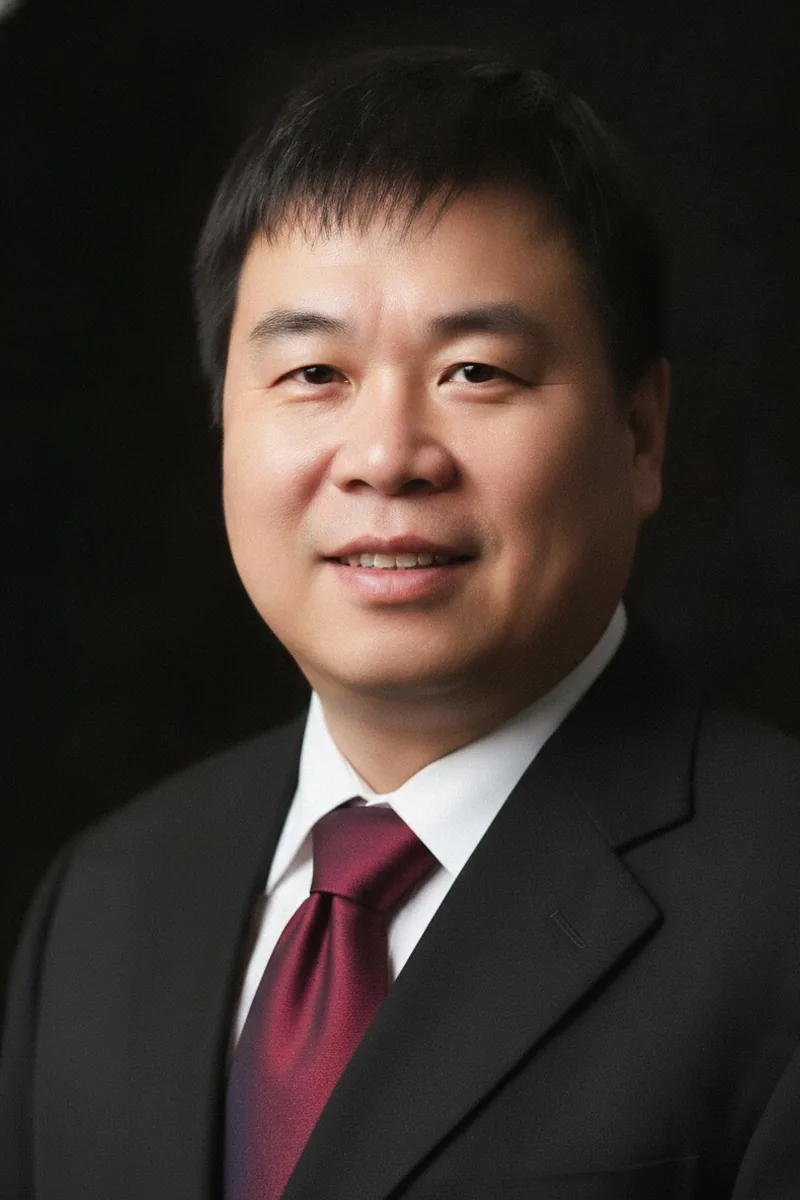
Crystal structures, phase diagrams, and stress-strain relationships sit at the intersection of physics, chemistry, and engineering — which is exactly where Zhengdong's expertise lives. His doctoral physics training and background in chemical and biomolecular engineering give him a cross-disciplinary lens for unpacking how atomic-level bonding determines macroscopic material properties.
This is Cori's home turf — she's pursuing a materials science and engineering degree at MIT, where she studies crystal structures, phase diagrams, mechanical properties, and the thermodynamic principles that govern material behavior. She can walk through everything from diffusion kinetics to stress-strain curves with the fluency of someone actively immersed in the field. Few tutors can match that level of direct, current expertise in MSE.
Nanoparticle design is fundamentally a materials science problem — crystallinity, surface chemistry, degradation behavior, and mechanical properties all dictate how a particle performs in a biological environment. Michelle's bioengineering PhD gave her hands-on experience characterizing materials at the nanoscale, which she now applies to teaching stress-strain relationships, phase diagrams, and structure-property connections.
Understanding why a titanium alloy works for a hip implant but not a heart valve requires thinking about crystal structure, phase diagrams, and mechanical properties all at once. Maggie's doctoral research in biomedical engineering puts her at the intersection of materials science and biological systems, so she teaches concepts like stress-strain behavior and material degradation with concrete, application-driven examples.
Stefan earned his master's in materials science from the University of Washington, where he studied the optical properties of semiconducting materials — so topics like band structure, defect behavior, and structure-property relationships come from direct research experience rather than textbook summaries. He brings a physicist's instinct for connecting atomic-level phenomena to macroscopic material behavior, which is especially useful when tackling thermodynamics-heavy coursework or characterization techniques. Rated 5.0 by students.
Arianna's neuroscience background might seem like an unusual fit for materials science, but her coursework in chemistry, physics, and quantitative reasoning covers the foundational principles behind topics like bonding, thermodynamics, and structure-property relationships. She approaches material behavior — why certain polymers degrade or how crystallinity affects mechanical strength — with the analytical rigor of someone trained to think across disciplines. Rated 4.8 by students.
Crystal structures, phase diagrams, stress-strain curves — materials science sits at the intersection of physics, chemistry, and engineering, which makes it uniquely tricky to study. Kevin is working through this material firsthand as a mechanical engineering student at Case Western Reserve, one of the stronger programs in the country for materials research. He explains concepts like dislocation theory and diffusion kinetics with the clarity of someone who recently mastered them himself.
Crystal structures, phase diagrams, stress-strain curves — materials science sits at the intersection of physics, chemistry, and engineering that Adel navigates daily. His mechanical engineering PhD involved working directly with material properties and failure analysis, so he teaches these concepts with the applied perspective that textbooks often lack.
Studying mechanical engineering at WPI means Matthew has spent semesters working with stress-strain curves, phase diagrams, and crystal structure analysis — the core of any materials science course. He unpacks concepts like dislocation theory, material selection for design constraints, and the relationship between microstructure and mechanical properties with the perspective of someone who applies them in engineering projects. His teaching philosophy centers on genuine mastery of fundamentals before tackling advanced applications.
Crystal structures, phase diagrams, stress-strain curves — materials science sits at the intersection of physics, chemistry, and engineering, which makes it uniquely hard to study from a textbook alone. Juliane's applied physics training and engineering background give her a cross-disciplinary perspective that's ideal for unpacking how atomic bonding determines bulk material behavior. She's particularly effective at connecting thermodynamic concepts to real material selection problems.
Analytical chemistry at the graduate level means Whitney spends her time characterizing materials — identifying composition, measuring purity, and interpreting spectroscopic data — which is exactly the skill set that underpins materials science coursework on characterization techniques and structure-property relationships. Her chemistry foundation makes her especially effective at explaining the atomic-level bonding and thermodynamic principles behind phase diagrams and material behavior. She teaches from a chemist's perspective, connecting why materials behave a certain way back to their electronic structure and intermolecular forces.
Jennifer holds both a bachelor's in Materials Science Engineering and a master's in Microsystems Engineering from Cornell, so she's deeply fluent in crystal structures, phase diagrams, mechanical properties, and material characterization techniques. She connects microstructure to macroscopic behavior in a way that turns dense textbook content into intuitive reasoning — exactly what's needed for exams and lab reports.
Stress-strain curves, phase diagrams, crystal lattice structures — materials science sits at the intersection of physics, chemistry, and engineering, which makes it uniquely difficult to self-study. Noah studied these concepts extensively in his mechanical engineering program and connects each one to real applications like why aircraft use aluminum alloys or how heat treatment changes steel's properties.
Neuroscience training builds a surprisingly useful toolkit for materials science — Evan's coursework in physics, chemistry, and quantitative analysis maps directly onto topics like bonding, thermodynamics, and how microstructure drives material behavior. He tackles problems like polymer degradation or crystallinity effects by breaking them into the same systematic, first-principles reasoning he uses across his science and engineering subjects. Holds a 5.0 rating.
Crystal structures, phase diagrams, stress-strain curves, and failure modes — materials science sits at the intersection of physics, chemistry, and engineering. Hossein's mechanical engineering PhD required deep work with material properties and selection, so he explains concepts like dislocation movement or diffusion kinetics from hands-on experience rather than purely from a textbook. He's especially sharp on connecting microstructure to mechanical behavior.
Crystal structures, phase diagrams, and stress-strain curves all click faster when connected to real engineering applications — and Anthony's mechanical and aerospace engineering background means he teaches materials science with that context built in. He digs into topics like grain boundaries, polymer chain behavior, and thermal properties by tying them to the design problems where material selection actually matters. Rated 5.0 by students.
Working as a project leader in the automotive industry, Annie makes material selection decisions regularly — choosing between aluminum alloys, high-strength steels, and composites based on their mechanical properties, fatigue behavior, and manufacturability. Her mechanical engineering degree provides the foundation in stress-strain relationships, phase diagrams, and microstructure analysis that materials science courses demand, and she teaches these concepts through the lens of someone who applies them to real design trade-offs. Rated 4.9 by students.
With a Ph.D. in Mechanical and Materials Engineering and over 5 years of experience in tutoring core STEM subjects, including Math, Physics, and Science, I bring both expertise and passion to my teaching. I have worked with students from elementary to college levels, adapting my methods to ensure each student thrives. My approach combines practical, real-world examples with clear, step-by-step guidance to make even the most challenging topics easy to grasp. I incorporate proven teaching techniques such as active learning, problem-based learning, and scaffolding to ensure students not only understand the material but can apply it effectively. Whether you're preparing for exams, improving grades, or simply building a stronger foundation, I am dedicated to helping students learn efficiently and achieve their academic goals.
A doctorate in Bioengineering from the University of Maryland means James has designed, selected, and characterized materials for biological applications — understanding how a scaffold's porosity affects cell growth or why certain polymers outperform metals in implant environments. That hands-on research translates directly to teaching topics like structure-property relationships, material degradation, and the thermodynamic principles governing phase behavior. His chemistry and biology depth gives him a unique angle for students who need to see materials science through a bioengineering lens.
Currently, I am a student at the University of Windsor, pursuing a PhD of Mechanical Engineering under the supervision of Dr. Altenhof. In 2005, I earned a Bachelor of Science degree in Mechanical Engineering from Azad University. The undergraduate curriculum in Mechanical Engineering introduced me to a wide variety of subjects, providing me with a strong foundation in the theoretical concepts of this major. Since I was interested in expanding my knowledge, acquiring skills in new technologies and methods, and opening pathways into additional employment opportunities, I applied for a master's degree in Solid Mechanic Engineering at Azad University. In 2006, I got admitted to the MSc program in Solid Mechanic Engineering at Azad University. During the first year, the coursework helped me to obtain a more in-depth understanding of the field. I engaged in research projects, presentations, and report submissions in the second year. In addition, as a Teaching Assistant, I developed pedagogical knowledge and skills. My MSc thesis project, "Experimental and numerical study of in-plane loading of thin-walled tubes," exposed me to new skills in experimental testing and software programs (LS- DYNA). I successfully earned my MSc in 2008 and ranked in the top 10% of students in my class. This two-year graduate program not only made me an expert in the field but also enhanced my critical thinking, analytic abilities, time management, and research skills. In 2009, Azad University of Tuyserkan offered me a Lecturer position. As a researcher who couldn't leave the dynamic atmosphere of the scholastic world and as a potential teacher who was constantly engaged in critical reflection, I accepted the offer. In the beginning, I took "Assessment & Evaluation in Higher Education" and " University Teaching Skills" courses to be eligible for teaching. These two mandatory courses increased my knowledge of evaluation methods, testing, and measurement in education. I learned how to motivate and activate students, encourage personal initiative and choose the most suitable teaching style. As a lecturer, I gained a great experience in teaching. I have taught Statics, Strength of Materials, and Design of machine elements courses at the undergraduate level. I believe that it has been an excellent opportunity to provide a great learning experience for a diverse group of students. As a faculty member, I have worked cooperatively and collaboratively with the campus community, including faculty members, employees, students, and others. I have contributed to the field as a researcher by conducting scholarly activities. I received two research grants from the university, conducted research and published three papers in prestigious ISI journals, and presented my research at 20 national and international conferences on Mechanical Engineering. I have valuable experience in optimizing energy absorption in thin-walled aluminum and composite tubes. I am also experienced working with Hopkinson instruments and gas gun testing equipment. In addition, I have significant experience working with the Santam instrument and the Instron testing machine. This machine can obtain the tensile and compressive strength of the specimens, input for LS Dyna software. I also became interested in Metal Matrix Composite after designing and manufacturing diffusion instruments to prepare metal matrix composite productions. As a faculty member, I provided administrative services. In 2011, I was appointed as the head of the Mechanical Engineering department for two years. I was responsible for faculty recruitment and development, faculty evaluation, program development, program review, curriculum development, class schedule planning, etc. In 2013, I was appointed as the "Vice Chancellor for Academic Affairs" for three years. In this position, I was the chair of the Academic Affairs committee. I was responsible for planning, developing, organizing, directing, and evaluating academic programs, policies, procedures, and guidelines. These two administrative services enhanced my management skills, such as strategic thinking, planning, communication, decision-making, motivating, and interpersonal skills. Driven by my dedication to sustainable engineering, I decided to pursue a Ph.D. in mechanical engineering overseas. My goal is to expand my expertise and confront fresh challenges in the realm of composite materials. If granted the chance to engage with Long Fiber Thermoplastic (LFT) composite materials during this internship, I am excited to explore industrial-scale manufacturing and design processes. I look forward to collaborating closely with fellow research engineers, anticipating that such collaboration will significantly enhance my skills and knowledge in the field. S
Testimonials
Because the right Materials Science tutor makes all the difference.
Average Session Rating – Based on 3.4M Learner Ratings
Top 20 Science Subjects


Top 20 Subjects
Frequently Asked Questions
Materials Science is an applied discipline that combines principles from chemistry, physics, and engineering to understand how materials work and behave. While chemistry focuses on atomic and molecular structure, and physics examines forces and energy, Materials Science asks: "How do we use these principles to design and improve real materials?" This means Materials Science tutoring emphasizes connecting theoretical concepts—like atomic bonding and crystal structures—to practical applications, from developing stronger alloys to creating semiconductors for electronics.
Materials Science involves visualizing atomic-scale phenomena that you can't see directly, which is where personalized tutoring makes a real difference. Expert tutors use diagrams, 3D models, animations, and hands-on explanations to help you build mental models of concepts like lattices, defects, and phase transitions. Rather than memorizing definitions, a tutor helps you understand *why* materials behave certain ways at the atomic level, making it easier to solve problems and predict material behavior in new situations.
Calculations in Materials Science often require unit conversions, stoichiometry, and quantitative reasoning—skills that build on each other. Varsity Tutors connects you with tutors who can slow down the process, identify where the confusion starts (Is it the concept? The math setup? Unit conversions?), and reinforce the foundational skills you need. With personalized 1-on-1 instruction, a tutor can work at your pace and help you develop strategies for tackling complex calculations confidently.
Lab work is where Materials Science comes alive—you're actually testing material properties, analyzing crystal structures, or observing phase changes. Tutoring complements hands-on learning by helping you understand *what* you're observing and *why* experiments are designed certain ways. A tutor can help you interpret lab results, connect them to theory, develop scientific reasoning skills, and prepare for lab reports or exams. Many students find that tutoring before or after lab sessions deepens their understanding significantly.
In Materials Science, memorizing facts about specific materials won't help you solve novel problems or design new materials. True understanding means grasping the underlying principles—like how atomic structure determines properties—so you can apply that knowledge to unfamiliar situations. Personalized tutoring focuses on building this deeper understanding through explanations, guided problem-solving, and questioning that pushes you to think like a materials scientist. Students who develop this conceptual foundation perform better on exams and in upper-level courses.
A great Materials Science tutor should have strong expertise in the subject and the ability to explain complex concepts clearly. They should ask questions to understand your specific struggles—Are you confused about phase diagrams? Struggling with defect calculations? Unsure how to connect theory to applications?—and tailor explanations to your learning style. The best tutors help you develop problem-solving strategies and scientific reasoning skills, not just work through practice problems. When you connect with Varsity Tutors, we match you with tutors who understand both the material and how to teach it effectively.
Results vary based on your starting point and effort, but most students see noticeable improvements in understanding and grades within a few weeks of consistent tutoring. Research on personalized 1-on-1 instruction shows significant benefits for complex subjects like Materials Science, especially when you're working to move from memorization to genuine understanding. Many students report feeling more confident tackling problem sets, performing better on exams, and developing the analytical thinking skills needed for advanced coursework or careers in materials engineering and research.
Let’s find your perfect tutor
Answer a few quick questions. We’ll recommend the right plan and match you with a top 5% tutor.