Award-Winning Physical Science
Tutors
Physical Science
Tutors
Private 1-on-1 tutoring, weekly live classes for academic support, test prep & enrichment, practice tests and diagnostics, and more to elevate grades and test scores.
Based on 3.4M Learner Ratings
UniversitiesSchools & Universities
DeliveredHours Delivered
ProficiencyGrowth in Proficiency
Who needs tutoring?
No obligation. Takes ~1 minute.
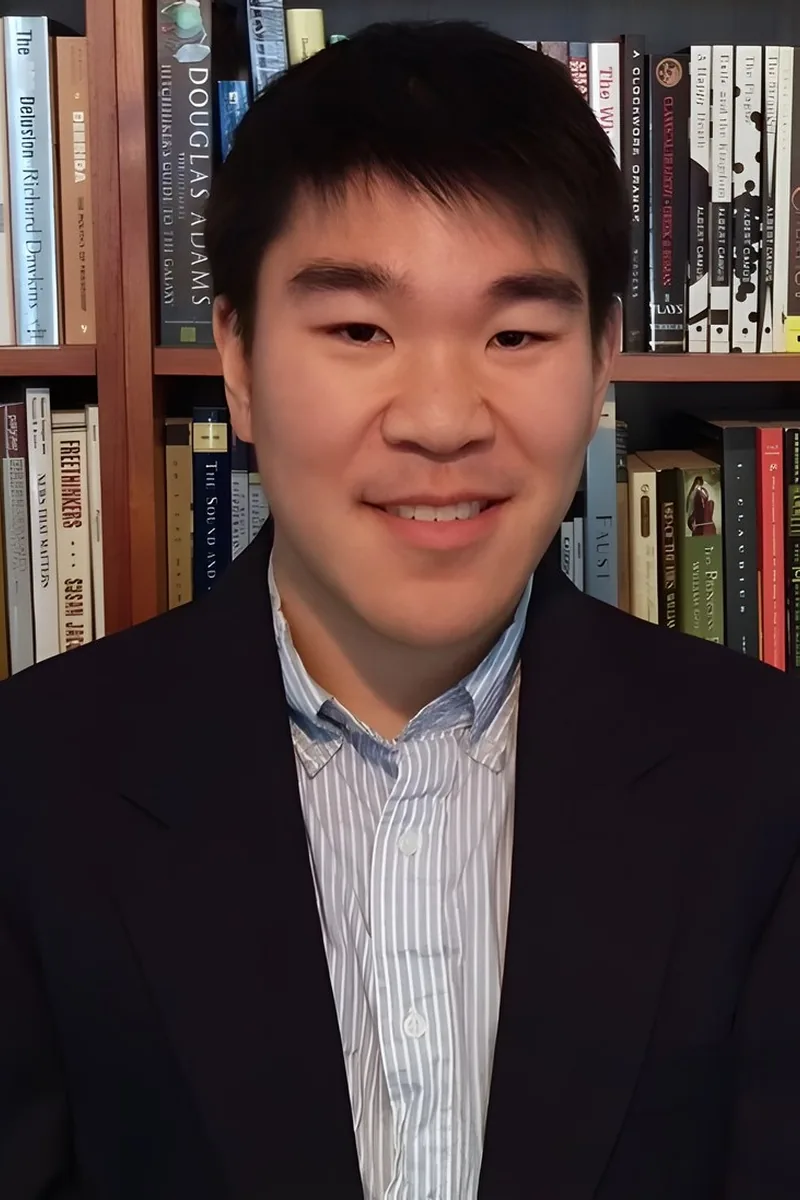
A master's in Chemical and Physical Biology from Vanderbilt means Dennis spent years at the intersection of chemistry, physics, and biology — exactly the disciplinary crossroads where physical science lives. He's particularly effective at unpacking how abstract chemistry concepts like bonding and molecular behavior connect to observable physics phenomena like heat transfer and phase changes, drawing on his research background to ground explanations in real experimental evidence. Rated 5.0 by students.

A bioinformatics concentration at Stanford meant Matthew couldn't escape physics and chemistry fundamentals — thermodynamics, molecular interactions, and energy at the cellular level all fed directly into his coursework. He takes a top-down approach to physical science, starting with the big-picture concept before drilling into the math, which clicks especially well for students who need to see where a formula fits before they'll trust it. Rated 4.9 by students.
A Master's in Chemistry from Princeton means Jon knows the chemistry half of physical science — atomic structure, chemical bonding, reaction types — at a level where he can explain it five different ways until one clicks. But what sets him apart for this subject is his math instinct: a 2x Ocean County Math League champion, he's comfortable unpacking the quantitative side of physics concepts like motion and energy so students aren't just memorizing formulas but actually following the logic behind each calculation.
Environmental studies might not scream physics, but Simon's coursework covered thermodynamics, earth systems, and the chemistry of pollution — all core physical science territory. He approaches problems like energy transfer and states of matter by tying them to tangible environmental processes, so a lesson on heat flow becomes a conversation about climate systems rather than an abstract equation. Holds a 5.0 rating.
A chemistry degree from Cornell means Samantha understands the atomic structure and chemical reaction side of physical science cold, but she's equally comfortable with the physics half — forces, energy, waves — thanks to years of tutoring both disciplines. She's a visual teacher who reaches for diagrams, charts, and physical models to make abstract ideas like energy conservation or molecular bonding something students can actually see and manipulate.
A chemical engineering degree from Yale means Mark spent four years immersed in thermodynamics, fluid mechanics, and reaction kinetics — the exact principles that physical science courses package into introductory form. He unpacks topics like heat transfer or conservation of energy by tracing them back to how industrial processes actually use those ideas, giving students a concrete picture instead of an abstract equation. His 35 ACT reflects the kind of cross-disciplinary fluency that makes both the chemistry and physics halves of the course click.
Lenique's dual foundation in biology and chemistry at Duke gives her a versatile grip on physical science topics from force and motion to energy transformations and wave behavior. She breaks down intimidating formulas by tying them to observable, everyday phenomena — the kind of concrete examples that make abstract physics and chemistry principles stick for younger learners.
Joyce's dual focus on biology and public health at Brown means she's worked through the chemistry and physics prerequisites that physical science draws from — reaction types, energy in biological systems, how matter changes state. She approaches the subject by anchoring each concept in health and environmental contexts, turning a lesson on chemical properties or basic mechanics into something students can connect to the real world rather than just a worksheet.
Chemical and biological engineering at the undergraduate level means Suzie spent years solving problems that sit squarely in physical science territory — thermodynamics, reaction kinetics, fluid mechanics, and properties of matter — then carried that knowledge into an MD/PhD program at Michigan. She unpacks topics like energy conversion or chemical bonding by tracing them through the engineering applications where she first learned to use them, giving students a concrete sense of what these principles actually do. Rated 5.0 by students.
A PhD in Chemistry from the University of Chicago plus a bachelor's in physics from Lafayette College means Mary has graduate-level depth on both halves of a physical science course — she's not stretching from one discipline into the other. She unpacks topics like chemical bonding and Newton's laws by tracing them back to the underlying principles, then builds outward to show how those ideas connect across units so students see one coherent subject instead of two unrelated ones.
Statistics might seem unrelated to physical science, but Alex's coursework in economics and quantitative analysis at Cornell built exactly the kind of data interpretation and unit-reasoning skills that physical science leans on — reading graphs, converting measurements, and making sense of experimental results. He tackles the chemistry and physics blend by treating each concept like a problem set: isolate the variables, understand the relationship, then apply it.
Twenty-five years as an engineer and software developer means Tim has applied the physics and chemistry behind physical science in professional settings most tutors have only read about — calculating forces on real structures, modeling energy systems, and troubleshooting material properties under actual working conditions. His BS in Physics gives him the theoretical backbone, but it's the industry experience that lets him explain why a concept like Newton's third law or thermal conductivity matters outside a textbook.
Biomedical engineering at Boston University and Tufts required Varuna to master both the physics and chemistry sides of physical science — forces, energy, thermodynamics, material properties — and apply them to real medical device problems. That engineering lens means she teaches concepts like wave behavior or Newton's laws by grounding them in how things actually work, from ultrasound imaging to the mechanics of a prosthetic limb. Rated 4.9 by students, she's especially strong at breaking down the math embedded in physical science problems.
Between TAing chemistry courses and earning a doctorate in biomedical sciences, Maggie has spent years applying the physics and chemistry concepts that physical science weaves together — from thermodynamics and energy conservation to how materials behave under stress. She draws on hands-on lab and engineering experience to walk through problems like heat transfer or atomic bonding with concrete examples instead of just definitions. Her MATLAB and calculus background also means she's comfortable breaking down the quantitative side when equations enter the picture.
A master's degree in chemistry means Shawn already owns half the physical science curriculum outright — atomic structure, chemical reactions, properties of matter — and his teaching load in physics, trigonometry, and calculus shows he's equally comfortable with the quantitative mechanics side. He digs into the math behind force and energy problems rather than hand-waving past equations, which gives students the tools to actually solve multi-step problems instead of guessing at formulas. Rated 4.9 by students.
Brandon's biomedical engineering degree required him to work through the full physics-chemistry gauntlet — mechanics, circuits, thermodynamics, material properties — and then apply it to biological systems, which is essentially physical science with higher stakes. He unpacks topics like energy conservation or chemical bonding by showing how they function inside real engineering problems, turning abstract textbook ideas into something concrete and useful. Rated 5.0 by students.
Struggling through undergraduate biochemistry before earning a PhD in Molecular Biology taught Monika something most science tutors skip — how to study efficiently when the material doesn't come naturally. She applies that hard-won approach to physical science topics like atomic structure, chemical reactions, and basic mechanics, breaking dense concepts into everyday analogies that stick. Rated 4.8 by students.
Between a pre-med degree at Penn State and medical school at Jefferson, Jamie has taken every foundational physics and chemistry course that physical science draws from — and learned to simplify the material using analogies that make abstract ideas like wave behavior or conservation of energy feel intuitive. He leans on real-life comparisons (how a car crash illustrates momentum, how cooking demonstrates heat transfer) to give students concrete mental models they actually remember. Rated 4.6 by students.
Between a neuroscience degree from Johns Hopkins and completing medical school at Drexel, Prateek sat through more physics and chemistry than most people encounter in a lifetime — and physical science draws from exactly that overlap. He unpacks topics like atomic structure, forces, and energy conservation by rooting them in how the body actually uses these principles, turning a lesson on electrical charge into a discussion of how neurons fire. That clinical context makes abstract formulas feel immediate and worth remembering.
Matthew's graduate work in Educational Measurement and Statistics at USF trained him to think in variables, controls, and data interpretation — skills that translate directly to physical science topics like experimental design, energy calculations, and analyzing how forces produce measurable changes. His psychology degree from Johns Hopkins also required foundational chemistry and physics coursework, so he's comfortable on both sides of the discipline. Rated 4.8 by students.
Eric's day job as a mechanical engineer means he's still solving problems with Newton's laws, thermodynamics, and material properties — the same concepts that form the backbone of any physical science course. He breaks down topics like motion, heat transfer, and simple machines using the real-world engineering scenarios he encounters daily, which gives students a concrete picture of why these ideas matter beyond the classroom.
I am currently an adjunct professor of chemistry at a small liberal arts college in the Chicago area. Previously, I worked in the chemical industry for several years as a researcher, but I've found that the most satisfying moments have come when I am able to share my expertise with someone else. Similarly, I very much enjoyed the four semesters in the graduate school when I was a teaching assistant. It gave me the opportunity to work with students and help them develop an understanding for the subject. These are the primary reasons that I have decided to go into teaching.
Karen's background is in English literature rather than lab science, but her 1530 SAT and 32 ACT show she can break down quantitative and analytical problems with precision — exactly what physical science demands when students hit unit conversions, graph interpretation, or word-heavy experiment questions. She's especially useful for students who struggle with the reading-comprehension side of science, where parsing a dense passage about wave properties or chemical changes matters as much as the math itself.
Working in a biochemistry lab at NYU Medical Center means Alex deals daily with the chemistry and physics principles that form the backbone of any physical science course — from how matter changes state to how energy moves through a system. That hands-on lab experience, combined with teaching assistant work for a Columbia biology course, gives him a practical vocabulary for explaining concepts like chemical reactions or force diagrams that textbooks often make unnecessarily abstract. Rated 4.9 by students.
I am Chad Bergman, a current Dartmouth student pursuing my Bachelor's in Economics with a physics minor. I have experience tutoring college economics in person on Dartmouth campus as well as online tutoring in high school calculus and physics. I've had great success on the SAT and ACT as well as my AP tests in high school, and I hope to help others succeed as well. My favorite subject to tutor is physics because I feel like learning to apply a few fundamental principles to different real world situations is extremely useful in any discipline. While tutoring I try to help students master the fundamentals so they can apply them to the material we're working on as well as future material. Outside academia, I help look after my four siblings and play more League of Legends online than is perhaps healthy.
I am comfortable working through the needs of students with disabilities, learning or otherwise. I pride myself on my ability to tailor lessons to particular students, finding the pedagogical methods that work best for the individual.
Thirty years of teaching physics and math gave Michael a front-row seat to the exact moments physical science clicks for students — usually when someone finally sees that a chemistry concept like atomic structure directly explains a physics concept like electrical conductivity. His molecular biology master's means he built his understanding of matter, energy, and chemical reactions from the ground up in lab settings, and he brings that same step-by-step rigor to topics like forces, wave behavior, and conservation of energy.
A physics degree means Michael didn't just pass through the chemistry and physics material physical science covers — he built his understanding from the ground up, through courses in electromagnetism, quantum mechanics, and physical chemistry that go well beyond the introductory level. That depth lets him explain something like why heat transfers between objects or how forces produce acceleration with the kind of intuitive clarity that comes from genuinely knowing the underlying physics, not just reciting definitions.
Pre-med coursework and a public health minor at UCLA put Nicole through the chemistry and physics sequences that map directly onto physical science — atomic structure, chemical reactions, forces, and energy. She earned cum laude honors and Phi Beta Kappa nomination along the way, which speaks to how thoroughly she absorbed that material. Her approach leans on asking students to explain concepts back in their own words, turning passive review into active understanding.
UCLA's Physiological Science program put Samantha through the chemistry and physics of how the human body actually works — gas exchange, osmotic pressure, metabolic energy — which is the same material physical science courses package as standalone units on matter, energy, and chemical reactions. She uses that biomedical lens to make topics like density or heat transfer feel less like isolated formulas and more like pieces of a system students can visualize. A year teaching third-grade math with City Year also sharpened her ability to break complex ideas into small, buildable steps.
I am very big on allowing my students to actively learn. I believe that this is the best way for my students to learn because it helps them pick up on new information and skills quickly.
Arianna's neuroscience degree required her to master the chemistry of how molecules interact and the physics of how electrical signals propagate through neurons — essentially the same atomic structure, energy, and forces material that physical science courses cover. She teaches those connections explicitly, so when a student encounters a topic like electrical conductivity or chemical bonding, she can ground it in how the brain actually uses those principles. Rated 4.8 by students.
Fourteen AP classes in high school followed by a full biochemistry degree at Texas A&M means Gabriel learned the chemistry and physics underlying physical science multiple times, from multiple angles — so when a student doesn't grasp atomic structure or energy concepts one way, he can explain them another. He's particularly effective at connecting the chemistry side (reactions, states of matter) to the physics side (forces, motion) because his biochemistry training demanded fluency in both. Rated 5.0 by students.
Andrew's background is in history, economics, and law rather than a traditional science track, but his teaching roster includes anatomy, physiology, and chemistry alongside physical science — meaning he's built comfort with the material through years of actually explaining it. He's especially strong at walking through word-heavy physical science problems where students need to parse what's being asked before they can set up the math, a skill sharpened by his legal training in close reading. Rated 4.9 by students.
A PhD in biophysical chemistry means Tom has spent years at the exact intersection of physics and chemistry — the two disciplines physical science blends into one course. He leans on that dual fluency to unpack how concepts like thermodynamics or atomic behavior connect across both fields, and he treats practice problems the way a musician treats scales: regular repetition with immediate correction is what turns shaky understanding into real fluency.
Elizabeth's biopsychology degree at Tufts required her to work through the chemistry and physics that govern how biological systems function — the same atomic structure, energy, and forces content that physical science courses cover. She leans on that training to teach topics like chemical reactions and basic mechanics through the lens of what's happening inside living organisms, giving students a concrete reason to care about each concept. Holds a 5.0 rating.
Two engineering degrees — biomedical and materials science — mean Wesley has solved real problems involving the exact physics and chemistry that physical science courses cover: how materials respond to stress, how heat moves through systems, how chemical bonds determine a substance's properties. His biophysical chemistry research at Rochester adds a layer most tutors can't offer, connecting textbook topics like atomic structure or energy conservation to what's actually happening in a lab. Rated 4.7 by students.
An MIT materials science PhD means Alan spent years studying how matter behaves at the atomic and molecular level — crystal structures, phase transitions, thermal conductivity — which is essentially physical science taken to its deepest layer. He uses that depth to explain everyday concepts like why metals conduct heat or how solids become liquids in a way that makes the underlying physics and chemistry feel intuitive rather than like disconnected textbook definitions.
Two years in cancer research labs gave Brian hands-on experience with the chemistry and physics that physical science courses cover — from how cells convert energy to how molecules interact at the atomic level. He uses that lab context to make topics like states of matter or basic thermodynamics feel like real phenomena rather than textbook definitions, walking students through problems with an active, question-driven approach. Rated 4.9 by students.
Five years of teaching collegiate-level physical science courses gave Mariela a clear map of where students stumble — whether it's connecting force diagrams to real motion or understanding why energy changes form during a phase transition. Her geophysics master's means she built her own knowledge of mechanics, thermodynamics, and wave behavior through fieldwork and lab data, so she teaches those topics with concrete examples rather than textbook definitions alone.
Testimonials
Because the right Physical Science tutor makes all the difference.
Average Session Rating – Based on 3.4M Learner Ratings
Top 20 Science Subjects


Top 20 Subjects
Frequently Asked Questions
Physical Science courses usually combine foundational physics and chemistry concepts, including matter and energy, forces and motion, waves and sound, heat and temperature, electricity and magnetism, atomic structure, and chemical reactions. The specific topics and their depth vary by grade level and curriculum standards. A tutor can help you understand which concepts are emphasized in your particular course and break down complex topics like balancing chemical equations or applying Newton's laws of motion.
Physical Science involves visualizing things we can't see directly—from atomic structures to invisible forces. Tutors use diagrams, demonstrations, analogies, and interactive explanations to make abstract ideas concrete. For example, they might use everyday objects to explain Newton's laws, draw molecular models to show how chemical bonds work, or use energy diagrams to clarify how energy transfers between systems. This visual and conceptual approach helps you move beyond memorization to genuine understanding.
Memorization might help you recall definitions, but understanding lets you apply concepts to new situations and explain the 'why' behind phenomena. For instance, you might memorize that "density equals mass divided by volume," but understanding means recognizing when to use that formula, what it tells you about different materials, and how density affects whether objects float. Personalized tutoring focuses on building conceptual understanding through explanation, practice, and connecting ideas to real-world examples—skills that matter far more on assessments and in future science courses.
These skills require both procedural knowledge (knowing the steps) and conceptual understanding (knowing why those steps work). Balancing equations can feel like guessing, and unit conversions involve abstract thinking about proportions. A tutor breaks these processes into manageable steps, shows you how to check your work, and helps you see the underlying logic. With practice and feedback, what feels confusing becomes systematic—you'll develop confidence and the ability to tackle similar problems independently.
Physical Science tutoring isn't just about content—it's about thinking like a scientist. Tutors help you practice the scientific method, make predictions, design simple experiments, and interpret data. They teach you to ask 'what if' questions, test assumptions, and troubleshoot when results don't match expectations. These critical thinking and problem-solving skills transfer beyond Physical Science to other subjects and real-world situations, making you a more analytical thinker overall.
The best Physical Science tutors have strong subject knowledge, patience with visual and conceptual explanations, and the ability to connect abstract ideas to real-world applications. They should ask you questions to understand your learning style, identify specific gaps, and tailor explanations accordingly. They're also good at breaking complex topics into smaller pieces and checking comprehension along the way. When you connect with a tutor through Varsity Tutors, you can discuss these qualities to find someone who's the right fit for your learning needs.
Absolutely. Many students understand concepts in theory but struggle to apply them in the lab or interpret experimental results. A tutor can help you prepare for lab activities by explaining the underlying science, walk you through data analysis, and help you connect observations back to the concepts you're learning. This bridge between theory and hands-on practice strengthens both your conceptual understanding and your ability to think scientifically when faced with real phenomena.
Let’s find your perfect tutor
Answer a few quick questions. We’ll recommend the right plan and match you with a top 5% tutor.