Award-Winning Thermochemistry
Tutors
Thermochemistry
Tutors
Private 1-on-1 tutoring, weekly live classes for academic support, test prep & enrichment, practice tests and diagnostics, and more to elevate grades and test scores.
Based on 3.4M Learner Ratings
UniversitiesSchools & Universities
DeliveredHours Delivered
ProficiencyGrowth in Proficiency
Who needs tutoring?
No obligation. Takes ~1 minute.

Enthalpy, Hess's law, calorimetry, bond energies — thermochemistry is where math and chemistry collide, and that intersection is exactly where a chemical engineer lives. Natasha walks through energy diagrams and heat-of-reaction calculations by connecting each formula to a physical picture of what molecules are actually doing. Her 4.9 rating speaks to how clearly she makes those connections land.
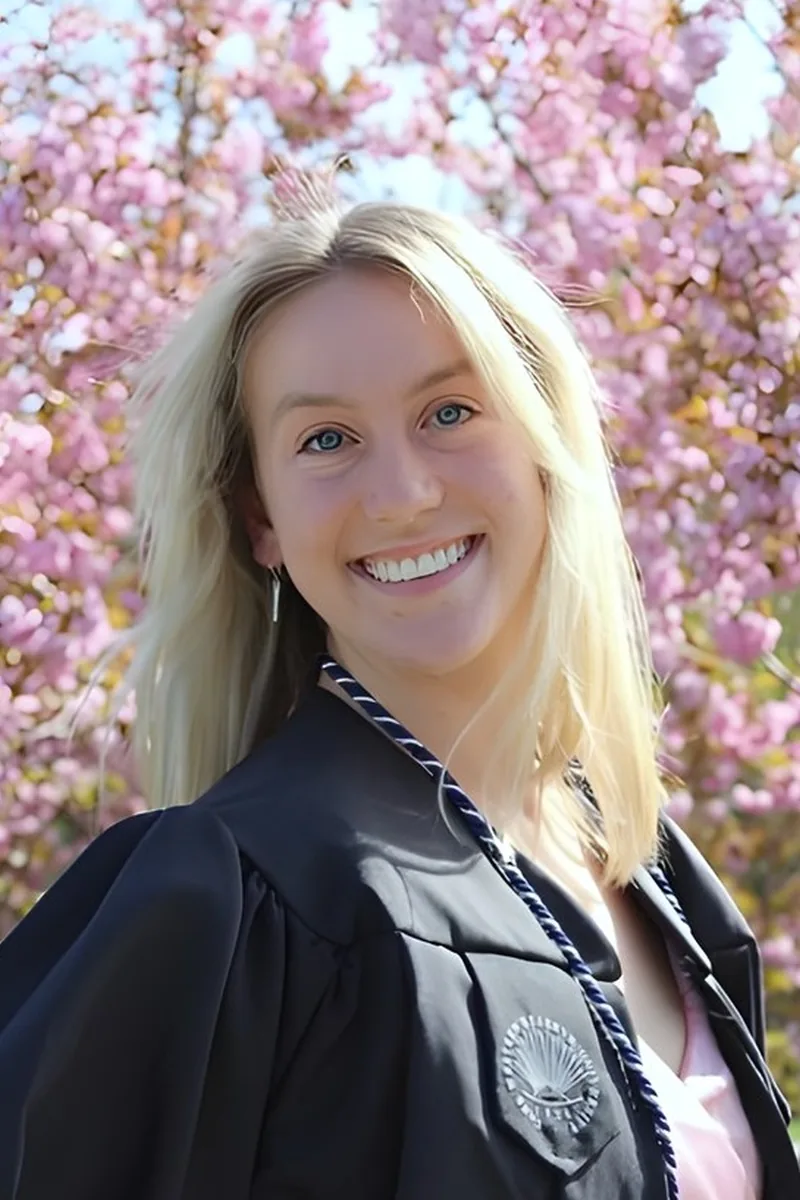
Maggie's doctoral work in biomedical sciences means she encounters thermochemistry where it matters most — metabolic energy balances, cellular respiration pathways, and the heat exchanges that keep biological systems running. She teaches students to build energy diagrams from the ground up, so sign conventions and multi-step Hess's law problems follow logically instead of requiring brute memorization. Her years as a chemistry TA sharpened her ability to break down calorimetry setups into clear, manageable pieces.
Biomedical engineering at Boston University and Tufts gave Varuna a working relationship with thermochemistry that most chemistry students never get — designing medical devices means understanding exactly how heat moves through materials and biological tissue. She teaches calorimetry and enthalpy problems by having students map the energy budget of a system first, so sign conventions and Hess's law calculations become logical steps rather than guesswork. Rated 4.9 by students.
Applied mathematics training gives Drisana an edge in thermochemistry that's easy to overlook — she treats multi-step Hess's law problems and calorimetry setups as structured mathematical arguments where every term has a physical meaning. That precision carries into how she teaches sign conventions and enthalpy calculations, building each solution from energy conservation principles rather than pattern-matching formulas. Rated 5.0 by students.
Oliver's biochemistry and MCD biology degrees from CU Boulder mean he studied thermochemistry from both sides — the physical chemistry of enthalpy and heat exchange, and the biological reality of metabolic energy pathways where those principles actually matter. He teaches students to work through Hess's law and calorimetry problems by building the energy narrative of a reaction first, so sign conventions and multi-step calculations stop feeling like arbitrary rules. Rated 5.0 by students.
Enthalpy diagrams, Hess's law, calorimetry calculations — thermochemistry sits at the intersection of chemistry and physics, and students often struggle because it requires fluency in both. Serena's UCLA premed track covered thermodynamics extensively, and she teaches students to trace energy flow through a reaction step by step so the math follows naturally from the concept.
Graduate-level analytical chemistry at UIUC means Whitney spends her days immersed in the quantitative rigor that thermochemistry demands — precise measurements, careful unit tracking, and systematic problem-solving. She teaches calorimetry and enthalpy calculations by emphasizing dimensional analysis and data interpretation, skills she sharpens daily as both a researcher and a TA in college chemistry courses.
Enthalpy diagrams, Hess's law, and calorimetry calculations are daily territory for a chemical engineering student — Michael uses thermochemistry constantly in his Penn coursework. He unpacks the logic behind sign conventions and energy balances so students can solve problems confidently rather than second-guessing every negative sign.
Christopher teaches both physics and chemistry, which means when students hit thermochemistry — where energy conservation meets reaction stoichiometry — he can explain the physics of heat transfer and the chemistry of bond breaking in the same conversation. His quantum mechanics and thermodynamics background lets him dig into why calorimetry problems demand such careful sign tracking, connecting each q = mcΔT calculation to the molecular-level energy changes driving it.
I am a doctoral candidate at the University of Calgary, Canada. I received my Master of Science in chemical engineering with focus on modelling complex materials in 2016. During graduate school, I have acted as a teaching assistant (TA) extensively, teaching a very wide variety of courses to students across different age groups. While I tutor a broad range of subjects, I am most passionate about the physical sciences. In my experience TAing university courses, I have learned how to explain a concept from many different points of view, to make it understandable to the most number of students. In my spare time, I enjoy reading, hiking, digital photography and playing chess.
Enthalpy diagrams, Hess's law, and calorimetry calculations all click faster when a student understands the energy story behind each reaction rather than just plugging into formulas. Ademola digs into the reasoning — why bond breaking is endothermic, how standard enthalpies of formation let you shortcut complex calculations, and where sign errors typically creep in. His McGill training in both physical chemistry and thermodynamics gives him a precise command of the subject.
Enthalpy diagrams, Hess's law, calorimetry calculations — thermochemistry sits at the intersection of chemistry and physics in a way that trips up students who are strong in one but not the other. Ekta's engineering coursework required mastering energy transfer concepts quantitatively, and she walks through each problem type with a structured, step-by-step approach.
Testimonials
Because the right Thermochemistry tutor makes all the difference.
Average Session Rating – Based on 3.4M Learner Ratings
Top 20 Science Subjects


Top 20 Subjects
Frequently Asked Questions
Thermochemistry is full of abstract concepts that are hard to visualize—enthalpy, entropy, and bond energy exist at the molecular level where you can't see them directly. A tutor can help you build mental models by connecting equations to real molecular behavior: why breaking bonds requires energy input, how heat flows during reactions, and what entropy really means physically rather than just as a formula.
Many students master the math but miss the conceptual understanding that makes thermochemistry click. Personalized 1-on-1 instruction focuses on your specific visualization gaps, using diagrams, energy level illustrations, and real-world examples to make abstract ideas concrete.
Calorimetry labs are where thermochemistry becomes hands-on, but the jump from experimental data to thermochemistry principles trips up many students. A tutor can help you understand what you're actually measuring in the lab, why the math works (q = mcΔT), and how to trace energy flow from the reaction to the thermometer reading.
Beyond just calculating values, personalized tutoring covers experimental design thinking—why we use calorimeters the way we do, how to account for heat loss, and how lab results connect to Hess's Law and thermochemical equations. This bridges the gap between procedure and real chemistry understanding.
This is a common source of confusion because both methods calculate enthalpy change, but they're actually measuring different things. Hess's Law works backward from known reactions and equations—it's powerful when you have reference data but doesn't require you to understand molecular bonding. Bond energy calculations directly model what happens at the molecular level: breaking old bonds (endothermic) and forming new bonds (exothermic).
A tutor can help you develop decision-making skills by teaching you to recognize which information you're given (reaction equations vs. bond energies) and what the problem is really asking. This shifts you from memorizing rules to understanding when and why each method applies.
Sign conventions in thermochemistry aren't arbitrary—they reflect real, physical meaning. ΔH is negative when a reaction releases heat (exothermic) because the system loses energy. ΔS is positive when disorder increases. ΔG tells you spontaneity: negative means the reaction will happen on its own. The reason you're struggling to keep these straight is that memorization falls apart without the conceptual backbone.
Personalized tutoring helps you build that backbone by connecting signs to energy and disorder at the molecular level, using energy diagrams and real examples so the logic sticks. Once you understand why the signs work this way, you'll use them correctly without constant second-guessing.
This is where thermochemistry and equilibrium chemistry meet, and it's crucial for understanding real-world reactions. ΔG tells you whether a reaction is thermodynamically favorable—whether it can happen spontaneously. A negative ΔG means the reaction will proceed, but how far it goes depends on equilibrium position (K). Some reactions with negative ΔG never seem to happen because they're incredibly slow (kinetics); others reach equilibrium before going to completion.
A tutor can help you connect these ideas: how ΔG, K, and reaction rates all work together to predict what actually happens in a beaker. This systems-level thinking is what separates surface-level problem-solving from real chemistry understanding.
Unit conversions are one of the biggest sources of careless errors in thermochemistry, and they're often harder than the chemistry itself. The challenge isn't the concept but keeping track of multiple conversions (kJ ↔ J, °C ↔ K, calories ↔ joules) without losing track. Many students rush through conversions and drop factors of 1000.
A tutor can help you develop systematic approaches: dimensional analysis habits, how to organize multi-step problems, and ways to sanity-check your answers. Personalized instruction also addresses your specific stumbling blocks—whether it's molar conversions, energy unit changes, or temperature scales—so you build reliable problem-solving routines.
Thermochemistry explains why gasoline burns, how batteries work, why some reactions feel hot while others feel cold, and whether a chemical process is worth doing at scale. It's the foundation for everything from pharmaceutical drug development (which compounds will be stable?) to materials engineering (designing better materials) to environmental science (climate change, fuel efficiency).
A tutor can connect the equations and theory to applications that resonate with you—whether that's how rockets work, why certain fuels are used, or what makes a reaction economically viable. When you see the real-world stakes, the abstract concepts become tools for solving problems you actually care about.
Let’s find your perfect tutor
Answer a few quick questions. We’ll recommend the right plan and match you with a top 5% tutor.