Award-Winning African-American History
Tutors
African-American History
Tutors
Private 1-on-1 tutoring, weekly live classes for academic support, test prep & enrichment, practice tests and diagnostics, and more to elevate grades and test scores.
Based on 3.4M Learner Ratings
UniversitiesSchools & Universities
DeliveredHours Delivered
ProficiencyGrowth in Proficiency
Who needs tutoring?
No obligation. Takes ~1 minute.

Patrick taught fifth and sixth graders on Chicago's south side, where African-American history isn't an abstraction but a living context. His training in close reading and textual analysis at the University of Chicago means he can walk students through foundational texts — from slave narratives and Reconstruction-era documents to Civil Rights speeches — and show how to extract meaning, argument, and historical significance from each one.
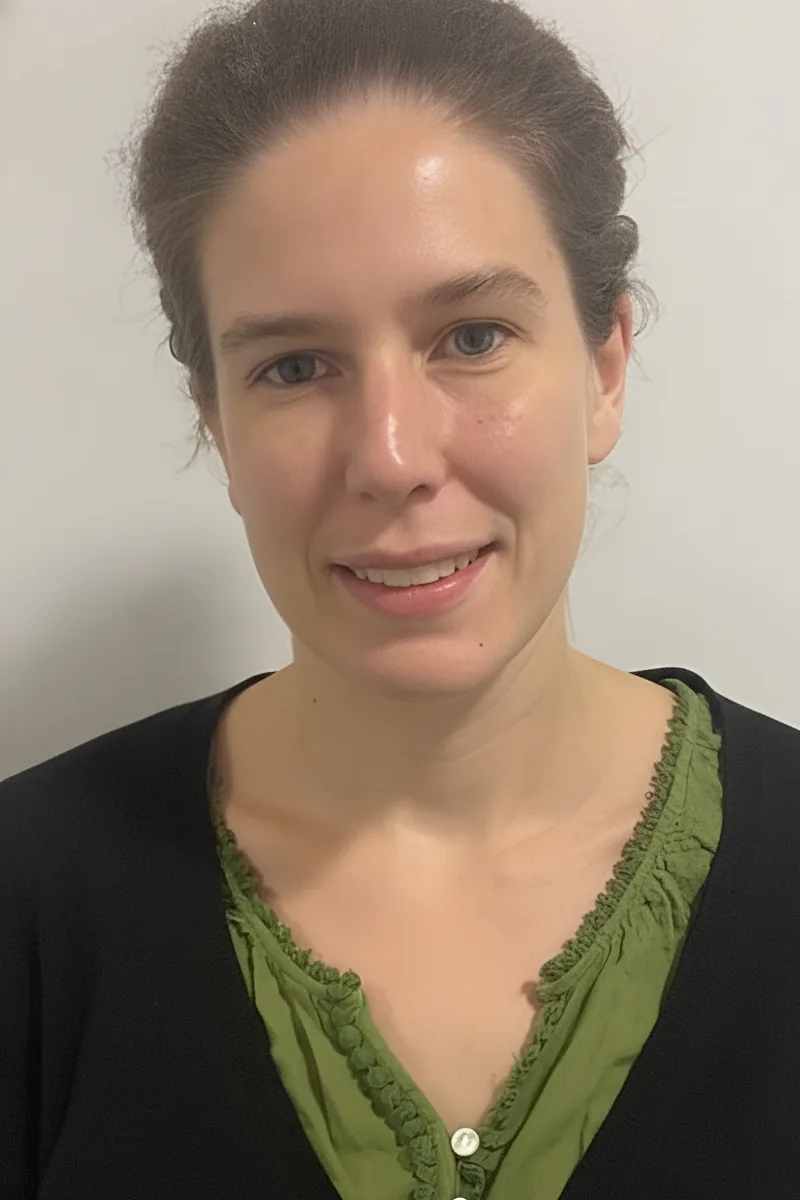
Sarah's doctoral research at Harvard sits at the intersection of African and African-American cultural production — tracing how musical traditions, oral histories, and literary voices moved across the Atlantic and evolved in new contexts. That background gives her an unusually textured understanding of the cultural, political, and artistic dimensions of African-American history.
Studying African-American history means grappling with primary sources that range from slave narratives to Supreme Court decisions to protest literature. Peter's dual background in journalism and English Education gives him a sharp eye for textual analysis, and he teaches students to read these documents critically while building the essay-writing skills the subject demands.
I'm excited to work with you or your child either on standardized test preparation or on generally improving performance in history, English, and social studies!
Lisanne earned her PhD from Harvard in Black Studies and Social Anthropology, making African-American history not just a tutoring subject but the center of her academic career. She digs into the primary documents, cultural movements, and political structures that shaped the Black experience in America — from Reconstruction-era legislation to the intellectual currents of the Harlem Renaissance. Students come away understanding not just what happened, but the frameworks scholars use to interpret why.
I love to help students to do well on the SAT and ACT Verbal, Reading, and English sections. I have tutored these areas of standardized tests for more than 3 years. My approach is not "standardized" because I enjoy working one-on-one with clients to tailor learning experiences that address each person's unique needs. As a former professor of communication, I also have the skills to help professionals and graduate students with their research and writing. I am currently helping a doctoral student with her dissertation.
This is Gabriela's home turf. As an African American Studies major at Harvard, she engages daily with the scholarship, primary sources, and historiographical debates that define this field — from Reconstruction-era politics to the civil rights movement to contemporary racial justice. She connects the dots between events, cultural movements, and systemic structures so students understand not just what happened but why it still matters.
Teaching African-American history well means going beyond a textbook timeline of key dates and instead unpacking the intellectual traditions, cultural movements, and systemic structures that shaped Black life in America. Anniessa brings dedicated study in anti-oppression frameworks to this subject, connecting events like Reconstruction or the Great Migration to their lasting social and political consequences. Her philosophy background adds rigor to discussions of figures like W.E.B. Du Bois, Fannie Lou Hamer, and Angela Davis.
A Dartmouth history major now pursuing a JD at Duke and a PhD in Education at Boston College, Jennifer brings serious academic range to African-American history — particularly the legal and policy dimensions that shaped Black life in America, from the Thirteenth Amendment's loopholes to the legislative battles behind Brown v. Board. She teaches students to trace how court decisions, executive orders, and grassroots organizing interacted across eras, turning what can feel like a disconnected timeline into a coherent story about power and citizenship. Rated 5.0 by students.
Asha's PhD in Political Science and Government grounds her teaching of African-American History in the legislative battles, constitutional amendments, and policy debates that shaped Black life in America — from Reconstruction-era civil rights acts to the Voting Rights Act of 1965. She unpacks how political institutions both enforced and dismantled racial hierarchies, giving students a framework that connects historical events to systemic causes. Rated 5.0 by students.
From Reconstruction to the Great Migration to the Civil Rights Movement, African-American history demands that students grapple with primary sources — speeches, legislation, personal narratives — and understand how systemic structures shaped lived experience. Michael's sociology background and his work teaching in Baltimore City public schools give him both the academic framework and the real-world context to make these connections vivid. He digs into the documents themselves, teaching students to analyze perspective, bias, and historical causation.
Currently pursuing a Master's in History at Penn after completing dual degrees in English and History at Cornell, Stephanie brings a researcher's eye to the texts and documents that define this subject — abolitionist pamphlets, Freedmen's Bureau records, the speeches and letters that reveal how Black Americans articulated their own demands for citizenship across eras. Her English training is particularly useful here, since so much of African-American history lives in narrative form: slave narratives, protest poetry, editorial columns that shaped public opinion from Frederick Douglass through the Black Press of the twentieth century. She teaches students to read these sources as both literary and historical evidence, building arguments that connect voice and context.
Arianna's Dartmouth education and science-heavy background — three bachelor's degrees including neuroscience — trained her to dissect complex systems, a skill she brings to tracing how medical exploitation, educational segregation, and economic policy compounded across generations in Black American life. She's particularly effective at walking students through how scientific racism and public health disparities functioned as tools of systemic oppression, connecting biology to history in ways most tutors can't. Rated 4.8 by students.
Kiara holds a BA in African American Studies, which means she didn't just take a survey course — she spent years engaging with the historiography, from Reconstruction-era politics to the intellectual traditions of the Harlem Renaissance to modern civil rights movements. She unpacks how to read primary documents from figures like Frederick Douglass or Ida B. Wells and build historical arguments around them. Students preparing for AP African American Studies or college-level coursework get someone who genuinely knows the field.
I am a graduate of Duke University with a degree in Health Policy and Education Policy. While at Duke University I was a student athlete, participated in the leadership of several clubs and service groups; as well as, working as a Math and Reading tutor. After graduation I spent a year pursing a business venture allotted to me through the Elevator Pitch Competition, my senior year of college, which I won in my category - Non-Profits. After that year, I joined the Teach for America Fellowship, where I fell in love with teaching. The Teach for America Fellowship is 2 years; however, after my first year due to the recognition and growth in my classroom I was invited to start a school. I spent 2 years at that school prior to getting married and moving to California, a few months ago, with my amazing, aerospace loving, husband.
Few tutors bring the depth Eric does to African-American History. His Master's in African Area Studies and his experience as a college humanities instructor give him a framework that connects the transatlantic slave trade, the Harlem Renaissance, and modern racial politics into a coherent narrative — one that sharpens students' ability to analyze primary sources and construct evidence-driven arguments.
Studying African-American history means grappling with primary sources that range from slave narratives and Reconstruction-era legislation to SNCC pamphlets and redlining maps — each demanding its own interpretive framework. Emmaline's Columbia training in both history and literature equips her to teach students how to read these documents critically, situate them in broader political contexts, and build arguments that take historiographical debates seriously.
Jennifer's communications and English background at the University of Alabama — a campus with its own deeply layered civil rights history — gives her strong skills in analyzing speeches, editorials, and protest literature that are central to studying the African-American experience. She teaches students to break down the rhetorical strategies behind texts like King's 'Letter from Birmingham Jail' or Frederick Douglass's autobiographical writing, treating them as both historical evidence and persuasive craft. Rated 5.0 by students.
Julia's history degree and her deep engagement with AP US History, AP World History, and American literature give her a cross-disciplinary lens for teaching how events like the Great Migration or the Harlem Renaissance reshaped both policy and culture simultaneously. She connects African-American history to students' own experiences and current events, making the through-lines from Reconstruction-era struggles to modern civil rights debates feel immediate rather than abstract. Her strength is turning what looks like a dense timeline into a conversation students actually want to have.
Zachary's literary background — he's a novelist and English professor with a Columbia MFA — gives him a narrative-driven approach to African-American history, connecting movements like the Harlem Renaissance, Reconstruction, and the Civil Rights era to the primary texts and voices that shaped them. He teaches students to read historical documents the way a writer would: looking for argument, perspective, and what's deliberately left unsaid.
From Reconstruction-era politics to the Great Migration to the Civil Rights Movement, African-American History covers ground that most U.S. survey courses barely touch. Kierra unpacks these periods by connecting political, cultural, and economic threads, teaching students to analyze how systemic forces shaped Black communities across different eras.
Working with public defense organizations on Rikers Island and across New York City gave Rachel direct exposure to how the criminal justice system intersects with the long arc of African-American history — from Black Codes and convict leasing to mass incarceration. Her Columbia coursework in History and American Studies anchors that real-world experience in rigorous source analysis, so she teaches students to connect contemporary policy debates back to their historical roots in Reconstruction, the Great Migration, and the Civil Rights era. Rated 4.9 by students.
Breond earned his PhD from Harvard with a specialization in Africana philosophy, moral thought, and criminology, making African-American history one of his deepest areas of expertise. He teaches the subject as an interconnected story — linking the legal architecture of Reconstruction to the Great Migration to the philosophical underpinnings of the Civil Rights and Black Power movements — so students can write and argue with real command of the material.
Understanding how psychology, philosophy, and science intersect with historical experience is something Ryan's neuroscience coursework and his involvement in psychology and philosophy clubs prepared him to do — and those intersections run deep in African-American history, from the pseudoscientific racism used to justify slavery to the psychological dimensions of the Black Power movement. He teaches students to examine how ideas about the mind and human nature were weaponized, challenged, and reclaimed across different eras. Rated 4.5 by students.
Few tutors bring both academic training and genuine depth to African-American history. Jacqueline earned a B.A. in African and African Diaspora Studies from UT Austin, studying everything from the transatlantic slave trade and abolitionist movements to the Harlem Renaissance and modern Black political thought. She connects these threads so students see African-American history as a continuous, living narrative rather than isolated chapters.
Cheryl's NYU political science coursework gave her deep exposure to the legislative battles, cultural movements, and systemic structures central to African-American history — from Reconstruction-era amendments through the Civil Rights Act to modern policy debates. She connects these threads so students see how each era's struggles and achievements shaped the next.
Understanding African-American history means grappling with primary sources — slave narratives, abolitionist pamphlets, civil rights speeches — as texts that reward close, critical reading. Evan's literary training sharpens that skill, and he connects movements like the Harlem Renaissance and Black Power to the broader cultural and political currents students need to analyze in essays and exams. Rated 5.0 by students.
Too many courses compress African-American History into a slavery-to-civil-rights arc and skip the rest. Nathaniel digs into the fuller story — Reconstruction-era political organizing, the Great Migration's cultural impact, Black intellectual traditions from Du Bois to Baldwin — and teaches students to engage with primary voices rather than relying on secondhand summaries.
Testimonials
Because the right African-American History tutor makes all the difference.
Average Session Rating – Based on 3.4M Learner Ratings
Top 20 Social Studies Subjects


Top 20 Subjects
Frequently Asked Questions
Students often find it challenging to synthesize the long arc of African-American experiences across multiple centuries while maintaining analytical clarity. Common trouble spots include: distinguishing between the distinct experiences and resistance strategies of enslaved people versus free Black communities in the North; understanding the complex relationship between Reconstruction policies and their actual implementation in different regions; and tracing how systemic racism evolved through different legal and institutional forms (slavery → Jim Crow → redlining → mass incarceration). Many students also struggle to move beyond memorizing dates and figures to analyzing primary sources that reveal competing perspectives within Black communities themselves—such as ideological differences between Booker T. Washington and W.E.B. Du Bois, or tensions within the Civil Rights Movement between different organizations and strategies.
A tutor can teach you a systematic approach to source analysis that goes beyond surface-level comprehension. This includes learning to identify the author's positionality (their social location, audience, and potential biases), recognizing what the source reveals about both the writer's perspective and the historical moment, and comparing competing narratives—for example, comparing enslaved people's narratives with slaveholders' accounts, or contrasting different civil rights leaders' strategic visions. Tutors help you practice asking critical questions: Who created this source and why? What assumptions does it contain? What voices or perspectives might be absent? This skill directly strengthens your ability to construct evidence-based arguments in essays and exams, moving beyond summary toward genuine historical interpretation.
African-American History involves complex, interconnected causes—economic systems, political decisions, cultural resistance, demographic shifts, and individual agency all interact in ways that resist simple linear explanations. A tutor helps you practice identifying multiple contributing factors and understanding how they reinforce each other. For instance, understanding the Great Migration requires examining not just the push factors (Jim Crow violence, limited economic opportunity in the South) but also the pull factors (industrial job availability, existing community networks, railroad recruitment), plus the ways this migration itself transformed American politics and culture. Learning to construct nuanced arguments that acknowledge complexity while still making clear analytical points—rather than listing disconnected factors—is a skill tutors develop with you through guided practice on actual historical questions.
Students often struggle with how to balance traditional periodization (Colonial era, Antebellum, Reconstruction, Jim Crow, Civil Rights, Post-Civil Rights) with the reality that African-American experiences don't neatly fit these categories. A tutor helps you develop flexible frameworks that track specific themes across periods—for example, following evolving strategies of resistance and freedom-seeking from the colonial period through emancipation, or examining how racial capitalism transformed across different eras while maintaining core exploitative structures. You'll learn to ask: What changed in this period, and what persisted? How did African-American communities respond to those shifts? This approach helps you write more sophisticated essays that demonstrate periodization as an analytical tool rather than a rigid box, which is especially important for AP-level work.
Understanding how institutions (government, education, banking, criminal justice) created and maintained racial hierarchies requires learning to read policy documents, legal codes, and institutional practices as historical evidence. A tutor teaches you to trace specific mechanisms—like how redlining policies mathematically prevented Black wealth accumulation, or how convict leasing systems perpetuated slavery-like conditions after emancipation, or how school funding formulas created resource disparities. You'll practice analyzing not just what policies stated but how they actually functioned and whom they benefited. This skill is crucial for constructing evidence-based arguments about systemic racism and understanding how individual prejudice and institutional structures interact—a distinction many students initially miss but is essential for sophisticated historical analysis.
This is one of the most important analytical challenges in African-American History: representing the real constraints people faced while honoring their creative, strategic responses and refusal to be passive. A tutor helps you develop language and frameworks that hold both truths simultaneously. For example, you might examine how enslaved people created autonomous spaces and cultural practices within an oppressive system, or how Black communities built thriving institutions and economies despite systematic exclusion, or how civil rights activists strategically chose tactics (nonviolence, direct action, litigation, political organizing) based on careful analysis of power. Learning to use primary sources that showcase African-American voices and decision-making—rather than only sources about what was done to Black people—fundamentally shifts your analytical approach and strengthens your historical arguments.
Many students initially treat African-American History as a monolithic category, missing how gender, class, sexuality, geography, and other identities shaped different experiences within Black communities. A tutor helps you practice analyzing how, for instance, Black women's experiences during slavery differed from Black men's due to sexual violence and reproductive coercion; how class divisions within Black communities affected civil rights strategies; or how LGBTQ+ Black activists contributed to and sometimes faced marginalization within mainstream movements. You'll learn to read sources that reveal these internal complexities—like Black feminist critiques of male-centered civil rights narratives, or working-class perspectives that challenged elite Black leadership. This analytical skill deepens your understanding of historical complexity and produces more nuanced, compelling essays that demonstrate sophisticated historical thinking.
An effective African-American History tutor should have deep subject knowledge that goes beyond textbook narratives—understanding historiographical debates, being familiar with major primary sources and scholarly works, and able to discuss how historical interpretations have evolved. They should excel at teaching source analysis and evidence-based argumentation rather than just drilling facts, and be skilled at helping you recognize bias (including in traditional narratives) while developing your own analytical voice. Look for someone who can connect African-American History to broader historical themes while maintaining focus on the specific experiences and agency of Black people, and who can adapt their approach whether you're preparing for AP exams, writing research papers, or building foundational understanding. Varsity Tutors connects you with tutors who specialize in social studies and can tailor their expertise to your specific learning goals and skill level.
Let’s find your perfect tutor
Answer a few quick questions. We’ll recommend the right plan and match you with a top 5% tutor.