Award-Winning AP Calculus BC Tutors
serving Baltimore, MD
AP Calculus BC
Tutors in Baltimore
Private 1-on-1 tutoring, weekly live classes for academic support, test prep & enrichment, practice tests and diagnostics, and more to elevate grades and test scores.
Based on 3.4M Learner Ratings
UniversitiesSchools & Universities
DeliveredHours Delivered
ProficiencyGrowth in Proficiency
Who needs tutoring?
No obligation. Takes ~1 minute.
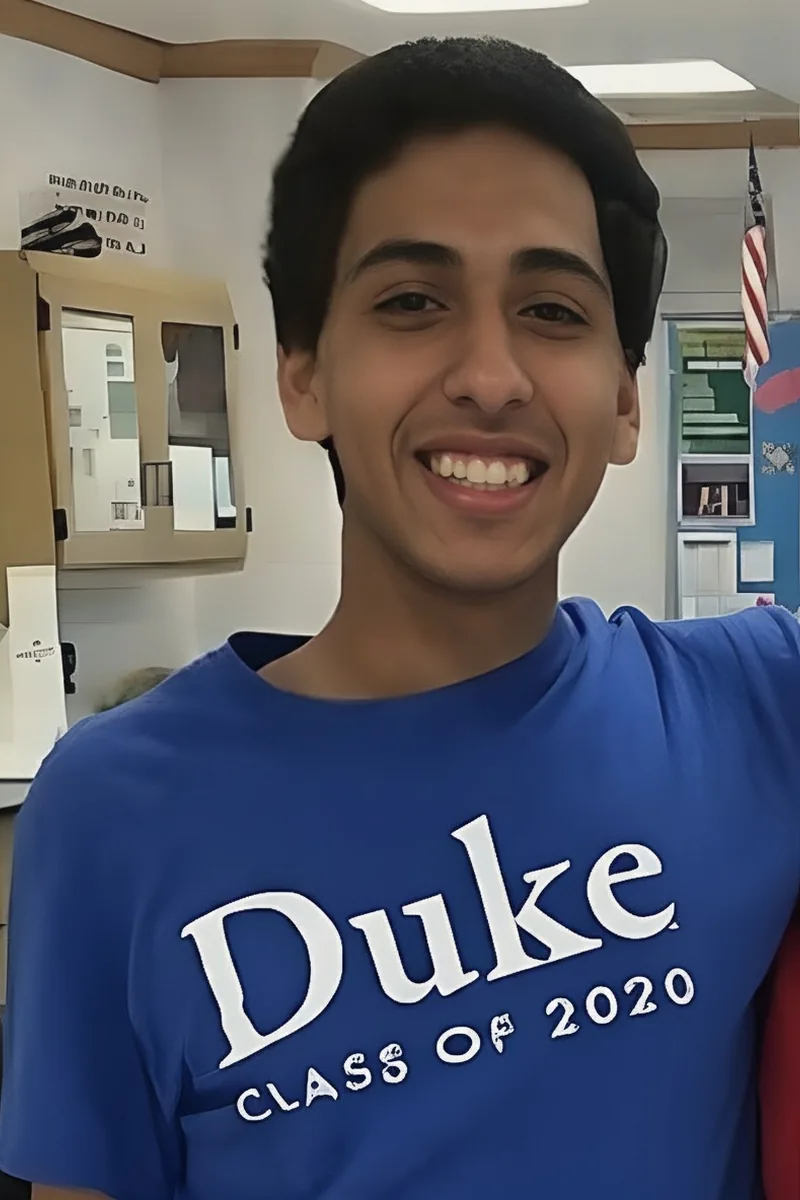
Most BC students can follow a convergence test step by step but freeze when asked to choose which test to apply — that decision-making is where Nima, a physics major heading to Duke on a full merit scholarship, spends most of his teaching energy. His physics training means he treats series and parametric equations as descriptions of real motion and real forces, which gives students an intuitive anchor when the abstraction piles up. A 1580 SAT and 4.7 rating back up his ability to make that AB-to-BC jump feel manageable.
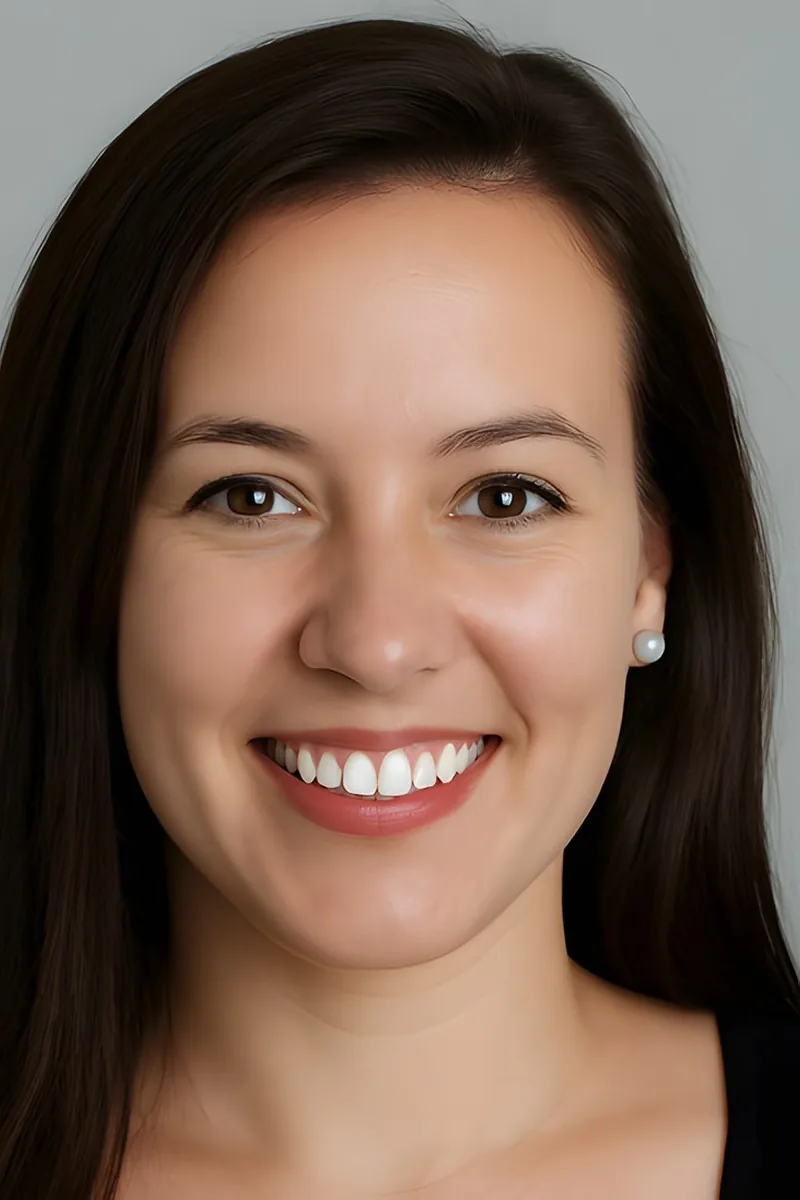
Environmental engineering graduate work is essentially applied calculus — Kate's thesis work required series approximations for modeling fluid dynamics and integration techniques for analyzing pollutant transport, so BC topics like Taylor polynomials and improper integrals are tools she's used professionally, not just academically. She's particularly good at showing how convergence tests follow a logical decision tree rather than feeling like a random grab bag of techniques. Rated 4.9 by students.
Engineering physics at Cornell means Daniel is currently neck-deep in the math that BC Calculus builds toward — using series to model oscillating systems, applying integration techniques to energy problems, and solving differential equations that describe real physical behavior. That context gives him a clear picture of which BC skills actually matter and how to teach something like the ratio test or parametric arc length by grounding it in the AB intuition a student already carries. Rated 5.0 by students.
Series convergence, parametric equations, and polar curves make BC the course where strong calculus students finally have to slow down and think carefully. Anthony earned his BS in physics and math from Yale, where these concepts weren't just exercises — they were the language of electromagnetism and classical mechanics. He teaches BC topics by connecting each technique to why it exists and when it matters.
Georgetown's math program gave Peter a rigorous grounding in the theoretical side of calculus — the kind where you prove convergence rather than just test for it — which translates directly into how he teaches BC topics like series, Taylor polynomials, and the Lagrange error bound. He's tutored every level of calculus since high school, and that range means he quickly spots when a BC struggle is actually an AB gap in disguise. Holds a 5.0 rating.
Princeton's electrical engineering program leans hard on series expansions and differential equations from day one — Sabrina uses them to analyze circuits and model signal behavior in her applied physics coursework, which means BC topics like Taylor polynomials and convergence tests aren't abstract exercises for her but tools she reaches for weekly. She's especially clear at breaking down the logic behind each convergence test so students can choose the right one on their own instead of guessing. Rated 5.0 by students.
Penn's economics program leans heavily on calculus-driven modeling, and Mandy is working through that curriculum right now — which means BC topics like series approximations and integration techniques show up in her coursework as tools for analyzing economic behavior, not just abstract exercises. She's especially clear at walking through the logic of convergence tests and connecting new BC material back to the AB foundations underneath it. Holds a 5.0 rating.
Scoring a 36 on the ACT while studying economics at Vanderbilt means Kerr lives comfortably in the quantitative reasoning that BC Calculus demands — and his computer science focus sharpens the algorithmic thinking behind recursive sequences and series convergence. He teaches BC's trickiest leaps, like moving from basic integration to constructing Taylor polynomials, by grounding each new idea in the conceptual logic rather than just the procedural steps. Rated 4.9 by students.
As a multivariable calculus teaching assistant at Harvard's Math Department, Kristi spent semesters watching exactly where students' BC foundations cracked under pressure — shaky series intuition, mechanical convergence testing, parametric reasoning that never quite solidified. Her astrophysics training means she learned these tools by necessity, using Taylor expansions to model orbital mechanics and integration techniques to analyze planetary data, so she teaches the logic driving each method rather than just the steps. Rated 5.0 by students.
Biomedical engineering at Cornell throws parametric modeling, series approximations, and heavy integration at Annie every semester — BC Calculus is essentially the prerequisite language for her entire degree. Her year as a teaching assistant for introductory biology sharpened her instinct for spotting exactly where a student's reasoning goes sideways, whether it's a shaky limit concept underneath a convergence test or a misread of how polar area integrals accumulate. Rated 4.9 by students.
Series convergence tests, parametric equations, polar curves — BC Calculus piles on concepts fast, and falling behind on one unit can cascade through the rest of the course. Ethan breaks each new topic back to its AB foundation before building upward, so students see Taylor series and integration techniques as extensions of ideas they already own rather than entirely new material.
BC Calculus covers a massive range — from parametric equations and polar curves to Taylor series and convergence tests — and Dennis's physics research at Princeton demanded fluency in all of it. He connects topics like integration techniques and differential equations to the physical problems they were invented to solve, which makes the logic behind each method click.
Biomedical engineering at Johns Hopkins means Bidyut uses series approximations and differential equations to model biological systems — the same convergence tests and integration techniques that define the BC curriculum beyond AB. He's especially sharp at showing how a topic like Taylor polynomial error bounds connects back to the derivative reasoning students already trust, turning what feels like a wall of new material into a logical extension. Holds a 5.0 rating and a 36 ACT composite.
Testimonials
Because the right AP Calculus BC tutor makes all the difference.
Average Session Rating – Based on 3.4M Learner Ratings
Practice AP Calculus BC
Free practice tests, flashcards, and AI tutoring for AP Calculus BC
Other Baltimore Tutors
Related Math Tutors in Baltimore
Frequently Asked Questions
AP Calculus BC covers all of AP Calculus AB content plus additional topics including parametric equations, polar coordinates, and infinite series. The course focuses on limits, derivatives, integrals, differential equations, and applications of calculus. For students in Baltimore, understanding this expanded scope is important since BC is considered more rigorous than AB and requires mastery of both foundational and advanced concepts.
Score improvement depends on your starting point and consistency with practice. Students who work with a tutor typically see gains of 1-2 score points on the 1-5 scale, with larger improvements possible when addressing specific weak areas like series convergence or parametric differentiation. The key is identifying gaps early and practicing with released AP exams to build familiarity with question formats and time management.
Students in Baltimore commonly struggle with infinite series (convergence tests, Taylor series), parametric and polar calculus, and applications involving differential equations. Many also find the free-response section challenging due to time pressure and the need to show clear mathematical reasoning. A tutor can break down these topics into manageable pieces and help you practice the problem-solving strategies that earn full credit.
The AP Calculus BC exam is 3 hours and 15 minutes, split between a multiple-choice section (105 minutes) and a free-response section (90 minutes). Effective pacing means spending roughly 1.5-2 minutes per multiple-choice question and allocating 15-20 minutes per free-response problem. Tutors can help you practice timed sections and develop strategies for knowing when to skip a problem and come back to it, which reduces anxiety and maximizes your score.
Most students benefit from taking 4-6 full-length practice tests in the weeks leading up to the exam, spaced out with time for review and targeted practice on weak areas. After each test, analyzing your mistakes—especially on free-response questions where you can lose points for incomplete reasoning—is more valuable than the score itself. A tutor can help you identify patterns in your errors and create a focused study plan based on what you find.
Look for tutors with strong mathematics backgrounds, experience teaching or tutoring AP Calculus BC, and familiarity with the College Board's exam format and grading rubrics. It's also helpful if they've worked with students in Baltimore schools and understand the specific curriculum pacing your school uses. Varsity Tutors connects you with expert tutors who can tailor instruction to your learning style and help you master both computational skills and conceptual understanding.
Free-response questions reward clear mathematical communication and justification, not just correct answers. Practice writing out your reasoning step-by-step, showing all work, and explaining why your approach is valid. Common mistakes include skipping steps, not labeling axes or units, and failing to address what the question actually asks. Working with a tutor on released free-response questions teaches you how to earn full credit by meeting the College Board's expectations for rigor and clarity.
Your first session is typically a diagnostic and planning meeting. The tutor will assess your current understanding of key calculus concepts, identify your strongest and weakest areas, and learn about your goals (score target, timeline, specific topics). From there, you'll create a personalized study plan that focuses on the topics where you'll gain the most points, whether that's strengthening fundamentals or mastering advanced series and parametric calculus.
Let’s find your perfect tutor
Answer a few quick questions. We’ll recommend the right plan and match you with a top 5% tutor.