Award-Winning College Chemistry Tutors
serving Baltimore, MD
College Chemistry
Tutors in Baltimore
Private 1-on-1 tutoring, weekly live classes for academic support, test prep & enrichment, practice tests and diagnostics, and more to elevate grades and test scores.
Based on 3.4M Learner Ratings
UniversitiesSchools & Universities
DeliveredHours Delivered
ProficiencyGrowth in Proficiency
Who needs tutoring?
No obligation. Takes ~1 minute.
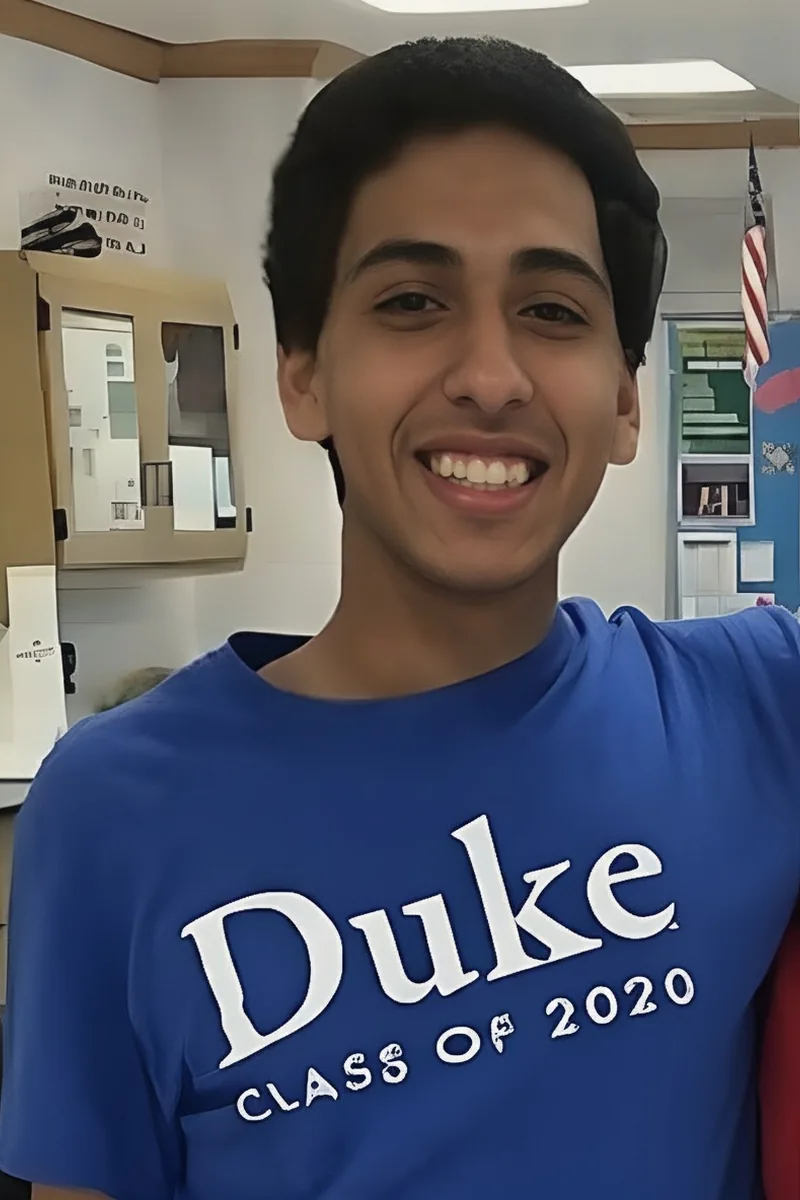
Thermodynamics, quantum numbers, and reaction kinetics all demand the kind of mathematical fluency that comes naturally to Nima as a Duke physics student. He unpacks college chemistry problems by grounding each calculation in the underlying physical principles, which makes topics like enthalpy, molecular orbital theory, and electrochemistry far more intuitive.

Conducting physics education research at the University of Maryland meant Lee spent years studying how students actually learn quantitative science — which misconceptions persist, which explanations stick, and where standard teaching methods fall short. He applies that pedagogy background directly to college chemistry topics like thermodynamics, quantum mechanical models of atomic structure, and gas laws, diagnosing conceptual gaps with unusual precision. Rated 4.6 by students.
Hi! My name is Matt Hlavin. I am currently working on my Master's degree in Materials Science and Engineering. I would consider myself a lifelong learner. Education has always had a special place in my heart, and now I am excited to share my love for learning with you!
I earned my undergraduate degree in biochemistry at Brown University and my Ph.D. in immunology at the University of California, Berkeley. I have been teaching both introductory and advanced biology courses at the University of Maryland, College Park for over 10 years. For fun I enjoy reading science fiction, doing crossword puzzles, swing and ballroom dancing, and playing ultimate frisbee.
Studying biochemistry at Boston College means Kellie is taking college chemistry right now — she knows which exam questions are tricky, which textbook explanations fall flat, and which shortcuts actually hold up under pressure. She breaks down topics like electron configurations, VSEPR geometry, and solution stoichiometry with the clarity of someone who just wrestled with them herself and figured out what finally made them click.
General chemistry at the college level demands more than memorizing solubility rules — it requires connecting thermodynamic principles to kinetics, understanding orbital theory, and applying equilibrium concepts quantitatively. Kinjal completed rigorous chemistry sequences as part of her biology program at Texas A&M and tackles each topic by tying abstract theory to concrete calculations. She holds a 5.0 rating from students.
Engineering coursework at Harvard means Christopher regularly uses chemistry concepts like thermodynamics, equilibrium, and reaction kinetics in applied settings. He teaches college chemistry by connecting abstract ideas — say, Gibbs free energy or electrochemical cells — to tangible problems, making the material easier to internalize before exams.
Eric holds a master's degree in inorganic chemistry, which means he can teach college chemistry topics like thermodynamics, electrochemistry, and coordination compounds from genuine research experience rather than rote textbook knowledge. He breaks down complex equilibrium and kinetics problems into logical steps that make the math feel manageable. Rated 5.0 by students.
Having scored a 36 on the ACT and taught honors chemistry alongside AP-level math and statistics, Ethan brings a quantitative sharpness to college chemistry that's especially useful when students hit the calculation-dense stretches — gas law problems, enthalpy calculations, solution stoichiometry. His environmental science background also means he can ground abstract topics like chemical kinetics and equilibrium in real-world systems where those principles visibly play out. Rated 5.0 by students.
Having taken college chemistry and then immediately applied it through four years of medical school, Sharon knows which gen chem concepts — electron orbitals, acid-base equilibria, reaction thermodynamics — actually stick with students and which ones need to be taught differently to last beyond the final exam. She unpacks problems by tying the abstract chemistry back to tangible examples from biology and medicine, which tends to make the material click for the pre-health students who make up most gen chem classrooms. Rated 5.0 by students.
Pre-med bio-psychology coursework at UCSB means Aaron has pushed through college chemistry the same way his students are — as a high-stakes prerequisite where every gap in stoichiometry or equilibrium shows up again in upper-division science courses. He talks through problems conversationally, pressing students to explain the reasoning back to him, which exposes shaky understanding far faster than just re-solving practice sets. Holds a 5.0 rating.
Neuroscience at Yale meant David couldn't just skim gen chem — he needed concepts like electrochemistry, molecular bonding, and reaction thermodynamics to stick, because they showed up again in every neurobiology and biochemistry course that followed. Now pursuing graduate work in bioethics, he teaches college chemistry by linking each topic to the bigger scientific picture, so students see why mastering something like intermolecular forces or acid-base equilibria pays off well beyond the final exam. Rated 5.0 by students.
Studying chemistry at MIT means Max has tackled the same problem sets, lab reports, and conceptual leaps that trip up college chemistry students — quantum mechanical models, thermodynamic cycles, molecular orbital theory. He approaches each session by identifying the specific concept a student is stuck on and building understanding from the ground up, not just drilling practice problems. His 5.0 rating speaks to how well that method works at the college level.
Going through med school means Amanda has seen what happens when gen chem concepts like acid-base equilibria and reaction thermodynamics aren't truly understood — they unravel in biochemistry, pharmacology, and every clinical science that follows. She teaches college chemistry by grounding each topic in the bigger picture of where it leads, using her biology degree and 4.2 GPA from Alabama to zero in on the quantitative reasoning — electron configurations, enthalpy calculations, equilibrium expressions — that students need to own rather than just survive.
Matt's neuroscience degree with a chemistry minor means he didn't just pass gen chem — he built on it through upper-level coursework in biochemistry and physiology, where concepts like molecular bonding, reaction energetics, and equilibrium stop being abstract and start explaining how biological systems actually function. That applied perspective lets him teach college chemistry topics by anchoring them to something concrete, which tends to make the leap from lecture notes to problem sets much less painful. Rated 5.0 by students.
Having served as an undergraduate teaching assistant at Cornell for introductory biochemistry, Josef has spent real time diagnosing where students get stuck on foundational chemistry — electron configurations bleeding into bonding theory, or mole concepts falling apart during stoichiometric conversions. He teaches college chemistry with a life sciences backbone, connecting topics like solution chemistry and reaction energetics to the biological applications his students will actually encounter next semester. Rated 5.0 by students.
Testimonials
Because the right College Chemistry tutor makes all the difference.
Average Session Rating – Based on 3.4M Learner Ratings
Other Baltimore Tutors
Related Science Tutors in Baltimore
Frequently Asked Questions
College Chemistry demands both conceptual understanding and problem-solving skills—many students struggle with balancing chemical equations, unit conversions, and visualizing molecular structures. Beyond memorization, the course requires you to connect theoretical concepts like equilibrium and thermodynamics to real-world applications, which takes practice. Personalized tutoring helps you build a solid foundation in these fundamentals while developing the scientific reasoning skills you need to tackle complex problems confidently.
During your first session, a tutor will assess your current understanding of chemistry concepts, identify specific areas where you need support, and learn about your learning style and goals. Whether you're struggling with stoichiometry, thermodynamics, or exam preparation, the tutor will create a personalized plan tailored to your needs. This foundation ensures every subsequent session builds directly on what you need most.
Yes—tutoring covers both the theoretical concepts and the practical lab skills you need to succeed. Tutors can help you understand experimental design, the scientific method, data analysis, and how to connect lab observations to underlying chemistry principles. This support is especially valuable for preparing lab reports and understanding why experiments work the way they do, not just following procedures.
Many students find it difficult to visualize molecules, electron configurations, and reaction mechanisms—concepts that are essential to understanding chemistry. Tutors use diagrams, molecular models, and real-world examples to make these abstract ideas concrete and easier to grasp. Breaking down complex structures and processes into digestible pieces helps you build mental models that stick, making problem-solving more intuitive.
If you're concerned about your chemistry readiness, personalized tutoring can strengthen your foundation in essential skills like algebra, unit conversions, and basic atomic structure. Starting with a tutor before the semester begins gives you a head start and builds confidence in the fundamentals. This preparation is especially helpful if you've been away from science or feel rusty on prerequisite concepts.
Varsity Tutors connects you with experienced tutors who specialize in College Chemistry and understand the specific challenges of the course. When you get matched with a tutor, you'll have access to someone with deep subject expertise who can explain concepts clearly and adapt their teaching to your learning style. The process is straightforward—you share your goals and needs, and we handle the matching.
Absolutely—exam preparation is one of the most common reasons students seek tutoring in College Chemistry. A tutor can help you review key concepts, practice problem-solving under timed conditions, identify weak areas, and develop test-taking strategies. With personalized guidance, you'll feel more confident walking into exams and better equipped to apply your knowledge to unfamiliar problems.
College Chemistry requires genuine understanding—memorizing facts won't help you solve new problems or apply concepts in the lab. Tutors focus on helping you grasp the underlying principles, see connections between topics, and develop the reasoning skills to approach unfamiliar problems. This deeper understanding not only leads to better grades but also makes chemistry more interesting and prepares you for advanced courses.
Let’s find your perfect tutor
Answer a few quick questions. We’ll recommend the right plan and match you with a top 5% tutor.