Award-Winning College Statistics
Tutors
College Statistics
Tutors
Private 1-on-1 tutoring, weekly live classes for academic support, test prep & enrichment, practice tests and diagnostics, and more to elevate grades and test scores.
Based on 3.4M Learner Ratings
UniversitiesSchools & Universities
DeliveredHours Delivered
ProficiencyGrowth in Proficiency
Who needs tutoring?
No obligation. Takes ~1 minute.
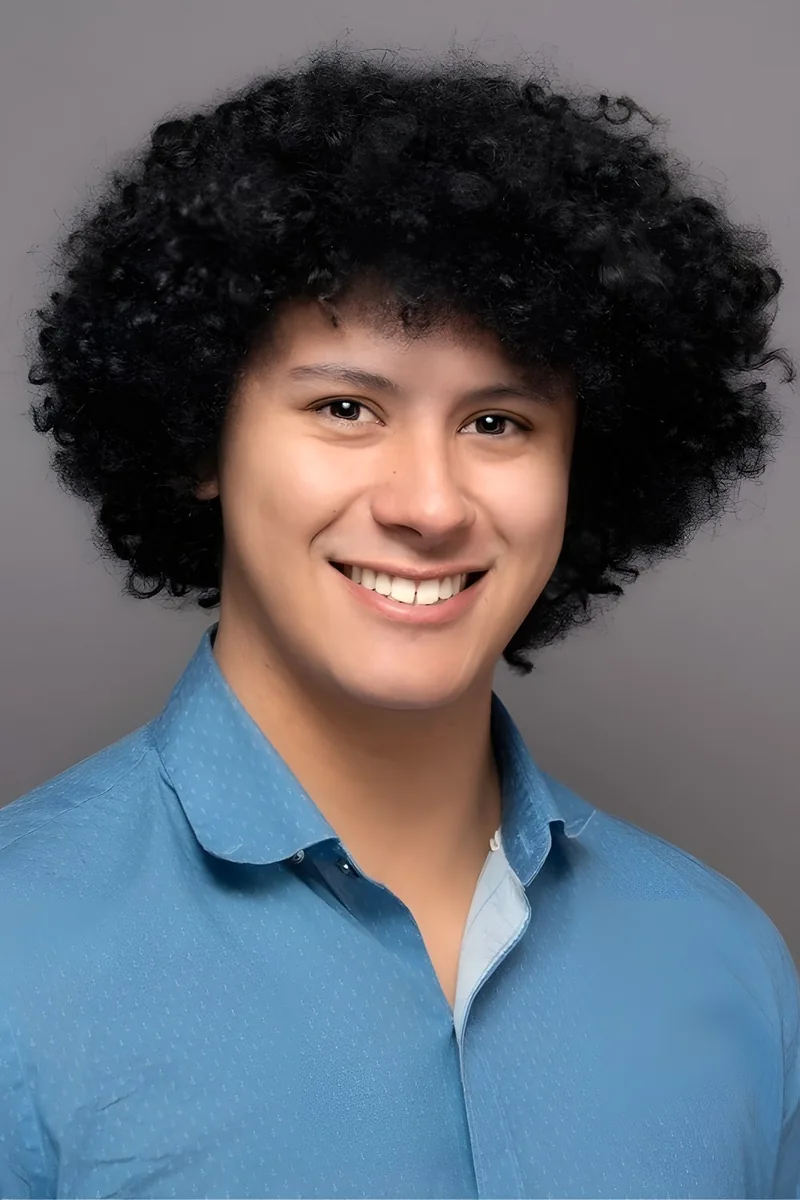
Hello! My name is Gabe, and I currently work as a Biostatistician in New York. I hold a Master's degree in Epidemiology from Johns Hopkins and a Bachelor's degree from NYU. Statistics isn't for everyone, but I hope to help students expand their knowledge or gain confidence in using it for a class. I am skilled in R studio for statistical and epidemiological analysis. My goal is to help students perform their best by becoming comfortable with the concepts.
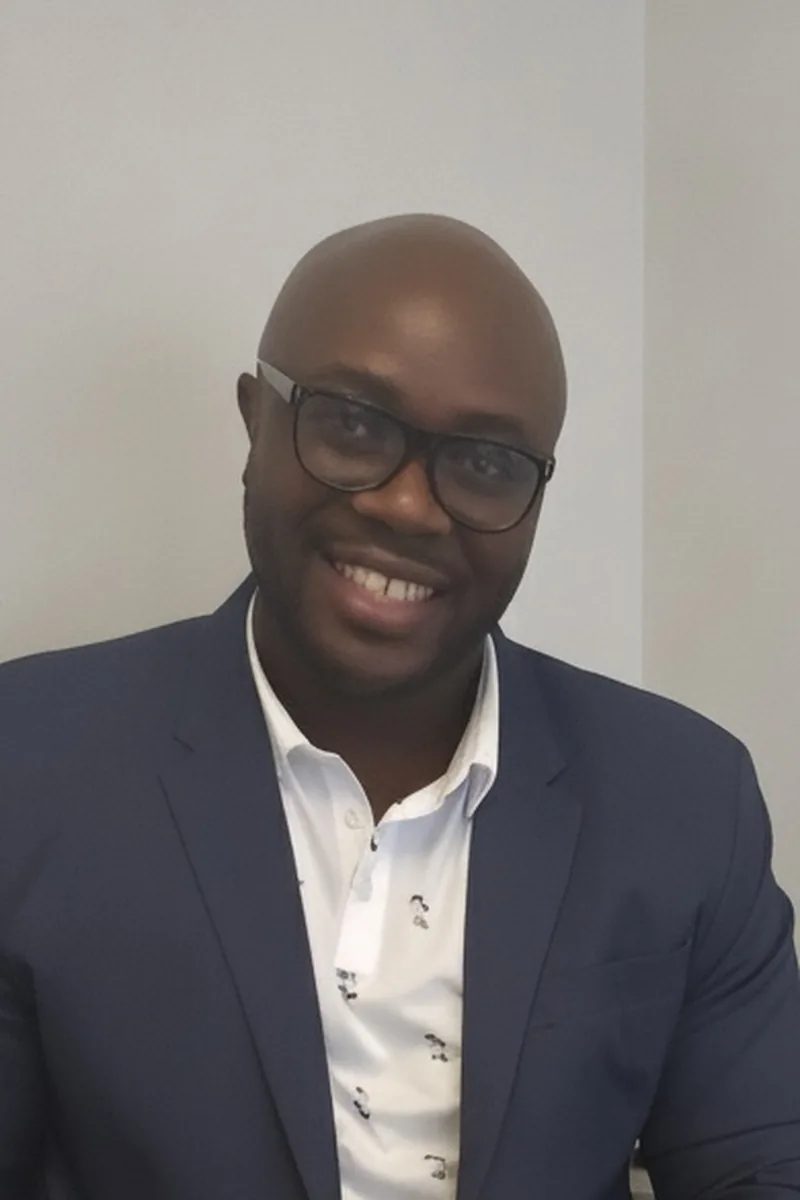
Statistical thinking is fundamentally about asking the right question before running any test, and that's where Courage starts. His environmental science research demanded fluency in hypothesis testing, confidence intervals, and regression analysis, so he walks students through both the logic behind each method and the practical mechanics of executing it.
Medical school trains you to read clinical research critically — evaluating sample sizes, interpreting p-values, and questioning whether a study's design actually supports its conclusions. Elise brings that lens to college statistics, connecting concepts like hypothesis testing and probability distributions to the kind of evidence-based reasoning she practiced throughout her MD at Creighton. Rated 4.9 by students.
Intro college statistics trips up students who memorize formulas without understanding when to apply a chi-square versus an ANOVA, or what a p-value actually tells them. Kate teaches these courses at the university level as part of her PhD program and walks students through hypothesis testing, probability distributions, and statistical software with the confidence of someone who uses these tools in her own research every day.
I like helping students. I am very patient. I have experience teaching Calculus classes at the University of Miami. I have done private tutoring for all levels of math up to Calculus, as well as Statistics, Business Math, and Math Finance. I have worked in the actuarial field. I have an undergraduate degree in mathematics from Michigan State University and a Master's degree in mathematics from the University of Miami. I worked for The Princeton Review as a tutor for the SAT. I did very well on both the SAT and ACT, and like teaching students how to do better on those. I like history, too, and always find it fun to tutor history.
Hi y'all! I hold my Master of Science in Psychology of Sport and my Bachelor of Science in both Psychology and Applied Human and Sport Physiology. I have many years of tutoring under my belt, working with people of all levels from elementary school through college in hard science subjects (Biology, Chemistry, and Mathematics), a few social sciences (History, Psychology, Economics), and language arts. When not tutoring, I love playing soccer and I even coach a youth team. I love encouraging students to learn, grow, and think critically for themselves.
Captaining a Math UIL Number Sense team builds a habit of thinking about numbers structurally — and Austin carries that same instinct into college statistics, where reading a dataset and choosing the right test matters more than raw computation. His math degree from UT Austin covers the probability theory and inferential methods that underpin the course, so he can explain what a sampling distribution actually represents instead of just walking through the formula. Rated 4.7 by students.
Statistics in college-level courses leans heavily on interpreting p-values, understanding regression output, and designing experiments with proper controls. Brody's neuroscience training required constant statistical analysis of research data, so he explains concepts like confidence intervals and hypothesis testing through the lens of how they're actually used in published studies.
Statistics becomes far less intimidating once you stop treating formulas as black boxes. Samuel unpacks concepts like hypothesis testing, confidence intervals, and probability distributions by explaining the logic behind each step, drawing on the quantitative rigor of his PhD in applied mathematics. He's rated 5.0 and is especially effective at bridging the gap between computation and interpretation.
My tutoring approach is one of coaching, mentoring, and helping the student understand exactly what level and detail of help that they need to get ahead. Combining the personal discipline learned during 20 years as a Naval Officer with the unique expertise learned in one-on-one communication with peers and sailors as well as my five children, I can help you or your child succeed. A Bachelor's in Electrical Engineering, and a Math Minor help qualify me for tutoring in many subjects. My individualized tutoring methods also raised my step-son's Physics grade from a C to an A in one semester. I specialize in mathematics (basic arithmetic through calculus) but can help in many other subjects. Learning should be fun, but should also, at times, bring "Instant" results. I work to keep positive encouragement in every lesson, tutoring, or test preparation session. I speak fluent Spanish!
Howdy! My name is Karthik, and I look forward to meeting you. I've been tutoring for over 10 years, and am excited to give you the tools to achieve success! I've seen it all, from frustrated parents who need their 8 year old to learn how to read, to high school/college students just needing a grade boost to pass a class, to retirees who finally have enough time to pick up that language they never got around to. I've personally taken courses on, passed tests for, and used the knowledge in real life for all the subjects I tutor, so I know not just how to learn, but also how to apply. If you'd like to get your personlized gameplan to never need tutoring again, help me help you and book a session today!
Working at both Microsoft and the National Institutes of Health meant Snipta was constantly pulling insights from messy, real-world datasets — deciding which statistical tests to run, interpreting output, and communicating results to teams that didn't speak stats. That applied experience, paired with a computer science and cognitive science background from UT Dallas, makes her especially sharp at teaching the logic behind inference and probability rather than just the mechanics. Rated 5.0 by students.
I am a PhD student in Civil Engineering at the University of Pittsburgh, holding both bachelor's and master's degrees in the same field from Cairo University, Egypt. My passion for teaching began at home, helping my three younger siblings understand challenging math and science topics. This early experience sparked a lifelong interest in education, which I continued to pursue as a teaching assistant at the University of Pittsburgh for two years. I've worked with students at different levels and backgrounds, and I enjoy tutoring subjects like math, physics, engineering mechanics, and civil engineering courses. I also have experience teaching engineering software. What I enjoy most is helping students understand difficult concepts by breaking them down into simple, manageable steps. I believe that every student learns differently, so I always try to adjust my teaching style to match their needs. Outside academia, I'm an avid football (soccer) fan and support Real Madrid and Al Ahly clubs and I enjoy playing the game whenever I get the chance. I also enjoy traveling and exploring new places with my wife we've visited six countries so far and hope to visit many more.
Hi! I am a math and science enthusiast first and foremost. Officially, I am a Harvard Biophysics graduate student. I enjoy problem-solving, discussing science, and sharing my expertise with others. I double majored in Applied Mathematics & Statistics and Biomedical Engineering. I love teaching Physics, and I have extensive experience tutoring Discrete Math and Real Analysis. I also served as a teaching fellow at Johns Hopkins University in Probability and Statistics, and later at Harvard University in Stochastic Processes. In addition, I completed a variety of foundational and applied computer science courses in college and applied these skills in various projects. I have been fluent in Java, and today I primarily use Python and R for my research projects. While most of my teaching experience is at the college level, I also enjoy working with high school students, whether in standard, honors, or AP- or IB-level courses.
Probability distributions, hypothesis testing, confidence intervals — college statistics is less about computation and more about learning to think with data. Melanie's neuroscience research background means she's run real statistical analyses, from t-tests to regression models, on actual datasets. She teaches the reasoning behind each method so students can set up problems independently, not just follow a formula sheet.
College-level statistics courses move fast through ANOVA, chi-square tests, and multivariate analysis, and professors rarely slow down for students still shaky on the logic behind null hypotheses. David has taught college statistics at Penn and the University of the Sciences, so he knows exactly what these courses demand and where the grading pitfalls hide. His 5.0 rating speaks to how clearly he translates statistical reasoning.
Hello! My name is AJ Eustace. I have five years of private tutoring experience working with students from middle school through college. I graduated from the University of Virginia with a double major in Statistics and Economics, and I'm currently enrolled in a Master of Social Work program at Ohio State. I specialize in helping students succeed in their math courses, particularly in algebra, geometry, and pre-calculus.
College-level statistics often ramps up quickly from descriptive measures to regression analysis and ANOVA, leaving students scrambling to connect the logic behind each test. Scott's dissertation research at NYU requires him to run these analyses regularly using both quantitative and qualitative methods, so he teaches the reasoning behind choosing a statistical test — not just how to punch numbers into a formula.
Probability distributions, hypothesis testing, and regression analysis show up in nearly every college major now, and Clare's Global Studies research background means she's applied these tools to real datasets, not just textbook exercises. She walks students through the reasoning behind each statistical test so they can interpret output and choose the right method on their own.
Confidence intervals, hypothesis testing, and regression analysis all hinge on understanding *why* a method applies, not just which formula to grab. Kathleen teaches statistics at every level up through graduate coursework and biostatistics, so she can unpack the theory behind a t-test or ANOVA in a way that actually prepares students for open-ended analysis projects. She holds a 4.9 rating across her subjects.
From the moment I began helping classmates in middle school study for math quizzes, I realized how much I enjoyed guiding others toward understanding. Over time, that spark grew into a genuine passion for education. What drives me most is witnessing the transformation in a student's confidencethe moment when confusion gives way to clarity, and they begin to believe in their own abilities. Tutoring, for me, is not simply about helping students achieve better grades; it's about empowering them to trust their capacity to learn and grow. My journey as a tutor began in high school, where I volunteered as a math tutor for underclassmen struggling with algebra and geometry. I worked one-on-one with students after school, helping them tackle difficult problems and build foundational skills. This early experience taught me how patience and consistent encouragement could make a lasting difference. In college, I served as a teaching assistant for general chemistry at the University of Virginia.
I'm a graduate student in Applied Statistics with experience in general math and computer programming to boot. I currently have a PhD in Applied Statistics with experience in data analytics. I've had the opportunity to do some math and statistics work for hospitals and research facilities, and I enjoy getting to share my passion for math with others to assist them in their education.
My background in math, economics, and finance has taught me to focus on understanding rather than memorizing. Having recently been a student myself, I understand how students think and where they can get stuck, which helps me stay patient and explain things from their perspective. As a bilingual speaker of English and Mandarin, I can also explain concepts in both languages when helpful.
College-level statistics demands more than plugging numbers into formulas; students need to understand when to apply a t-test versus a chi-square, how to interpret confidence intervals, and why assumptions matter. Jordan brings the quantitative rigor of his physics training at UNM to these concepts, walking through the logic of each method so students can set up and interpret analyses on their own.
Hi! I love to help students with the subject I love most: Math. I find joy in finding patterns, providing explanation in the world around me, and above all else, learning something new. I have my Bachelor's Degree in Mathematics (concentration in Statistics) at the University of Texas Rio Grande Valley. I've tutored virtually every high school/introductory college course available for about 4 years, from Algebra I to Calculus (I , II , III) to Introductory Statistics. I believe in not only teaching how to solve a problem, but making sure that a student truly understands *why* a given method works. Instead of just learning how to drive the metaphorical car, I show the student what happens under the hood. This philosophy has resulted in every single one of my students not only improving their scores, but more importantly attaining an underlying confidence in the subject material.
As a PhD candidate in Applied Economics, I bring years of experience in tutoring and mentoring students across a wide range of subjectsfrom foundational algebra, statistics and calculus to advanced microeconomic theory and econometrics. My teaching philosophy centers on adaptability: I begin with a personalized assessment to identify each student's strengths, challenges, and learning style, ensuring a tailored approach that fosters confidence and mastery. Beyond simply conveying concepts, I strive to make learning dynamic and relevant. By integrating real-world applicationswhether in policy, business, or everyday decision-makingI help students see the practical value of statistics, economics and mathematics, sparking curiosity and deeper engagement. My experience extends beyond the classroom; as a research mentor at the university level, I guide students in developing analytical rigor, critical thinking, and a genuine appreciation for the subjects they study. What drives me is not just academic success but intellectual empowerment. I want students to leave our sessions not only with better grades but with sharper problem-solving skills, a growth mindset, and enthusiasm for the material. Whether tackling a challenging theory or preparing for exams, I'm committed to creating a supportive, stimulating environment where learning thrives. Let's work together to turn obstacles into opportunitiesand discover the excitement in economics and mathematics along the way. Let's have fun with numbers
Hey!! I am a current graduate student at University and I possess over 5 years of teaching students of a varied age group. I am currently pursuing a masters degree in data analytics and management engineering. I specialize in mathematics, physics, programming languages (R, Python), statistics, economics and other concepts in science and technology. I am also proficient in core engineering concepts and love implementing optimization techniques. Feel free to reach out to me in case you need any help or queries.
I'm patient, personable, and have an incredible gift for explaining things in a way that makes sense. I majored in Math Education (with a minor in Computer Science), and I have more than eight years of experience teaching math and other STEM subjects.
I am a graduate from Rochester Institute of Technology with a master's in Game Design and Development. My passions lie in everything related to games and mathematics. In the past, I have tutored various subjects in mathematics throughout high school and college, including but not limited to Algebra, Algebra II, Trigonometry, Calculus, Discrete Mathematics, Mathematics of Graphical Simulation, and Linear Algebra. As for technology, I am more than happy to reach out for help in Web Development (HTML, CSS, Javascript) or C# programming. I believe that every person can learn any topic. While every individual has different tastes, strengths, and weaknesses, there is no such thing as an "incapability" to know a subject. Education often possesses a guise of anti-fun, but I can promise you that all topics can be engaging, and I am willing to show you how engaging mathematics and technology can be. As a Game Designer, I have a deep interest in both playing games and making games. This includes games of all kinds: video games, board games, tabletop role-playing games, trading card games, miniatures, and even some sports like tennis or ping pong. Games act as a fantastic teaching tool. They teach by design without users recognizing. It is always a satisfying moment when somebody says "I learned that word from Magic" or "D&D taught me that." Remember: you can succeed. If something is important to you, then it's always worthwhile.
As a passionate tutor working on an Accounting degree, I am dedicated to fostering a supportive and engaging learning environment that empowers students to reach their full potential. My approach is student-centered; I tailor lessons to accommodate diverse learning styles, utilizing interactive discussions, hands-on activities, and real-world examples that make complex subjects more relatable. With experience in a wide array of subjects, including Algebra, AP History, and English Language Arts, I strive to create customized learning plans that address individual goals and challenges. I believe that building strong relationships with my students is key to their success, and I am committed to nurturing their love for learning, and helping them thrive academically. I have experience tutoring multiple students in subjects such as: SAT, SSAT, Algebra, History, English & Writing
My sense of humor follows the 80/20 rule: 80% of my jokes work about 20% of the time. When I teach a class, if I haven't made them laugh at least once then I've failed. I know what it's like to suffer as a math student. Math was my hardest subject in high school and even made me cry sometimes. When I got to Calculus, though, everything came together and I came to see the beauty in mathematics. I continued this cycle of suffering followed by joyful understanding when I studied math in college and then grad school, and now that I'm finally out of academia, I can relax and share my experience with others. When I engage in an hour of private tutoring I tend to go over-time by around fifteen minutes if I need to do so to wrap up whatever we were working on. Teaching is a passion, a calling, and a compulsion for me.
Hi, I'm Kyle! I'm an Electrical Engineering student from Johns Hopkins, and I love to bring my experiences from both the student and teacher perspectives. As a teacher for more than 6 years with a 99th percentile SAT score and all 5s in APs such as Chemistry, both Physics Cs, and Calculus BC, I have developed strong communication and academic skills to help my students succeed. I try to break down problems and work on a stepwise approach to help all students succeed from their respective starting points. I love the chance to work with new students, and I can't wait to meet you!
As an experienced tutor with over four years of proven success, I am deeply passionate about education and its power to transform lives. My commitment to helping students achieve their academic goals stems from a genuine belief in the importance of knowledge and skill development. My teaching philosophy centers on creating a supportive and engaging learning environment. I believe in fostering critical thinking skills and encouraging students to approach challenges with confidence. By tailoring my tutoring style to each individual, I strive to not only improve academic performance but also instill a love for learning that extends beyond the classroom. What sets me apart is my unwavering dedication to student success. I am committed to going above and beyond to ensure my students grasp complex concepts, develop effective study strategies, and build the confidence needed to excel in their academic pursuits. My goal is not just to help students pass exams, but to equip them with the tools and mindset necessary for long-term success in their educational journey and beyond. Outside of tutoring, I am passionate about cricket, soccer, chess. These pursuits help me maintain a well-rounded perspective, which I believe enhances my ability to connect with and inspire my students. I look forward to the opportunity to work with you and contribute to your academic growth and success. Together, we can unlock your full potential and make your learning experience both rewarding and enjoyable.
Statistics trips up a lot of college students because it requires a different kind of mathematical thinking — interpreting distributions, designing hypothesis tests, and reasoning about probability rather than just computing answers. Brianna's University of Richmond concentration in Marketing Analytics meant she lived in datasets, regression models, and statistical inference throughout her degree. That applied background makes her especially effective at translating abstract statistical concepts into intuitive, real-world terms.
Katie's psychology degree from the University of Maryland meant working extensively with statistical methods — hypothesis testing, probability distributions, and regression analysis were part of her everyday coursework. She breaks down concepts like p-values and confidence intervals by tying them to real research scenarios, which makes the logic behind the formulas easier to retain.
Probability distributions, hypothesis testing, confidence intervals — statistics clicks when you understand *why* a method works, not just when to use it. Samantha's doctoral research in computer science required heavy statistical analysis, so she teaches these concepts through the lens of real data and practical interpretation.
Tutoring business statistics at the graduate level while earning his MS in Industrial-Organizational Psychology means Ján has used tools like regression, ANOVA, and correlation to answer real research questions about workplace behavior — not just to pass an exam. He teaches the reasoning behind each method so students can look at a problem and know which test to reach for, then interpret the output in plain language.
I have been teaching Math and Statistics for over 15 years. I am very passionate about teaching these subjects and want to make the teaching of theses subjects easy and interesting to students. My students love my teaching methods and have earned me a 5 star rating on rate your professor. I have Masters Degrees in Mathematics and Physics from Kishnov State University, Moldove and from the University of Alberta, Canada. I am happy when my students are happy and understand what I teach them.
I am currently pursuing a Ph.D. in Mathematical Finance at the University of Calgary, where I have maintained a perfect GPA. My journey in mathematics has been marked by numerous accomplishments, including winning medals in prestigious national and international mathematics competitions, such as the International Mathematics Competition and the National Scientific Olympiad. These achievements have fuelled my passion for mathematics and inspired me to help others excel in the subject. I have extensive experience as a Teaching Assistant at the University of Calgary, where I have taught courses such as Calculus, Linear Algebra, and Discrete Mathematics. These subjects are among my favorites to tutor because they form the foundation of many mathematical applications and are essential for students pursuing STEM fields. I enjoy helping students build a strong understanding of these core areas, which not only improves their academic performance but also boosts their confidence in tackling more advanced topics. My teaching philosophy is rooted in the belief that every student has the potential to excel in mathematics with the right support and motivation. I focus on making complex concepts accessible through creative problem-solving techniques and intuitive learning. My goal is to make each tutoring session engaging, interactive, and tailored to the individual needs of my students, helping them achieve their academic goals with confidence.
Krittika's MMath in Biostatistics from the University of Waterloo means she learned statistical methods through epidemiological data — survival analysis, logistic regression, and study designs where getting the model assumptions wrong has real consequences. She teaches college statistics by connecting each concept back to why a particular method exists, so topics like confidence intervals and hypothesis testing feel like logical tools rather than arbitrary formulas.
Testimonials
Because the right College Statistics tutor makes all the difference.
Average Session Rating – Based on 3.4M Learner Ratings
Top 20 Math Subjects


Top 20 Subjects
Frequently Asked Questions
College Statistics students often struggle with hypothesis testing and interpreting p-values—many memorize the mechanics without understanding what they actually mean. Probability concepts (especially conditional probability and Bayes' theorem) trip up students because they require shifting between different ways of thinking about the same problem. Additionally, students frequently misinterpret confidence intervals, confusing them with probability statements about the true parameter. Regression analysis is another challenge, as students apply formulas without grasping when linear models are appropriate or how to identify outliers and influential points that skew results. A tutor can help you move beyond "plug and chug" to truly understand the reasoning behind these concepts.
Statistics requires both computational skill and conceptual understanding—knowing *why* a test works matters as much as *how* to run it. A tutor can help you connect formulas to their underlying logic: for example, understanding that standard error measures variability in sample means, not just computing it from a formula. Through guided exploration of real datasets and simulations, you'll see how sampling distributions emerge and why they're central to inference. This approach helps you recognize when a particular test is appropriate for a research question, interpret results in context, and catch common pitfalls like confusing correlation with causation or misapplying tests to non-random samples.
Word problems in statistics require you to translate a real-world scenario into statistical language—identifying what's being measured, what population or sample you're working with, and which statistical tool applies. Start by clearly defining variables and parameters (like μ for population mean), then decide whether you're doing estimation, hypothesis testing, or prediction. A tutor can teach you to organize multi-step problems by working backward from the question: "What do I need to find?" then "What information do I have?" and "What method connects them?" This structured approach prevents the common mistake of jumping to calculations before understanding what the problem is actually asking.
Statistical software outputs tables and plots filled with numbers—confidence intervals, test statistics, p-values, R-squared—and students often don't know which values matter or what they mean in plain English. The challenge is that interpretation requires you to hold multiple concepts together: understanding what a p-value does *not* tell you (it's not the probability your hypothesis is true), recognizing that statistical significance doesn't mean practical importance, and translating confidence intervals into statements about where the true parameter likely lies. A tutor can help you develop a checklist for output interpretation: identify the test used, locate the key statistic and p-value, check assumptions, and then write a conclusion in context. Regular practice with real data and feedback on your interpretations builds this skill quickly.
Statistics anxiety often stems from feeling overwhelmed by formulas, unfamiliar notation, and the pressure to "get the right answer"—but statistics is fundamentally about reasoning with data, not memorization. A tutor can demystify the subject by breaking complex topics into smaller pieces, explaining *why* each step matters, and showing you that mistakes are learning opportunities, not failures. Working through problems at your own pace with immediate feedback helps build confidence; you'll start to see patterns and recognize which tools apply to different situations. Many students find that once they understand the logic behind a concept, the anxiety drops significantly because they're no longer relying on shaky memory of formulas.
In statistics, showing your work means documenting not just calculations but your *reasoning*: state your hypotheses clearly, identify which test you're using and why it's appropriate, check assumptions, and explain what your results mean. For example, if you're computing a confidence interval, write out the formula you're using, identify each component (sample mean, standard error, critical value), and then interpret the interval in context—"I'm 95% confident the true population mean lies between X and Y." A tutor can help you develop the habit of narrating your problem-solving process, which forces you to catch errors in logic before they lead to wrong answers. This skill also prepares you for exams where partial credit depends on demonstrating understanding, not just final answers.
College Statistics can feel like a collection of disconnected tests and formulas, but they're actually built on a few core ideas: sampling distributions, the Central Limit Theorem, and the logic of inference. A tutor can help you map these connections by showing how t-tests, ANOVA, and regression all rely on comparing observed data to what we'd expect under a null hypothesis. Understanding that confidence intervals and hypothesis tests are two sides of the same coin—both using sampling distributions to make inferences—helps you recognize which tool fits a given problem. Visual approaches (like simulations showing how sample means vary) and comparing similar problems with different contexts reinforces these patterns, so statistics starts to feel like a coherent system rather than isolated techniques.
A strong College Statistics tutor should have deep knowledge of both the mathematics underlying statistical methods and experience teaching the conceptual reasoning that makes statistics click for students. They should be comfortable explaining not just *how* to run a test but *when* and *why* it's appropriate, recognize common misconceptions (like confusing p-values with posterior probabilities), and know multiple ways to explain the same concept since different approaches work for different learners. Experience with statistical software and real datasets is valuable, as is the ability to connect abstract concepts to real-world examples. Most importantly, they should listen carefully to where you're stuck and tailor explanations to your learning style rather than delivering a one-size-fits-all lecture.
Let’s find your perfect tutor
Answer a few quick questions. We’ll recommend the right plan and match you with a top 5% tutor.