Award-Winning College Physics
Tutors
College Physics
Tutors
Private 1-on-1 tutoring, weekly live classes for academic support, test prep & enrichment, practice tests and diagnostics, and more to elevate grades and test scores.
Based on 3.4M Learner Ratings
UniversitiesSchools & Universities
DeliveredHours Delivered
ProficiencyGrowth in Proficiency
Who needs tutoring?
No obligation. Takes ~1 minute.
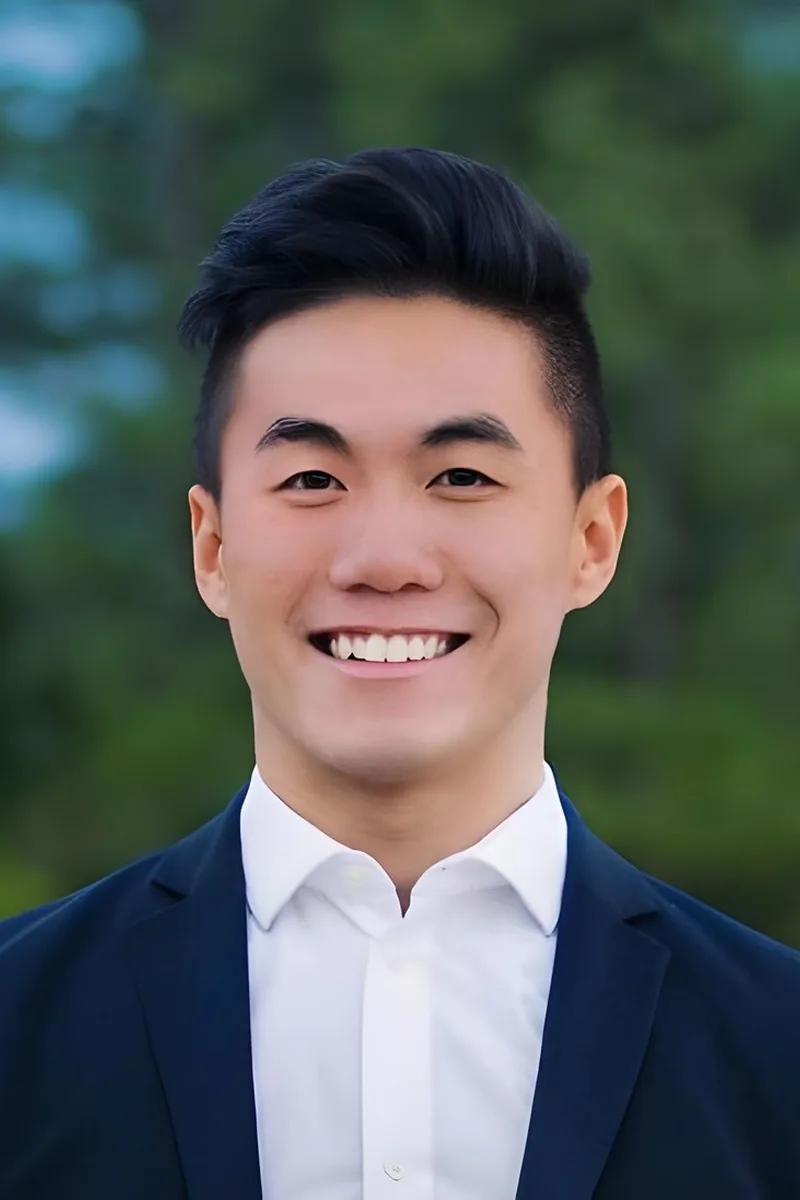
Between earning a mechanical engineering bachelor's and pursuing his master's, Aaron has taken calculus-based physics from every angle — statics, dynamics, thermodynamics, fluid mechanics — and now applies those principles daily in graduate-level research and coursework. He breaks down problems by teaching students to sketch the physical situation first, identify constraints, and only then select the right conservation law or force equation. Holds a 5.0 rating.

Studying mechanical engineering at Harvard means Christopher applies physics daily — from free-body diagrams and torque calculations to thermodynamic cycles and fluid dynamics. He breaks down multi-step problems by identifying which conservation law applies and walking through the math from there, so the problem-solving process becomes repeatable rather than mysterious.
College-level physics ramps up fast, especially when courses introduce calculus-based mechanics or electromagnetism for the first time. Charles works through these topics as part of his mechanical engineering curriculum at Yale, so he can walk through derivations of torque, moment of inertia, or Gauss's law with the fluency of someone who applies them in lab and design projects regularly.
Three years of tutoring introductory physics while completing dual bachelor's degrees in physics and mathematics gave Justin a detailed map of exactly where students lose the thread — the jump from one-dimensional kinematics to rotational analogs, the shift from intuitive force reasoning to formal energy methods. His PhD in Computational Mathematics at the University of Chicago deepened that foundation, adding fluency with the differential equations and vector calculus that make the leap from algebra-based to calculus-based physics so steep. Rated 5.0 by students.
A PhD in biomedical engineering means Andrew has spent years applying physics to biological systems — modeling forces on joints, analyzing fluid flow through tissues, understanding how electromagnetic fields interact with the body. That depth in mechanics, thermodynamics, and E&M carries directly into the calculus-based problem solving college physics courses demand. Rated 4.9 by students.
Biomedical engineering at Yale means Ellie applies physics daily — from fluid dynamics in circulatory models to electromagnetic principles in medical imaging. She breaks down topics like torque, wave optics, and circuit analysis by connecting them to real systems she encounters in her coursework and research. Rated 5.0 by students.
A chemistry degree from Yale means Zosia spent years in courses where physics does the heavy lifting — thermodynamics driving reaction spontaneity, quantum mechanics explaining atomic structure, electrostatics governing molecular interactions — so she knows these concepts from the inside out. She's particularly effective at teaching students to translate word-heavy problem statements into clean free-body diagrams or energy bar charts before touching an equation. Rated 4.9 by students.
Environmental engineering is essentially physics with consequences — Kate's master's work required her to model fluid flow, heat transfer, and pressure systems in real infrastructure, which means she's solved the same types of problems that show up on college physics exams but with actual design constraints attached. That applied perspective makes her particularly effective at teaching students to set up force balances and energy equations from a physical scenario rather than reverse-engineering from a formula sheet. Rated 4.9 by students.
Biomedical engineering at Brown means Phillip solves physics problems with real biological stakes — modeling fluid flow through vessels, analyzing stress on implant materials, calculating electrical signals in tissue. That daily overlap with mechanics, thermodynamics, and electromagnetism gives him a practical fluency that makes college physics problem sets feel less abstract and more like puzzles with actual answers. Rated 5.0 by students.
Theater might not scream physics, but Amber's breadth across math and science tutoring — from calculus to chemistry to AP-level coursework — means she's comfortable with the quantitative reasoning that college physics demands, and her 5.0 rating confirms students agree. She's particularly effective at teaching the problem-setup habits that separate students who flounder from those who don't: sketching free-body diagrams, identifying conservation laws, and translating word problems into equations before plugging in numbers. Her ACT 35 reflects the kind of cross-disciplinary sharpness that keeps pace with fast-moving, concept-dense courses.
Chemical engineering at Georgia Tech means Aimee's spent years solving problems that blend thermodynamics, fluid mechanics, and energy balances — the same physics concepts that make college-level courses demanding, except she's applied them to reactor design and process optimization. Her biosystems engineering graduate work adds another layer, connecting classical mechanics and heat transfer to biological systems in ways that make abstract problem sets feel more concrete. Rated 4.9 by students.
College-level physics ramps up quickly, especially once calculus-based mechanics and electromagnetism enter the picture. Richard's time as a course assistant in Harvard's math department gave him deep comfort with the calculus underpinning topics like electric flux integrals and differential equations of motion. He teaches the physics and the math simultaneously, so students aren't left wondering where a derivation came from.
Four years teaching undergraduate physics labs at the University of Michigan — especially courses designed for non-STEM majors — taught Michael how to strip intimidating topics like electromagnetism, circuits, and wave optics down to their physical intuition before layering the math back on. His PhD research deepened that fluency across the full spectrum of college physics, from introductory mechanics through advanced electrodynamics and special relativity. Rated 4.7 by students.
Between simulating supernova shock fronts at Princeton and building optical filters at Norfolk State, Dennis has applied college-level physics across mechanics, electromagnetism, thermodynamics, and wave optics in real research settings. He unpacks difficult problem sets by connecting each concept to the physical scenario it describes — an approach that's especially effective for students transitioning from plug-and-chug to genuine problem-solving.
Bidyut's biomedical engineering coursework at Johns Hopkins means he tackles college physics problems — from rotational dynamics to electromagnetic induction — with the applied perspective of someone who uses these principles in lab and design work daily. He connects abstract force diagrams and circuit analyses to real engineering scenarios so the physics actually clicks. Rated 5.0 by students.
Pursuing an MD at Stanford after a double major in economics and molecular/cellular biology, Maggie brings a pre-med perspective to college physics that makes topics like optics, fluid dynamics, and wave mechanics feel immediately relevant rather than abstract. She's especially sharp at teaching students to set up problems cleanly — translating a physical scenario into the right free-body diagram or energy equation before doing any math. Rated 5.0 by students.
Having served as a teaching assistant for Differential Equations and Mechanics at Notre Dame, Jeffrey has already spent time explaining the exact concepts — torque, oscillations, coupled systems — that trip up students in university physics courses. His mechanical engineering PhD work at Rice deepens that fluency, especially in thermodynamics and rotational dynamics where the math gets dense fast. He's rated 4.9 by students.
Three science-focused bachelor's degrees — including biology — meant Garrett sat through the full calculus-based physics sequence and kept coming back to it in physiology and physical chemistry, where concepts like fluid dynamics, pressure gradients, and energy transfer show up again and again. That repeated exposure across disciplines gives him an intuitive feel for when to apply conservation of energy versus momentum, or how to reason through a thermodynamics problem without getting lost in the formalism. His 1530 SAT speaks to the quantitative sharpness he brings to each session.
Biomedical engineering at Duke means Eric solves physics problems daily — modeling forces on prosthetic joints, analyzing fluid flow through artificial vessels, calculating electrical signals in biosensors — so the mechanics and electromagnetism in a college physics course map directly onto work he's already doing. He breaks multi-step problems into their physical components first, making sure the reasoning is solid before any math hits the page. Holds a 5.0 rating.
Princeton's mechanical and aerospace engineering program is essentially a four-year immersion in applied physics — Fred spent it solving problems in fluid dynamics, thermodynamics, structural mechanics, and orbital motion, which maps directly onto the topics that fill college physics syllabi. He breaks down force diagrams and energy methods by connecting them to the engineering contexts where those concepts actually get used, making abstract problem sets feel more concrete. His 1550 SAT reflects the quantitative precision he brings to calculus-heavy coursework.
College-level physics demands comfort with calculus-based reasoning — deriving equations of motion, integrating force over a path for work, or applying differential equations to oscillations. Kathleen's math degree from Washington University and her experience teaching through multivariable calculus mean she can unpack both the physics intuition and the mathematical machinery simultaneously.
Statics, dynamics, circuits, electromagnetics — Steve didn't just take these courses, he took them twice over, earning degrees in both mechanical and electrical engineering before working as a practicing engineer. That dual perspective is especially useful in college physics, where a problem about induced EMF or stress in a beam benefits from someone who's designed real systems around those principles. Rated 4.9 by students.
Working at an ExxonMobil refinery before MIT Sloan meant Caroline spent years applying thermodynamics, fluid mechanics, and force analysis to real industrial systems — the same physics that fills college problem sets, except with actual consequences for getting the math wrong. Her mechanical engineering M.S. from WashU (magna cum laude) gave her deep fluency with calculus-based derivations, so she can walk through everything from torque problems to heat transfer without skipping the steps that textbooks gloss over. Rated 5.0 by students.
Graduate work in Chemical and Physical Biology at Vanderbilt meant Dennis spent years applying thermodynamics, fluid dynamics, and electromagnetism to biological systems — the same core physics concepts that fill college problem sets, just in a research context where getting the physics wrong meant failed experiments. He breaks down force, energy, and field problems by connecting them to the physical intuition behind the math, which is especially useful for pre-med and life science students navigating calculus-based physics for the first time. Holds a 5.0 rating.
A dual BS in physics and math from Yale means Anthony didn't just take college physics — he took the honors sequence and then kept going through differential equations, multivariable calculus, and upper-division mechanics. His PhD work in economics at Yale still draws on that training daily, since building economic models requires the same setup-and-solve discipline as a multi-step Newton's law problem. Rated 5.0 by students.
College-level physics demands more than plug-and-chug — problems in electrodynamics, rotational mechanics, or thermodynamics often require combining multiple principles in a single solution. Pranav digs into these multi-step problems as a Biomedical Engineering student at Johns Hopkins, where physics underpins much of his coursework. He walks through derivations and problem-solving strategies that build real fluency with the material rather than surface-level familiarity.
Studying applied mathematics at Caltech means Samuel encounters physics constantly — from classical mechanics and energy conservation to electromagnetism and wave behavior. He breaks down the math behind physical systems so that equations like Maxwell's or Newton's second law feel like tools rather than obstacles.
As a senior physics major at Yale, Ian tackles college-level topics like electromagnetism, rotational dynamics, and wave optics with the fluency of someone who uses them daily. He breaks intimidating derivations into logical steps, connecting the math to physical intuition so that concepts like Gauss's Law or Lagrangian mechanics actually make sense rather than feeling like symbol-pushing.
Studying computer science and applied math at Harvard means Derek uses physics constantly — from electromagnetism in circuit design to mechanics in computational modeling. He tackles college-level topics like Lagrangian dynamics and wave equations by connecting the math to physical intuition, making dense derivations feel less abstract.
College-level physics ramps up fast, and the jump from textbook examples to exam problems can be brutal. Bryan earned his B.S. in Physics and tackles that gap by teaching problem-solving frameworks — symmetry arguments in electrostatics, constraint equations in multi-body dynamics — that transfer across chapters instead of requiring a new trick every week.
When a college physics problem looks like pure abstraction — a block on a frictionless ramp, a charge in a uniform field — Dylan's instinct is to sketch it out, graph it, and show what's physically happening before touching an equation. That visual, graphical approach comes from his physics major at Vanderbilt, where he's simultaneously studying classics and computer science, giving him an unusual ability to translate dense quantitative reasoning into clear, intuitive language. He holds a 4.5 rating and a 36 ACT composite.
Biomedical engineering at Johns Hopkins means Christine solves physics problems daily that most students only see in textbooks — fluid dynamics in blood flow, pressure gradients across membranes, mechanics of prosthetic joints — giving her a concrete, application-heavy lens for the material. She's particularly strong on the thermodynamics and mechanics portions of college physics, where her coursework overlaps most directly with standard problem sets. Holds a 5.0 rating.
Studying molecular biophysics at Brown means Srini lives at the intersection of physics and biology — applying thermodynamics, electromagnetism, and wave mechanics to understand how molecules actually behave in living systems. That dual perspective makes him especially effective at unpacking the conceptual reasoning behind problems in mechanics, circuits, and optics that trip up so many college students.
Thermodynamics is where Rahul lights up — it was his favorite corner of Cornell's chemical engineering program, and that enthusiasm shows when he's walking someone through heat engines, entropy, or the first and second laws in a college physics context. His engineering training means he treats every problem as a physical system first and an equation second, pushing for the conceptual reasoning behind each step rather than formula-matching. Rated 4.9 by students.
Molecular biology might seem like a different world from physics, but Annabel's coursework lives in the overlap — understanding diffusion requires thermodynamics, membrane potentials are voltage problems, and imaging techniques depend on wave optics and electromagnetism. She brings that life-sciences lens to college physics topics like energy conservation and fluid dynamics, making the material click for pre-med students who need to see why these concepts matter beyond the problem set.
College-level physics demands more mathematical rigor than high school — suddenly, problems involve calculus-based derivations and vector analysis alongside conceptual reasoning. As a Johns Hopkins biomedical engineering and applied math student, Nicholas lives in that intersection of advanced math and physical modeling every semester. He walks through topics like rotational dynamics, electric fields, and wave optics with the precision college courses require.
Engineering physics at Cornell means Daniel is taking the most mathematically demanding version of every physics course — mechanics, E&M, waves, thermo — and building the intuition to move fluidly between physical reasoning and formal derivation. He's particularly strong at teaching students how to set up problems from scratch, translating a word problem into a free-body diagram or energy equation before any numbers appear. Rated 5.0 by students.
Three physics-related bachelor's degrees give Avram an unusually deep undergraduate perspective on the subject — he's worked through mechanics, electromagnetism, and modern physics multiple times across different programs, which means he knows exactly where the conceptual gaps tend to hide. He breaks down wave phenomena and optics problems by connecting the math back to physical intuition, so equations feel like descriptions of real behavior rather than symbols to manipulate. His 1520 SAT reflects the quantitative precision he brings to problem solving.
Rice University's physics program is notoriously rigorous, and Ainsley came out the other side with both a B.S. in Physics and a philosophy degree that sharpened her ability to reason through ambiguous, multi-step problems — exactly the skill that separates students who survive college physics from those who don't. She digs into the conceptual logic behind topics like rotational dynamics and electrostatics, making sure students understand *why* an approach works before applying it to increasingly complex scenarios. Rated 4.9 by students.
Running an immunology lab at Columbia University Medical Center means Matthew applies physics daily in ways most tutors haven't — calibrating imaging equipment, analyzing force and pressure data in tissue samples, and troubleshooting instruments that depend on optics and electromagnetism. That hands-on fluency, combined with a physics degree and a 35 ACT, lets him teach college-level mechanics and E&M problems by connecting equations to the physical systems they actually describe.
Testimonials
Because the right College Physics tutor makes all the difference.
Average Session Rating – Based on 3.4M Learner Ratings
Top 20 Science Subjects


Top 20 Subjects
Frequently Asked Questions
Students often find thermodynamics, electromagnetism, and rotational mechanics most challenging because they require visualizing abstract concepts and applying multiple interconnected principles simultaneously. Thermodynamics trips up many because entropy and the second law feel counterintuitive, while electromagnetism demands strong vector math skills and spatial reasoning. Additionally, students frequently struggle with problems that require selecting the right approach from several valid methods—like choosing between energy conservation, kinematics, or force analysis—which is less about memorization and more about deep conceptual understanding.
A tutor can teach you a structured problem-solving framework: clearly identifying what's given and what you're solving for, choosing the right physics principles (energy conservation, Newton's laws, etc.), setting up equations systematically, and checking whether your answer makes physical sense. Rather than just showing you solutions, expert tutors guide you through the reasoning behind each step so you develop the ability to tackle unfamiliar problems independently. This approach builds confidence and helps you recognize which concepts apply to different scenarios.
College Physics relies heavily on calculus, vectors, and unit conversions—weak math skills often mask strong physics understanding. A tutor can identify whether you're struggling with the physics concept itself or the mathematical execution (like setting up integrals for work problems or resolving forces into components). By addressing these gaps simultaneously, tutoring helps you move past computational obstacles and focus on the deeper physics reasoning that exams and applications actually test.
Lab work requires translating theoretical concepts into experimental design and interpreting real data—skills that go beyond lectures. Tutors can help you understand the physics principles underlying each experiment, design proper controls, analyze measurement uncertainty, and connect lab results back to theory. This bridges the gap between what you learn in class and what you observe in the lab, deepening your grasp of the scientific method and building the critical thinking skills that lab reports demand.
College Physics exams and applications test whether you understand *why* formulas work and *when* to use them, not whether you memorized them. A tutor focuses on building conceptual frameworks—like understanding that F=ma represents how forces cause acceleration, not just a formula to plug numbers into. This approach helps you solve novel problems you've never seen before, recognize when formulas don't apply, and develop the intuition that separates students who truly understand physics from those who just memorize.
Many College Physics concepts—like electric fields, wave interference, or spacetime curvature—are inherently abstract and difficult to picture. Tutors use diagrams, physical analogies, simulations, and real-world examples to make these invisible phenomena tangible. For instance, understanding electromagnetic induction becomes clearer when you visualize changing magnetic flux through a loop, or grasp wave superposition by thinking about ripples on water. This visual and intuitive foundation makes the mathematics and problem-solving much more meaningful.
Effective exam prep goes beyond reviewing lecture notes—it requires practicing problems across different topics, identifying which concepts you consistently confuse, and building speed without sacrificing accuracy. A tutor can help you recognize common problem types, develop strategies for managing time on exams, and pinpoint whether mistakes stem from conceptual misunderstanding or careless errors. Working through past exams and challenging problems together reveals gaps in your understanding before the actual test.
Beyond mastery of physics content, expert tutors understand the conceptual stumbling blocks students hit and can explain difficult ideas multiple ways until something clicks. They should be comfortable with calculus-based problem-solving, able to guide experimental design and data analysis, and skilled at asking questions that help you discover answers rather than simply telling you what to do. The best tutors also stay current with how College Physics is taught—recognizing that modern courses emphasize conceptual reasoning and problem-solving skills over rote memorization.
Let’s find your perfect tutor
Answer a few quick questions. We’ll recommend the right plan and match you with a top 5% tutor.