Award-Winning IB Biology
Tutors
IB Biology
Tutors
Private 1-on-1 tutoring, weekly live classes for academic support, test prep & enrichment, practice tests and diagnostics, and more to elevate grades and test scores.
Based on 3.4M Learner Ratings
UniversitiesSchools & Universities
DeliveredHours Delivered
ProficiencyGrowth in Proficiency
Who needs tutoring?
No obligation. Takes ~1 minute.

Between ecology, genetics, and human physiology, IB Biology covers an enormous range — and the exam expects students to apply concepts to unfamiliar data sets, not just recall definitions. Dane approaches each unit by linking biological processes to real-world systems, which makes topics like cellular respiration pathways or population dynamics easier to retain and reason through under exam conditions.
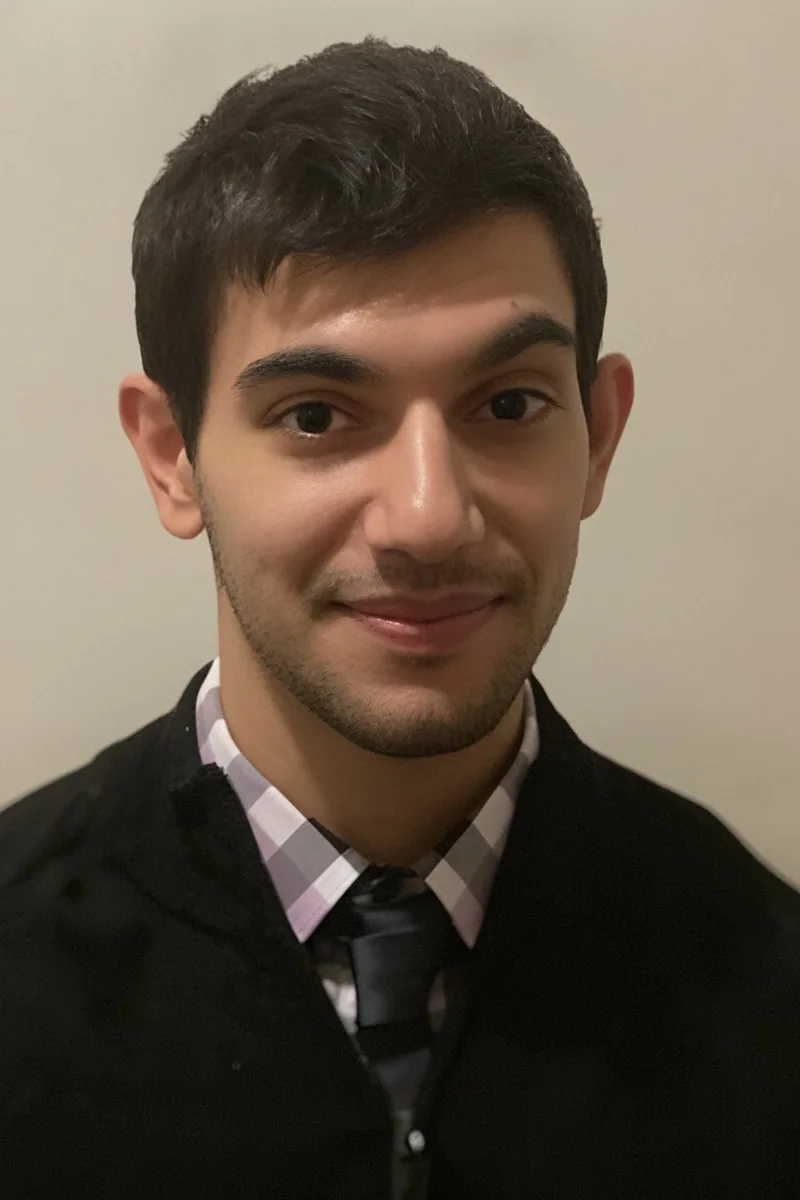
IB Biology's internal assessment alone can make or break a final grade, and many students struggle with experimental design and data analysis. Mosab tackles both the IA process and exam prep by teaching students to think like scientists — forming testable hypotheses, interpreting error bars, and writing evaluations that demonstrate genuine understanding of biological concepts.
Between earning an IB diploma in high school and completing premed coursework at the university level, Jessi has encountered IB Biology's core topics — genetics, ecology, cell biology, evolution — from both the student's seat and a deeper scientific perspective. She unpacks tricky command terms like 'evaluate' and 'distinguish' that often cost students easy marks on exams. Her psychology background also sharpens how she explains the neurobiology and human physiology units.
Four years teaching science in Boston middle schools gave Yan a knack for breaking down dense biological concepts — like photosynthesis pathways or membrane transport — into clear, step-by-step explanations that actually stick. Her curriculum and instruction master's degree means she doesn't just know the IB Biology content; she knows how to structure review sessions around the way mark schemes allocate points. Rated 4.5 by students.
Working in Duke's Bilbo lab on neuroimmune interactions gives Lauren hands-on experience with the cell signaling, gene expression, and immunology concepts that show up across IB Biology's most demanding units. Her neuroscience training means she can trace a pathway from the molecular level to whole-system outcomes — exactly the kind of thinking IB extended-response questions reward. Rated 4.8 by students.
Every day in his Columbia immunology lab, Matthew applies the same cellular biology, genetics, and ecological thinking that IB Biology exams test. He teaches students to decode command terms — distinguish between "explain" and "outline," for instance — while building genuine understanding of topics like homeostasis, evolution, and human physiology so they're not caught off guard by unfamiliar question formats.
A biopsychology degree means Clare has studied the overlap between biology and behavior at the cellular level — neurotransmitter pathways, hormonal feedback loops, and the genetics underlying trait expression all showed up in her coursework before they show up on an IB exam. She's especially useful for students struggling with the HL neurobiology and human physiology content, where understanding the 'why' behind a mechanism is what earns full marks on extended-response questions. Rated 5.0 by students.
Having completed the full IB curriculum in Shanghai — including the sciences — Christine knows exactly how IB Biology assessments are structured, from data-based questions to the internal assessment lab report. She breaks down topics like cell biology, genetics, and ecology with an eye toward the specific command terms IB examiners expect students to use. Her psychology training also gives her a strong handle on the neuroscience and human physiology options.
The IB Biology syllabus stretches from molecular genetics to ecology, and the exam expects students to connect across those scales — explaining how a single mutation cascades into population-level effects, for instance. Rithi's neuroscience degree and biotechnology master's give her fluency in both the cellular detail and the systems-level thinking the course demands. She's especially strong on the biochemistry-heavy units like metabolism, genetics, and human physiology.
Medical school trains you to connect molecular mechanisms to whole-body outcomes — exactly the reasoning IB Biology rewards when a Paper 2 question asks how a mutation in a gene affects an entire physiological system. Amanda's MD and biology degree mean she can trace a concept like membrane transport or hormonal regulation from the cellular level through to clinical significance, giving students the depth IB examiners look for. Rated 4.7 by students.
Having completed the full IB program herself — including IB Biology HL — Kinjal knows exactly how the curriculum is structured, from cellular respiration and genetics to ecology and human physiology. She pairs that firsthand experience with a biology degree from Texas A&M, so she can unpack IA design, data analysis questions, and the style of reasoning IB examiners reward. Rated 5.0 by students.
Every IB Biology exam question is really testing whether a student can apply knowledge to unfamiliar data — a graph they've never seen, an experiment they didn't design. James trains that skill explicitly, teaching students to read axes, identify trends, and connect observations back to syllabus concepts like homeostasis or inheritance patterns. His biology degree gives him the depth to handle both SL and HL material with equal confidence.
IB Biology's internal assessment alone demands the kind of experimental design and data analysis skills that most high schoolers haven't encountered yet. Theresa's research experience at Rice's Institute for Global Health gives her firsthand practice designing studies and interpreting results, so she can coach students through both the content — ecology, genetics, human physiology — and the investigative components that drive IB scores.
The IB Biology curriculum asks students to evaluate experimental design, analyze data, and write clear scientific arguments — skills Eshita sharpened through her own neuroscience research training. She digs into topics like photosynthesis, evolution, and human physiology by linking each one to real experimental questions, so the content sticks beyond exam day.
I'm a current medical student at VCU School of Medicine, and a graduate of Johns Hopkins University. I received my Bachelor of Science in Molecular and Cellular Biology. I've had the pleasure of tutoring a diverse range of students for 5 years; while I tutor a broad set of subjects, I'm most passionate about biology, psychology, and chemistry. I'm a big proponent of ensuring understanding over memorization and teaching concepts that last for years to come (particularly for other students interested in medicine!) In my free time, I love to write poetry, edit essays, and gush about game writing with friends.
Robin's biology degree and medical training mean she's studied topics like neurobiology, cell signaling, and hormonal regulation at a depth that makes even the HL-only material feel manageable. She's especially strong at connecting Option D's human physiology content back to the core molecular biology units — the kind of cross-topic linking that turns good IB answers into great ones. Rated 5.0 by students.
Mechanical engineering at Brown requires serious biology-adjacent coursework — thermodynamics of living systems, fluid mechanics in biological contexts, materials science — which gives Roni a quantitative lens on IB Biology topics like cellular respiration, gas exchange, and energy flow through ecosystems. That engineering mindset is particularly useful for the data-analysis and experimental-design questions on Papers 2 and 3, where setting up calculations cleanly and interpreting graphs precisely can mean the difference between partial and full marks.
IB Biology's depth — especially in topics like cellular respiration, genetics, and ecology — demands more than surface-level recall; exam questions require data analysis and extended-response reasoning. Mariane's PhD training in biochemistry and cell biology at Rice gives her the scientific fluency to walk students through HL-level material like protein structure and biotechnology with real research context behind every explanation.
The IB Biology syllabus covers everything from molecular genetics to ecology and evolution — a range that maps almost exactly onto Karista's academic training across biochemistry and environmental science. She digs into the trickier HL topics like gene regulation, photosynthesis light reactions, and population dynamics with the kind of depth that turns rote memorization into genuine understanding.
A biochemistry degree paired with a master's in curriculum and instruction is a rare combination for IB Biology — Tamicka understands the molecular detail behind units like cellular respiration and protein synthesis, and she also knows how to structure that knowledge so students can reproduce it under exam conditions. She's particularly sharp on the Internal Assessment, where her background in experimental design and scientific writing translates directly into the kind of methodical guidance that earns top marks.
IB Biology's internal assessment alone demands skills most science classes never teach — designing experiments, analyzing data, and writing up results at a near-college level. Christopher's policy research background at Duke means he's comfortable coaching students through that kind of structured analytical writing while also tackling content-heavy units like genetics and ecology.
I am a graduate of UC San Diego with a Bachelors in Neuroscience through the Psychology department. After graduating, I went to Michigan Technological University and did some graduate work, before moving to Texas to be closer to my parents. I did my alternative certification program through Texas Teachers and am highly qualified to teach Science for grades 7-12. I have been a teacher in public and charter schools for the last four years, and have tutoring experience extending over ten years behind me as well.
The IB Biology syllabus demands fluency across ecology, genetics, and human physiology — plus the internal assessment, which requires genuine experimental design skills. Asad tutored biology extensively at Rice and approaches each topic by anchoring abstract processes like DNA replication or neurotransmission to concrete diagrams and exam-style explanations that match IB mark schemes.
Between a neuroscience degree from WashU and first-year medical coursework at Einstein, Taylor has already gone deep on the genetics, cell biology, and human physiology that make up IB Biology's most point-heavy units. That background is especially useful for HL students tackling Option D or the neurobiology material, where she can explain synaptic transmission and hormonal feedback loops from firsthand study rather than simplified textbook summaries. Rated 5.0 by students.
The jump from SL to HL Biology means mastering detailed biochemistry — protein folding, gene expression regulation, and metabolic pathway specifics that require genuine molecular-level thinking. Arianna's neuroscience training at Dartmouth covered these topics extensively, from synaptic transmission mechanisms to the intricacies of DNA replication and repair. She unpacks HL-specific content like monoclonal antibody production and muscle contraction physiology with the depth the IB program requires.
I am applying to medical schools to attend Fall 2016 and I like to play basketball, go backpacking and volunteer with youth in my free time.
As a recent graduate from Cornell University with a degree in biological sciences and someone who plans to attend medical school in the future, my passion and appreciation for the sciences and medicine is something I consider integral to my identity. My favorite subjects to tutor are biology and chemistry as those are the subjects in which I have past teaching experience in the classroom setting. In particular, my teaching style focuses on rephrasing and remodeling initially daunting concepts and information into bite-sized and digestible bits of information that any student can comprehend. I firmly believe that a lot of what slows students down in the learning process is their preconceived notions of course material. My passion for helping students stems from my experiences as an undergraduate where I can remember on countless occasions feeling lost in the material with little direction on how to approach the curriculum. I can think back to the many times I would have benefitted from having someone who could have guided me through stretches of daunting coursework which led me to become a tutor myself. As a teaching assistant, I discovered my passion for helping students manage their way through courses that many considered to be very difficult. Seeing how they reacted to my assistance reminded me why I applied for the position in the first place and motivates me to help students learn more every single day.
IB Biology's depth — especially in topics like Option D (Human Physiology) and the ecology unit — catches students off guard if they're used to surface-level memorization. Daniyal tackles the extended-response and data-analysis questions head-on, teaching students to link biological concepts across units the way IB examiners expect. His neuroscience background gives him particular strength in the cellular and human physiology content.
IB Biology's depth catches students off guard, especially in topics like genetics, metabolism, and human physiology where the detail level jumps well beyond standard courses. Wesley's biomedical engineering background means he naturally thinks about biological systems in terms of inputs, outputs, and feedback loops — exactly the framework IB examiners reward in extended-response questions.
The IB Biology syllabus packs in everything from molecular genetics to ecology, and the exam expects students to apply concepts to unfamiliar experimental scenarios. As a medical student with a biology degree, Kaitlyn lives in this material daily — she can walk through DNA replication or membrane transport with the kind of depth that makes Paper 2 long-answer questions feel approachable. She also coaches students on structuring their Internal Assessment so the analysis section actually earns top marks.
Two master's degrees in science — one with a technology focus — mean Christina has tackled IB Biology's core content from multiple angles, whether it's the genetics and evolution units or the data-analysis skills the Internal Assessment demands. She's especially effective at walking students through the kind of multi-step biological explanations IB mark schemes reward, like tracing how a change in DNA sequence cascades through transcription, translation, and protein function.
The IB Biology curriculum asks students to connect core topics like cell biology and genetics to broader applications through data-based questions and experimental design. Mary's daily classroom teaching sharpens her ability to explain these connections clearly, and her pre-med science preparation means she can go beyond the syllabus when a concept like membrane transport or evolution needs a deeper explanation to click.
IB Biology's internal assessments and extended essays demand a level of scientific writing and experimental design that goes well beyond memorizing content. Jacquelyn's graduate training at Columbia and Oxford sharpened her academic writing and research skills, which she applies directly to coaching students through IA design, data analysis, and the program's emphasis on critical evaluation.
Having studied molecular biology and neuroscience alongside her physics major, Jane brings a quantitative edge to IB Biology that's especially useful for topics like genetics, cellular energetics, and data-based questions on Paper 2. She also knows how to structure an IA so the analysis section actually earns top marks.
Scoring 39 points in the IB programme means Brad navigated the programme's internal assessment expectations, lab reports, and essay-heavy exams across subjects including biology. He digs into the trickiest IB Bio content — membrane transport, DNA replication, and human physiology — while also coaching students on how to structure IA experiments for top marks.
IB Biology's depth — from cellular respiration pathways to ecology energy flow diagrams — requires more than surface-level memorization of definitions. Rick's Health Sciences degree and med school preparation mean he's recently worked through the same molecular biology and genetics concepts that IB students encounter in Topics 2, 3, and 7. He also led Supplemental Instruction sessions at UCF, so he knows how to break down dense material into manageable steps.
Having studied general biology at the university level and tutored both SL and HL students, Amy knows which IB Biology topics — like ecology, classification, and evolution — reward clear diagram interpretation and precise use of command terms over rote memorization. She's especially strong on the ecology and conservation units, where her environmental science background adds real depth to data-analysis questions. Rated 4.9 by students.
IB Biology's internal assessment demands the kind of statistical analysis and scientific writing that sits right at the intersection of Sally's math and communication training at Georgia Tech. She tackles topics like genetics ratios, ecological modeling, and enzyme kinetics by anchoring each concept in the underlying math so students can reason through unfamiliar exam questions.
Between a biology degree and a maritime studies background, Lindsey has spent serious time with the ecology, conservation, and marine-focused content that many IB Biology tutors treat as afterthoughts — she can dig into topics like nutrient cycling, species interactions, and ecosystem modeling with firsthand knowledge from fieldwork-oriented coursework. That ecological depth pairs well with the core cell biology and genetics units, where she connects abstract processes to the living systems students have actually observed. Rated 4.9 by students.
Premed coursework means Ehigbor has tackled the biology, chemistry, and physics that underpin IB Biology's most interconnected units — particularly where cellular respiration, enzyme function, and metabolic regulation blur the line between disciplines. She brings that cross-subject fluency to the extended-response questions where students need to explain mechanisms in precise, command-term language rather than just label a diagram. Rated 5.0 by students.
Testimonials
Because the right IB Biology tutor makes all the difference.
Average Session Rating – Based on 3.4M Learner Ratings
Top 20 Science Subjects


Top 20 Subjects
Frequently Asked Questions
Students often find photosynthesis and cellular respiration challenging because they require understanding both the biochemical pathways and the energy transfer mechanisms simultaneously. Other common pain points include genetics (particularly Mendelian inheritance, chi-squared analysis, and linkage), ecology (population dynamics and nutrient cycling), and the detailed structure-function relationships in topics like the nervous system and immune response. Many students also struggle with the quantitative aspects of IB Biology—calculating magnification from electron microscopy images, working with enzyme kinetics data, and interpreting statistical tests—because these require both conceptual understanding and mathematical precision.
Tutors help students develop strong experimental design skills by teaching them to identify variables, design controls, and anticipate sources of error before entering the lab. They also guide students through analyzing raw data—whether it's calculating enzyme activity rates, interpreting gel electrophoresis results, or determining photosynthetic rates from gas exchange measurements—and connecting those results back to biological principles. Beyond the data, tutors help students write clear, evidence-based conclusions and understand how to evaluate the reliability and validity of their methods, which are critical for scoring well on the Internal Assessment component.
Rather than treating IB Biology as a list of facts to memorize, tutors help students build conceptual frameworks—for example, understanding that homeostasis, enzyme function, and feedback mechanisms are interconnected principles that apply across multiple topics. They use real-world examples (like how diabetes relates to pancreatic function and glucose regulation) and visual models to help students see why structures matter, not just what they are. This approach actually reduces the memorization burden because students retain information better when it's connected to a larger concept, and it prepares them for the higher-level thinking required on Paper 3 and extended response questions.
IB Biology requires comfort with calculations like magnification (actual size = image size ÷ magnification), enzyme kinetics (Km and Vmax from Michaelis-Menten curves), population growth rates, chi-squared tests for genetic data, and dilution series for experiments. Many students struggle because they understand the biology but get stuck on the math or don't know when to apply which calculation. Tutors teach students to recognize what a question is really asking, work through calculations step-by-step, and—critically—interpret the biological meaning of their results rather than just getting a number. This builds confidence for both the practical exams and the quantitative questions embedded throughout the written papers.
IB Biology emphasizes systems thinking—understanding how the nervous system and endocrine system work together, how photosynthesis and respiration are complementary, or how population dynamics connect to energy flow in ecosystems. Tutors help students map these connections by asking guiding questions like 'How does this relate to homeostasis?' or 'Where does energy come from and where does it go?' and by creating visual organizers that show feedback loops and cause-and-effect relationships. This systems perspective is essential for Paper 3 questions and extended responses, which often test whether students can apply knowledge from one topic to explain phenomena in another.
IB Biology exam questions often use precise command words (explain, discuss, evaluate, analyze) that require different types of responses, and students who misinterpret the question waste time and miss marks. Tutors teach students to recognize these cues and structure answers accordingly—for example, 'explain' requires a mechanism or reason, while 'discuss' requires weighing multiple perspectives. They also help students practice reading data-heavy questions (graphs, tables, images) under timed conditions and develop strategies for allocating time across the three papers. Mock exams with detailed feedback help identify whether mistakes stem from knowledge gaps, misunderstanding the question, or time management issues.
The Internal Assessment is a significant component of the IB Biology grade, and tutors help at every stage: choosing a feasible research question, designing a rigorous experiment with appropriate controls and variables, collecting and analyzing data correctly, and writing a report that clearly connects results to biological theory. Tutors ensure students understand that the IA isn't just about getting 'good' results—examiners value well-designed experiments that yield clear data even if the results are unexpected. They also help students avoid common pitfalls like choosing overly complex investigations, failing to control variables, or writing conclusions that don't match their data, all of which significantly impact the IA score.
A strong IB Biology tutor understands not just the content but the IB curriculum structure, assessment criteria, and command word expectations. They should have experience with both the theoretical concepts (biochemistry, genetics, physiology) and the practical/experimental side, and be able to explain abstract concepts like enzyme-substrate interactions or photosynthetic electron transport clearly. Ideally, they're familiar with common student misconceptions in biology (like thinking mitochondria only exist in animal cells, or confusing active and passive transport) and know how to address them. They should also be comfortable helping students with quantitative analysis, interpreting exam-style questions, and providing constructive feedback on Internal Assessment work.
Let’s find your perfect tutor
Answer a few quick questions. We’ll recommend the right plan and match you with a top 5% tutor.