Award-Winning AP Physics C: Electricity and Magnetism Tutors
serving Washington, DC
AP Physics C: Electricity and Magnetism
Tutors in Washington
Private 1-on-1 tutoring, weekly live classes for academic support, test prep & enrichment, practice tests and diagnostics, and more to elevate grades and test scores.
Based on 3.4M Learner Ratings
UniversitiesSchools & Universities
DeliveredHours Delivered
ProficiencyGrowth in Proficiency
Who needs tutoring?
No obligation. Takes ~1 minute.

Gauss's law, Ampère's law, RC circuits, electromagnetic induction — E&M demands that students think in vector fields and apply calculus to invisible phenomena. As a Stony Brook physics major who also codes simulations, Kiran unpacks these abstractions by walking through the physical setup before touching an integral, which turns intimidating problems into a sequence of logical steps.
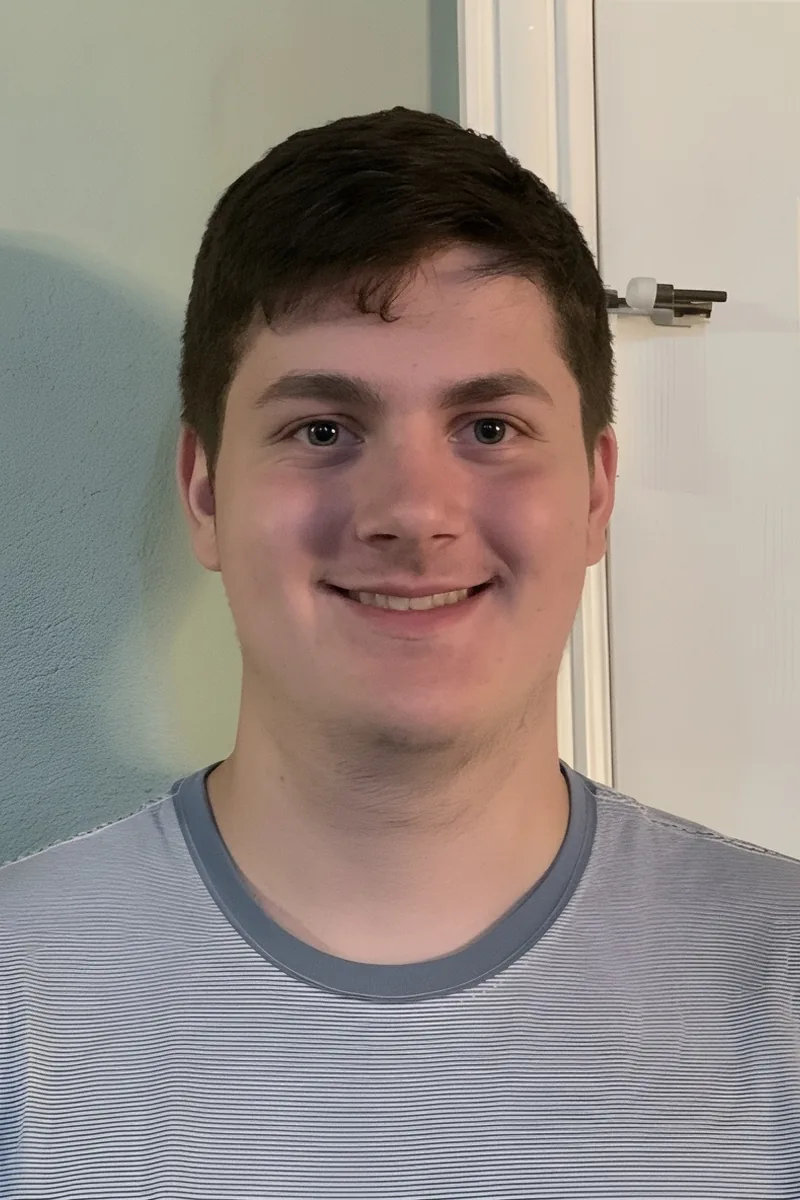
AP Physics C: E&M is where calculus and physics collide — Gauss's law integrals, Faraday's law, RC circuits, and Maxwell's equations all demand fluency in both. As a mechanical engineering student at Purdue, Austin uses these concepts daily and can unpack the vector calculus behind electromagnetic fields in a way that makes the math feel purposeful. Rated 4.9 by students.
Electricity and Magnetism trips students up because it layers vector calculus onto already-abstract concepts like electric flux, Gauss's law, and electromagnetic induction. Rachel's calculus expertise gives her a solid handle on the integral and differential equations that drive E&M problem-solving. She's upfront that this is one of the toughest AP courses offered, and she approaches it by making sure the math never becomes the bottleneck.
AP Physics C: E&M is where calculus and physics genuinely merge — Gauss's law, Ampère's law, and Faraday's law all require setting up and evaluating integrals that many students haven't encountered outside a math class. Maxwell's dual degree in mathematics and physics means he tackles both the vector calculus and the physical intuition simultaneously, so concepts like electric flux and induced EMF actually click. Rated 5.0 by students.
Gauss's law, Ampère's law, Faraday's law — AP Physics C: E&M asks students to think in three dimensions with vector calculus tools they've barely learned. Taha breaks down each Maxwell equation into physical intuition first, then builds up the mathematical formalism around it. His deep background in both calculus and physics lets him bridge the gap between what students see in their math classes and what the E&M exam actually demands.
AP Physics C: E&M is where calculus and physics collide — Gauss's law, Ampère's law, and Faraday's law all require setting up and solving integrals that many students haven't encountered in their math classes yet. Raphael's combined strength in calculus and physics, built through his Cornell science curriculum, means he can teach both the mathematical machinery and the physical intuition behind electromagnetic fields and circuits. Rated 5.0 by students.
Gauss's law, Ampère's law, Faraday's law — E&M asks students to visualize invisible fields and then do calculus on them, which is a uniquely difficult combination. Ava's engineering training at Washington University in St. Louis gave her deep practice with vector calculus and electromagnetic theory in applied settings like circuit analysis and energy systems. She unpacks each law by grounding it in a physical scenario before touching the math, so the integrals actually make sense.
I am working towards a Bachelor of Arts in Pure and Applied Mathematics as well as a Bachelor of Arts in Astronomy and Physics. I have enjoyed studying math and science since I was in elementary school. I would always help my friends out by answering their questions about the material. For about the last five years, I have had my own tutoring business where I have tutored a wide variety of math courses from elementary school math to pre-calculus and calculus. I like to make sure my students have a complete understanding of the core concepts before going into practice questions. I have also had experience helping my peers with physics and computer science courses.
Electromagnetism was the centerpiece of Michael's teaching at the University of Michigan, where he designed and led undergraduate lab courses on circuits, fields, and waves. AP Physics C: E&M demands comfort with Gauss's law, Ampère's law, Faraday's law, and RC/RL circuit analysis — all topics he's taught extensively at the college level. He knows exactly where the conceptual gaps tend to open up, especially around flux integrals and the superposition of electric fields.
Gauss's law, Ampère's law, and Faraday's law each require students to set up integrals over surfaces and paths that feel nothing like standard calculus problems. Vishank's comfort with multivariable math and his experience teaching across physics and calculus let him bridge that gap — showing exactly how to choose a Gaussian surface or an Amperian loop and why the math works the way it does.
Gauss's law, Ampère's law, and Faraday's law all require students to visualize invisible fields and reason through multivariable integrals — a combination that trips up even strong physics students. Dylan's coursework at Vanderbilt covers exactly this material, and his instinct is to sketch field lines, draw Gaussian surfaces, and build physical intuition before diving into the math. That graphical-first approach turns E&M from the most feared AP Physics exam into something manageable.
I am an Applied Physics Major with an Emphasis in Mechanical Engineering at Brigham Young University. I love to share the joy I have in the sciences and math to show truly the applications are so far-reaching.
Testimonials
Because the right AP Physics C: Electricity and Magnetism tutor makes all the difference.
Average Session Rating – Based on 3.4M Learner Ratings
Practice AP Physics C: Electricity and Magnetism
Free practice tests, flashcards, and AI tutoring for AP Physics C: Electricity and Magnetism
Other Washington Tutors
Related Science Tutors in Washington
Frequently Asked Questions
AP Physics C: E&M requires both strong conceptual understanding and calculus-based problem-solving skills, making it significantly more challenging than algebra-based physics courses. The exam heavily emphasizes Gauss's Law, electric potential, and magnetic fields—topics that are abstract and require visualizing invisible forces. Many students struggle with the mathematical rigor and the need to apply calculus to derive and manipulate equations rather than just memorize them.
Score improvement depends on your starting point and commitment level. Students who work with a tutor typically see gains of 2-4 points on the AP scale (out of 5), though some improve more significantly by addressing fundamental gaps in understanding. The most dramatic improvements come from consistent practice with full-length exams, targeted review of weak topics, and developing stronger problem-solving strategies—all areas where personalized tutoring makes a measurable difference.
The biggest hurdles are understanding vector fields and Gauss's Law applications, managing multi-step problem-solving under time pressure, and translating word problems into mathematical models. Many students also struggle with the distinction between electric field and electric potential, and with visualizing magnetic force directions using the right-hand rule. Additionally, pacing is critical—the exam requires solving complex problems in limited time, so students need both conceptual mastery and efficient problem-solving techniques.
Most students benefit from starting serious exam prep 3-4 months before the May exam, dedicating 5-8 hours per week to focused study. This timeline allows you to work through the curriculum systematically, take multiple practice tests, and identify weak areas for targeted review. If you're starting later or have significant gaps, working with a tutor can help you prioritize the highest-impact topics and study more efficiently.
Practice tests are essential—they're the best way to build test-taking stamina, identify weak topics, and get comfortable with the exam's pacing and question formats. Taking full-length, timed practice exams every 2-3 weeks during your prep period helps you track progress and reveals patterns in where you lose points. Beyond just taking them, reviewing every single problem (especially ones you missed) is where the real learning happens.
The most effective tutoring sessions focus on problem-solving strategies, working through practice problems together, and clarifying conceptual misconceptions—especially around Gauss's Law, electric potential energy, and magnetic forces. Rather than re-teaching entire units, tutors should help you develop stronger intuition for why equations work, practice applying them to unfamiliar problems, and build confidence tackling the multi-step reasoning required on the exam.
Your first session focuses on assessment and planning. A tutor will review your current understanding of key topics, identify your strongest and weakest areas, and discuss your target score and timeline. You'll likely work through a few practice problems together to understand your problem-solving approach and where misconceptions might be hiding. This gives the tutor a clear picture of how to personalize your prep plan.
Washington, DC's strong academic environment—with 292 schools and an average student-teacher ratio of 11.7:1—means many students have access to quality physics programs. However, AP Physics C: E&M is specialized enough that finding a tutor with deep expertise in calculus-based physics and AP exam strategy is valuable. Varsity Tutors connects you with expert tutors who can provide the focused, personalized instruction that goes beyond what's typically available in classroom settings.
Let’s find your perfect tutor
Answer a few quick questions. We’ll recommend the right plan and match you with a top 5% tutor.