Award-Winning High School Geography
Tutors
High School Geography
Tutors
Private 1-on-1 tutoring, weekly live classes for academic support, test prep & enrichment, practice tests and diagnostics, and more to elevate grades and test scores.
Based on 3.4M Learner Ratings
UniversitiesSchools & Universities
DeliveredHours Delivered
ProficiencyGrowth in Proficiency
Who needs tutoring?
No obligation. Takes ~1 minute.
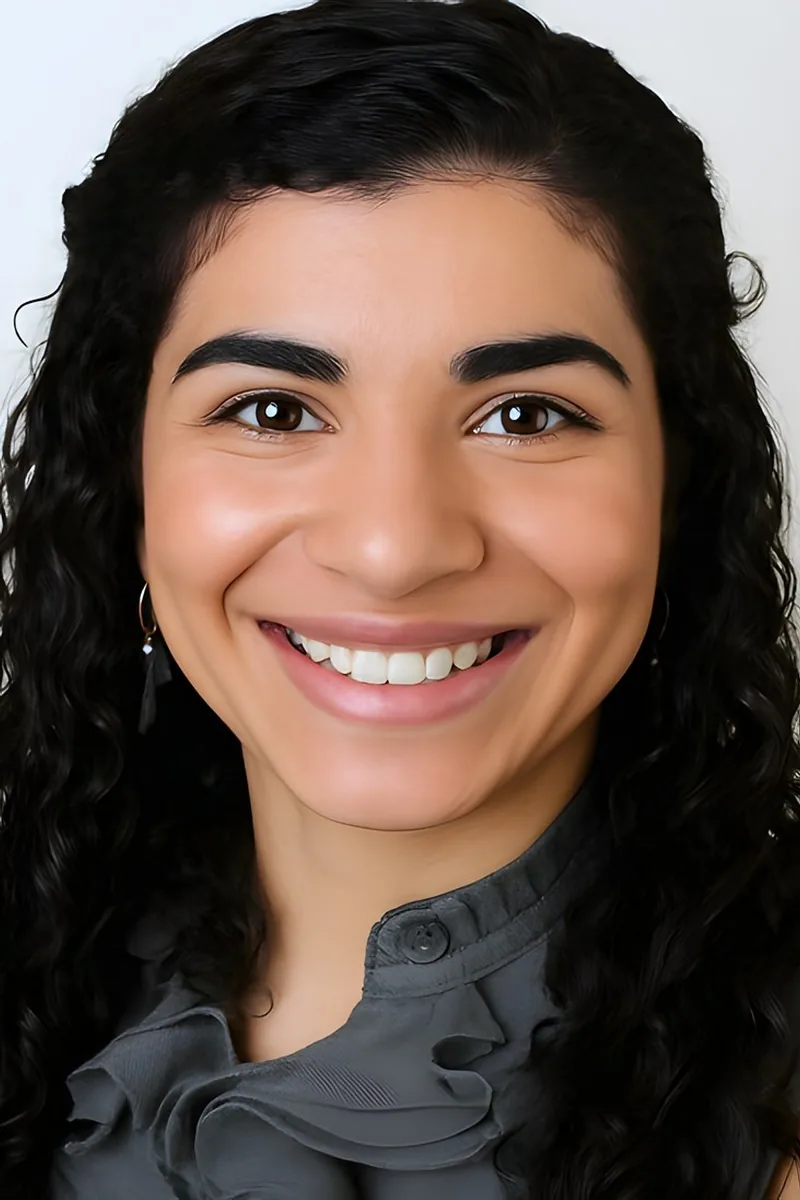
Geography is as much about human decision-making as it is about maps — why cities form along rivers, how climate shapes migration, what drives urbanization patterns. Paula's psychology background gives her a natural entry point into human geography concepts, and she connects physical geography features like tectonic activity and weather systems to the real-world consequences students can see on the news.

Patrick approaches geography through the lens of language and culture, drawing on his linguistics background to show how physical landscapes, migration patterns, and political boundaries shape — and are shaped by — the people who inhabit them. His time teaching in South Korea and on Chicago's south side gave him firsthand experience with the cultural and economic dynamics that make geography come alive beyond maps and memorization.
Economics training at the undergraduate level means Mackenzie spent years studying how trade networks, labor markets, and development patterns are rooted in where resources actually sit on a map — exactly the kind of thinking that powers high school geography. She unpacks topics like economic regionalism and population distribution by tying them back to the supply-and-demand logic students can reason through, not just memorize. Rated 4.8 by students.
Latin American history doesn't make sense without understanding physical geography — how the Andes shaped trade routes, how climate zones determined colonial agriculture, how river systems built economies. Jean's Duke degree in Latin American History means she teaches geographic concepts like spatial organization and human-environment interaction through vivid, real-world examples rather than abstract definitions.
Physical and human geography overlap more than most students expect — understanding monsoon patterns matters for explaining South Asian agriculture, and map skills tie directly into reading population data. Hannah approaches geography through its connections to history, which makes concepts like demographic transition and cultural diffusion click for students who think in stories rather than statistics.
Molly's classroom teaching across 2nd through 4th grade means she's spent years making abstract concepts concrete — a skill that transfers directly to geography, where students need to visualize how landforms, climate, and human activity interact on a map. Her Columbia history degree gave her deep practice analyzing how regions develop over time, which she now channels into topics like urbanization, resource distribution, and cultural landscapes. Rated 5.0 by students.
Geography clicks when students stop seeing maps as static pictures and start reading them as stories about trade routes, migration patterns, and resource distribution. Ryan's economics degree means he naturally connects physical and human geography to the economic forces that shape where people live, how borders form, and why certain regions develop faster than others.
Most high school geography courses cover everything from plate tectonics to population pyramids in a single semester, and students often struggle to see how the pieces connect. Duncan's BA in Human Geography and MA in Geography mean he can tie together physical systems, cultural landscapes, and map skills into a coherent framework that makes exam prep far less overwhelming.
Studying public policy at Northwestern meant constantly analyzing how physical landscapes, demographics, and resource distribution shape political outcomes. Nathaniel brings that lens to geography, connecting topics like urbanization patterns, climate regions, and migration flows to real-world policy debates students actually recognize.
Understanding climate zones, population distribution, or how physical geography shapes trade routes requires more than memorizing map labels. Jack teaches students to read landscapes and data like a story — linking, for example, why certain regions industrialized first to the resources and waterways available to them.
Regular travel to India for independent research gave Harry a concrete understanding of how physical geography — monsoon patterns, river systems, mountain barriers — shapes human settlement, trade, and political boundaries. He brings that real-world perspective into lessons on map skills, climate zones, and the human-environment interactions that high school geography courses emphasize.
A semester living in Amman, Jordan gave Gary a ground-level understanding of how climate, urbanization, and cultural geography interact in ways a textbook can only approximate. He connects high school geography topics like population distribution, economic development, and physical landforms to places and situations he's actually encountered.
Geography sits at the intersection of physical landscapes and human decisions, which means students need to toggle between reading maps, interpreting data, and writing analytical responses. Olivia's interdisciplinary American Studies background is a natural fit for this kind of thinking — she's used to connecting environmental factors to cultural and economic patterns. She's especially effective at teaching students to use geographic vocabulary with precision in written responses.
Geography clicks when students see how physical landscapes shape human decisions — why cities form along rivers, why trade routes follow mountain passes, why climate patterns drive migration. Alexander pairs his genuine enthusiasm for geography with the analytical habits he developed studying European history at Johns Hopkins, where understanding spatial relationships was essential to his coursework.
Peter's journalism degree trained him to ask the reporter's core questions — who lives where, why there, and what changed — which maps neatly onto high school geography topics like migration, urbanization, and resource distribution. His Master's in Education means he structures those inquiries into lessons that build real analytical skills, not just memorized place names. Rated 4.7 by students.
Geography makes more sense when you've actually been on the ground — Chris's Peace Corps service and extensive travel give him concrete examples of how physical landscapes, climate patterns, and human migration interact. He teaches students to read maps, analyze demographic data, and connect geographic concepts like urbanization and resource distribution to real places they can visualize.
Folklore and mythology are fundamentally about place — how landscapes, climate, and migration shape the stories cultures tell about themselves. Cynthia brings that lens to high school geography, connecting topics like cultural diffusion, population patterns, and regional identity to narratives that make the material stick. Her background as a reader and traveler gives her a rich library of real-world examples to draw from.
David's PhD research at Columbia and Chicago sits at the intersection of natural science and social science — studying how environmental factors shape human societies over time, which is essentially what geography asks students to do at the high school level. He teaches topics like climate patterns, land use, and demographic change by connecting them to the anthropological and historical questions that drove those geographic realities in the first place. Rated 4.9 by students.
Understanding geographic concepts like migration patterns, urbanization, and resource distribution gets easier when a tutor can tie them to real economic forces. Christopher's Economics and History background from UCLA lets him explain why cities grow where they do and how physical geography shapes political boundaries, turning abstract map skills into something intuitive.
Julian's political science degree meant spending years analyzing how governments, borders, and policy decisions are fundamentally shaped by where people live and what resources surround them — the exact intersection high school geography explores. He tackles topics like political boundaries, demographic shifts, and economic regionalism by connecting them to the power structures and governance questions that make geographic patterns matter beyond the textbook.
I am a graduate of the Master's program at the School of Education at St. John's University, and a graduate of the undergraduate English program at Washington University in St. Louis. I am currently eligible to teach 7th to 12th grade English in a New York City school under the Initial Certificate, and have a combined three years of experience in the Department of Education. I have a significant background in tutoring, including test prep, English, Mathematics, and Social Studies. My extensive background in education, coupled with my intense desire to bring about positive change in the lives of New York City school children and my belief in the importance of using emerging educational technologies to engage with and enrich the education of students, has made me both a successful teacher, and a popular tutor.
Between studying psychology at Penn and picking up Russian and French along the way, Max developed a habit of asking how culture, language, and environment shape the way people think and organize their lives — which is basically the core question behind human geography. He applies that lens to topics like demographic analysis and cultural diffusion, turning what often feels like rote map memorization into something students can actually reason through. Holds a 5.0 rating.
Understanding geography means more than memorizing capitals — it's about seeing how physical landscapes, climate patterns, and human migration shape the world we live in. Jay's History and Global Studies background at Penn State's Schreyer Honors College trained him to connect geographic concepts like urbanization, resource distribution, and cultural diffusion to the larger story of how societies develop.
Psychology training gives Katelyn an angle on geography that most tutors miss — she understands the behavioral and developmental forces behind why populations cluster, how communities form around resources, and what drives migration decisions at the human level. Her CLEP social sciences and history preparation reinforces that with the broader political and economic context that ties human behavior back to the physical landscape. She connects topics like demographic patterns and urbanization to the psychology underneath them, making the material stick.
Understanding why cities form along rivers, how climate shapes agriculture, or what makes a border contested requires more than labeling a map. Eric's anthropology background means he approaches geography through the human stories behind physical landscapes — connecting population patterns, resource distribution, and cultural regions to the broader social studies concepts students encounter in other courses.
Cultural anthropology is basically geography with a different lens — Conor's UCLA training had him analyzing how physical environments shape kinship systems, rituals, and economic practices across societies, which translates directly into topics like cultural diffusion, population distribution, and human-environment interaction. His years teaching middle school Language Arts in Miami also sharpened his ability to break down dense reading passages and data sets, a skill that pays off when students hit map analysis or demographic charts in geography coursework.
Physical systems, human-environment interaction, and spatial reasoning can feel abstract until a student sees how they explain real phenomena like migration corridors or economic inequality. Mary's combined training in science curriculum development and social studies instruction lets her teach geographic models and map analysis with concrete, interdisciplinary examples. She's rated 5.0 by her students.
Studying both biology and English at Bowdoin gave Alex an unusual double lens — he reads ecosystems and landscapes the way he reads texts, tracing how environmental factors like climate, soil, and water systems drive the human patterns of settlement and land use that show up in geography coursework. His graduate work in evolution and bioanthropology deepens that perspective, since understanding how human populations adapted to different environments is essentially geography's central question viewed through a longer timeline. Rated 4.8 by students.
Physical geography concepts like plate tectonics and climate zones often feel disconnected from the human geography that follows — population density, migration, land use. Nitin bridges that gap by showing how physical features drive economic and political outcomes, an angle that comes naturally from his dual study of business analytics and economics at Carnegie Mellon.
As a special education social worker, Emily reads how each student processes information and adapts accordingly — useful in geography, where a topic like migration patterns or urbanization can feel overwhelming without the right scaffolding. Her social work training means she naturally connects geographic concepts to the human stories behind them: why communities form where they do, how resource access shapes neighborhoods, and what demographic data actually reveals about people's lives.
Geography at the high school level often stumbles when students can't connect physical features to human patterns — why populations cluster near river deltas, or how climate zones shape agriculture and trade. Adam tackles these connections by encouraging students to think systematically about how environments and cultures interact, drawing on his broad background in history and world religions to give geographic concepts real-world depth.
American Studies at Stanford is essentially geography's cousin — Emily spent her degree tracing how regional identity, land use, and cultural movements play out across the physical and political landscape of the United States. That background gives her a ready toolkit for unpacking topics like cultural regions, demographic shifts, and how physical features shape the communities built around them.
Certified to teach Social Studies grades 7-12 and currently in a high school social studies classroom, Julio brings daily practice in getting students to think spatially about how societies organize themselves across landscapes. His Swarthmore sociology and anthropology degree means he naturally approaches topics like population distribution and cultural regions through the lens of how human groups actually form, adapt, and move — not just where they appear on a map. His Brown MAT with a perfect GPA sharpened his ability to turn that academic depth into clear, structured lessons.
Physical and human geography come alive when tied to real-world patterns — why monsoon systems drive population density in South Asia, or how colonialism redrew Africa's borders with lasting consequences. Kyle's international studies background means he can connect map skills and spatial reasoning to the global forces students read about in the news.
Geography clicks when students see how physical landscapes drive human decisions — why civilizations cluster around river valleys, or how mountain ranges create cultural boundaries that persist for centuries. William's background in Classics and Archaeology gives him a knack for connecting physical geography to the human stories that make it memorable.
Understanding geography means more than memorizing capitals — it's about grasping how physical landscapes, climate patterns, and human migration shape the world students read about in the news. Stephanie's history training at Cornell and Penn gives her a knack for connecting geographic concepts like urbanization and resource distribution to the real historical forces behind them. She breaks down map skills, regional analysis, and spatial thinking in ways that stick.
Karen approaches geography through the stories behind the maps — why borders fall where they do, how physical landscapes shape migration patterns, and what makes regions economically distinct. Her broad background in history and literature means she can connect geographic concepts to the cultural and political forces students are already studying in other classes.
Having studied both history and Spanish at the undergraduate level, Adam learned to trace how language, culture, and power spread across physical landscapes — skills that plug directly into geography topics like cultural diffusion, political boundaries, and regional development. His library science master's adds a research dimension most geography tutors lack: he knows how to pull and interpret demographic data, thematic maps, and primary sources, then teach students to do the same.
Statistics training at UVA means Benjamin is fluent in the kind of data interpretation that geography increasingly demands — reading population density charts, analyzing demographic trends, and drawing conclusions from spatial data sets. He connects public policy coursework to geographic topics like urbanization and resource distribution, grounding map-based questions in the real-world patterns behind them.
Near Eastern Studies at the undergraduate level means Anna spent years tracing how arid climates, river systems, and contested borders shaped entire civilizations — the kind of physical-and-human geography overlap that makes topics like resource scarcity and political boundaries click for students. Her PhD work in policy analysis adds a quantitative edge, since she's trained to read demographic data and interpret the spatial patterns behind policy decisions.
Testimonials
Because the right High School Geography tutor makes all the difference.
Average Session Rating – Based on 3.4M Learner Ratings
Top 20 Social Studies Subjects


Top 20 Subjects
Frequently Asked Questions
Students often find human-environment interaction and spatial analysis challenging—understanding how physical geography (climate zones, landforms, water systems) shapes human settlement patterns and economic activity requires integrating multiple scales of analysis simultaneously. Map interpretation and choropleth analysis also trip up many students, who may struggle to distinguish between correlation and causation when analyzing geographic data (for example, assuming that countries with higher GDP always have better environmental outcomes). Additionally, geopolitics and cultural geography concepts like diffusion, cultural landscapes, and the impact of globalization on local communities require critical thinking beyond simple memorization. AP Human Geography students specifically struggle with applying geographic frameworks like the gravity model or central place theory to real-world case studies rather than just defining them.
A tutor can teach you systematic approaches to interpreting different map types—thematic maps, choropleth maps, and cartograms each tell different stories, and understanding what data is being represented (and what's being hidden) is crucial. Tutors help you practice extracting patterns from maps, then move beyond simple observation to ask geographic questions: Why is this pattern distributed this way? What physical or human factors explain it? This bridges the gap between reading a map and analyzing it critically. You'll also learn to spot misleading map projections and understand how scale choices affect interpretation—skills that directly improve performance on both standardized tests and geography essays.
Tutors help you practice using frameworks like Rostow's Stages of Development, the demographic transition model, or Wallerstein's world-systems theory as analytical tools rather than facts to recite. The key is working through case studies where you identify which theory best explains a real geographic situation, then justify your choice with evidence—why does the demographic transition model better explain Japan's population decline than Malthus's theory? This type of practice builds the critical thinking required for AP-level essays and college-level geography. Tutors can also help you understand the limitations and criticisms of major theories, which deepens your analysis and shows sophisticated geographic thinking.
This is a core geographic skill that tutors emphasize through repeated practice with real data. For example, you might notice that countries with higher urbanization rates also have higher carbon emissions—but does urbanization cause emissions, or do industrialized nations both urbanize and emit more? A tutor teaches you to ask critical follow-up questions: What are the confounding variables? Could there be reverse causation? What would you need to measure to establish causation? You'll learn to evaluate geographic arguments by identifying the evidence chain and spotting logical leaps. This skill is essential for analyzing case studies, reading geographic research, and writing evidence-based essays that avoid oversimplification.
High school geography emphasizes qualitative and quantitative methods: surveys and interviews (primary data collection), case studies that examine specific places in depth, statistical analysis of geographic data, and ethnographic observation of cultural landscapes. Tutors help you understand when each method is appropriate—a survey works well for measuring migration patterns, while a case study might better illuminate how a community adapts to climate change. You'll also learn to read and critique published geographic research, understanding how methodology shapes conclusions. This research literacy is particularly important for AP Human Geography students tackling the required fieldwork and data analysis components, and it prepares you to think like a geographer rather than just memorize geographic facts.
Geography essays require you to make claims about spatial patterns or human-environment relationships, then support them with specific examples—citing a statistic about deforestation rates in the Amazon is a start, but you need to explain why that pattern exists and what it reveals about broader geographic processes. Tutors help you structure arguments that move from observation (what pattern do we see?) to explanation (what geographic factors or theories explain it?) to implications (what does this tell us about human-environment interaction or global inequality?). You'll practice integrating evidence from maps, data sets, and case studies into your writing, and learn to distinguish between descriptive writing (Brazil has rainforests) and analytical writing (rainforest deforestation reflects the tension between economic development and environmental sustainability). This skill directly improves performance on AP essays and research papers.
Scale—local, regional, national, and global—is fundamental to geographic thinking because the same phenomenon looks different depending on the scale you examine it. Climate change operates globally, but its impacts vary dramatically by region and community; migration patterns visible at the national scale might reflect very different local causes. Tutors help you practice thinking across scales, asking how local decisions (a farmer's choice of crops) connect to regional patterns (agricultural zones) and global systems (international trade). This multi-scalar thinking is what distinguishes geographic analysis from other social sciences, and it's essential for understanding complex topics like globalization, urbanization, and resource management. Mastering scale analysis significantly improves your ability to write sophisticated essays and perform well on AP Human Geography exams.
A cultural landscape is the visible imprint of human activity on a place—architecture, land use patterns, religious sites, agricultural practices—and reading it tells you about a society's values, history, and power structures. Tutors teach you to observe landscapes systematically and ask interpretive questions: Why are certain buildings or land uses concentrated in specific areas? What does the landscape reveal about who has power and resources in this place? How have historical events shaped what we see today? For example, analyzing a city's segregated neighborhoods requires understanding redlining policies, economic inequality, and migration patterns—not just describing what you see. This analytical approach transforms landscape observation from simple description into geographic investigation, a skill that strengthens both essays and fieldwork-based assignments.
Let’s find your perfect tutor
Answer a few quick questions. We’ll recommend the right plan and match you with a top 5% tutor.