Award-Winning Physical Chemistry Tutors
serving Kansas City, MO
Physical Chemistry
Tutors in Kansas City
Private 1-on-1 tutoring, weekly live classes for academic support, test prep & enrichment, practice tests and diagnostics, and more to elevate grades and test scores.
Based on 3.4M Learner Ratings
UniversitiesSchools & Universities
DeliveredHours Delivered
ProficiencyGrowth in Proficiency
Who needs tutoring?
No obligation. Takes ~1 minute.
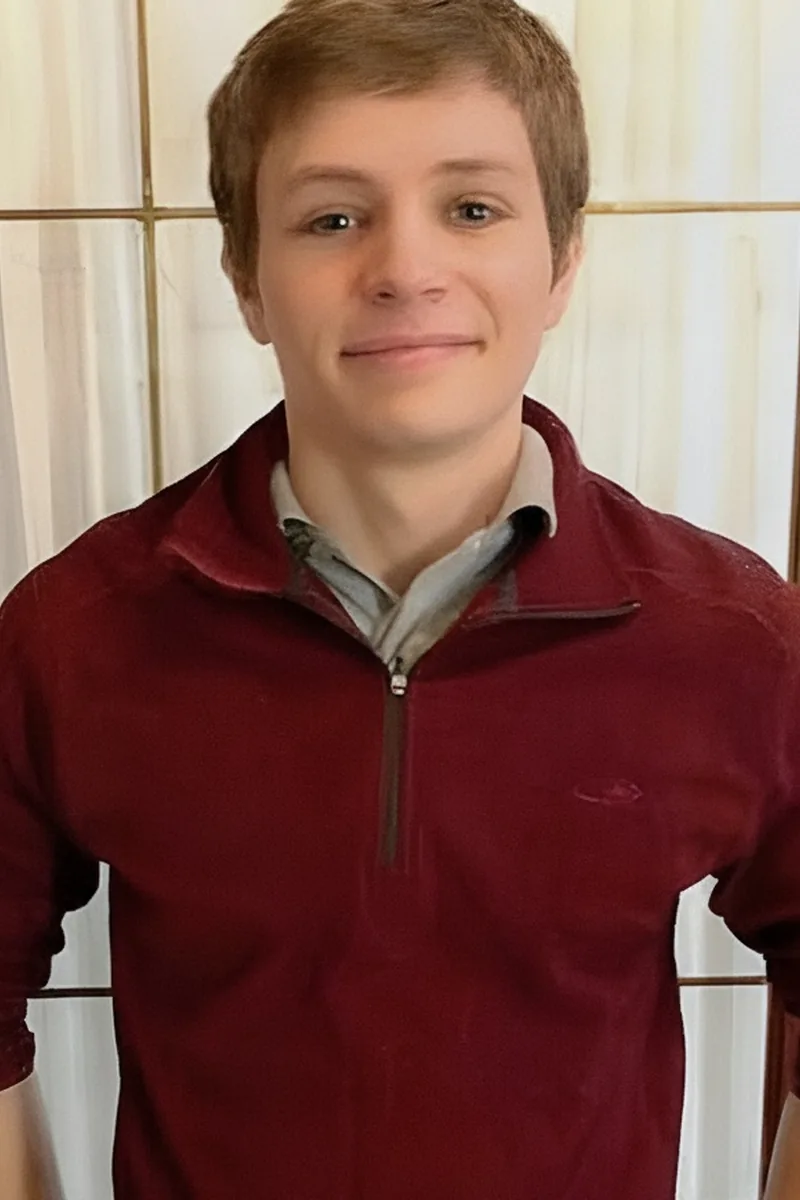
P-chem is where thermodynamics, quantum mechanics, and kinetics collide, and most students feel overwhelmed by the math intensity alone. Jacob's biochemistry-emphasis BS in Chemistry means he tackled these derivations firsthand — from partition functions to the Schrödinger equation — and he's skilled at unpacking the physical meaning behind each equation so the math stops feeling arbitrary. Rated 5.0 by students.

Biology coursework builds a surprising amount of p-chem intuition — enzyme kinetics, membrane energetics, and metabolic thermodynamics all run on the same free energy and rate equations that dominate a physical chemistry sequence. Ade uses that biological grounding to make abstract derivations tangible, turning something like a Boltzmann distribution into a concrete picture of how molecules actually partition energy across states.
A bio-organic chemistry degree means Alex spent serious time with thermodynamic cycles, kinetics derivations, and the quantum mechanical underpinnings of molecular behavior — the core of any p-chem course. He approaches the subject by tying each derivation back to the organic and biochemical systems students already recognize, so an intimidating equation like the Arrhenius expression becomes a story about why reactions speed up at the molecular level.
Differential equations, calculus, and organic chemistry all sit in Nate's regular teaching rotation, which means he's constantly moving between the math and the chemistry that p-chem smashes together — and he knows exactly where students lose the thread between the two. He zeroes in on building intuition around concepts like chemical potential and equilibrium thermodynamics by tying each derivation back to the reaction behavior students already recognize from general and organic chemistry. Rated 5.0 by students.
A PhD in chemistry means Justin didn't just pass p-chem — he lived in its formalism for years, from quantum mechanical models to statistical thermodynamics, and then kept using it through doctoral research. That depth shows when he teaches: he can trace a concept like chemical potential or a Maxwell relation back to the physical picture driving the math, catching the exact step where a student's understanding breaks down. Rated 5.0 by students.
Thermodynamic state functions, quantum mechanical models, and kinetic rate laws all converge in Physical Chemistry, and most students need someone who can bridge the math and the chemistry simultaneously. Abismael's chemical engineering training put him through the full gauntlet — partial differential equations applied to heat transfer, Gibbs free energy calculations for phase equilibria, statistical mechanics. He explains each derivation from multiple angles and tests understanding with problems designed to be harder than what shows up on the exam.
Pursuing a PhD in Analytical Chemistry at UIUC means Whitney spends her days immersed in the quantitative rigor that makes p-chem so demanding — thermodynamic derivations, kinetic modeling, and the statistical mechanics underlying instrumental techniques. She's currently TAing college-level chemistry courses, which keeps her sharp on exactly where students lose the thread in topics like Gibbs free energy, phase diagrams, and partition functions. That combination of active research and daily teaching gives her a practical read on which derivations need more physical intuition and which just need cleaner math.
Enric holds a PhD in Chemistry, which means p-chem wasn't just a course requirement — it was the foundation his entire research career was built on, from quantum mechanical modeling to thermodynamic analysis at the graduate level. He teaches the subject by slowing down at the exact calculus step where a derivation goes from followable to opaque, rebuilding the physical reasoning behind each manipulation before moving forward. Rated 5.0 by students.
A physics degree gives Cory something many p-chem tutors lack — native comfort with the quantum mechanics and statistical mechanics that chemistry students often encounter for the first time in this course. He treats topics like wave functions, partition functions, and thermodynamic state variables as extensions of the physics he already thinks in, then builds the chemical context around them. Rated 4.9 by students.
Medical school at the Medical College of Wisconsin means Abrahim encounters p-chem's core concepts daily — reaction kinetics in pharmacology, thermodynamic energy balances in physiology, and the quantum mechanical principles behind spectroscopic diagnostics. His UCLA biology degree and 34 ACT demonstrate the mathematical fluency needed to work through derivations involving state functions, equilibrium constants, and entropy calculations without losing sight of what the chemistry actually describes. Rated 5.0 by students.
Maurice's teaching background in special education sharpens his ability to break down the layered abstractions in p-chem — when a student is lost inside a Gibbs free energy derivation, he isolates exactly which conceptual step broke down and rebuilds from there. His coursework across calculus, statistics, and chemistry gives him enough quantitative range to walk through the thermodynamic and kinetic formalisms, even if p-chem isn't his deepest specialty.
Eight years as a chemistry professor at Trinity College meant Maria taught p-chem repeatedly — not just lecturing on thermodynamic state functions and quantum mechanical models, but sitting with students in office hours untangling the specific derivation step where they got lost. That Ph.D.-level command of the subject, combined with a 5.0 rating, reflects someone who knows exactly which Maxwell relation or partition function integral is about to cause trouble and can rework it on the spot.
Nicholas studied biology with enough chemistry and physics depth to encounter the thermodynamic and kinetic frameworks that p-chem builds on — enzyme energetics, gas laws, equilibrium — before they get buried under pages of calculus. His 33 ACT reflects strong quantitative reasoning, and he leans on that cross-disciplinary perspective to clarify why a concept like enthalpy or a phase transition behaves the way it does at the molecular level, not just how to push through the derivation.
Testimonials
Because the right Physical Chemistry tutor makes all the difference.
Average Session Rating – Based on 3.4M Learner Ratings
Nearby Physical Chemistry Tutors
Other Kansas City Tutors
Related Science Tutors in Kansas City
Frequently Asked Questions
Physical Chemistry bridges chemistry and physics by studying the properties of molecules and how chemical reactions occur at a molecular level. It's challenging because it requires understanding abstract concepts like thermodynamics, kinetics, and quantum mechanics—often without seeing them directly. Many students struggle with the math-heavy nature of the subject and connecting equations to real molecular behavior, which is where personalized tutoring can make a real difference.
Abstract concepts like molecular orbitals, entropy, and reaction mechanisms become clearer when broken down with visual models, diagrams, and real-world examples. Expert tutors can use molecular visualization tools, energy diagrams, and step-by-step explanations to help you see how theory connects to actual chemical behavior. Regular practice with these visual representations—combined with working through problems—strengthens your conceptual understanding beyond memorization.
Students in Kansas City schools often struggle with balancing complex equations, mastering unit conversions, and understanding thermodynamic principles like enthalpy and entropy. Many find it difficult to apply mathematical concepts to chemical systems, and lab work can feel disconnected from lecture material. Personalized instruction helps you identify which specific areas need focus and builds confidence in both the math and the chemistry reasoning behind it.
Physical Chemistry labs can feel abstract without understanding the theory behind them. Tutors help you design experiments with purpose, interpret data using thermodynamic and kinetic principles, and understand why certain procedures matter. This connection between hands-on work and theoretical concepts deepens your grasp of the scientific method and makes lab reports and analysis much more meaningful.
Yes—Physical Chemistry relies heavily on calculus, algebra, and logarithms to solve problems involving rates, equilibrium, and energy. If math isn't your strongest area, that's okay; tutors can help you build the specific math skills you need while teaching you how to apply them to chemistry problems. Many students find that reviewing math fundamentals alongside chemistry concepts makes both subjects click into place.
Effective exam prep involves mastering both conceptual understanding and problem-solving speed. Tutors help you practice with past exam questions, identify your weak spots, and develop strategies for tackling complex multi-step problems under time pressure. For AP Chemistry, this includes understanding equilibrium, thermodynamics, kinetics, and electrochemistry—all areas where personalized guidance accelerates your readiness.
Look for tutors with strong backgrounds in chemistry and physics who can explain concepts clearly and adapt to your learning style. They should be comfortable with the math involved, able to work through lab concepts, and skilled at breaking down abstract ideas into understandable pieces. Varsity Tutors connects you with expert tutors in Kansas City who specialize in Physical Chemistry and understand the specific challenges students face.
Your first session focuses on understanding your current level, identifying which concepts feel confusing, and learning your preferred way of working through problems. The tutor will likely assess your comfort with math, discuss your course goals, and start working on a specific topic you're struggling with. This personalized approach means your tutoring plan is built around your needs from day one.
Let’s find your perfect tutor
Answer a few quick questions. We’ll recommend the right plan and match you with a top 5% tutor.